Thursday, 28 April 2022

Hemp’s Role in a $7.4 Billion Plant-Based Foods Market  

US hemp food retail sales

By Eric Singular, Director, Hemp Business Journal

While the global food supply chain has been shaken by crop shortages, the COVID-19 pandemic, and more logistical disruptions due to the Russian invasion of Ukraine, the plant-based foods market has shown remarkable resilience, and the hemp sector is looking to establish the grain as a superfood.

A reported 4 in 10 Americans are buying plant-based meat and/or dairy products, with most doing so on a regular basis. According to the Plant Based Foods Association (PBFA), the trend spiked last year as 2021 U.S. retail sales of plant-based food reached $7.4 billion, up 6.2% from 2020, and marking a 27% increase from 2019. The strong consumer interest is attributed to an emphasis on health, wellness, and sustainability since the pandemic, opening an opportunity for hemp as a highly nutritious whole grain.

A recent report from the PBFA, in conjunction with the Good Food Institute and SPINS, highlights the newfound popularity of plant-based foods. In 2021, 79 million (62%) among U.S. households purchased plant-based products, with 78% of purchasers being repeat buyers.

Hemp for Nutrition

While Canada-based Manitoba Harvest has cultivated a robust supply chain from seed to shelf – becoming the world’s largest hemp heart brand – they are promoting hemp grain as an ingredient for formulation to boost the nutritional value of a vast array of food products. Since the plant-based food category already relies heavily on pea protein, the premise is that hemp fits the bill of a superfood to compete head-on with other common plant-based nutritional additives.
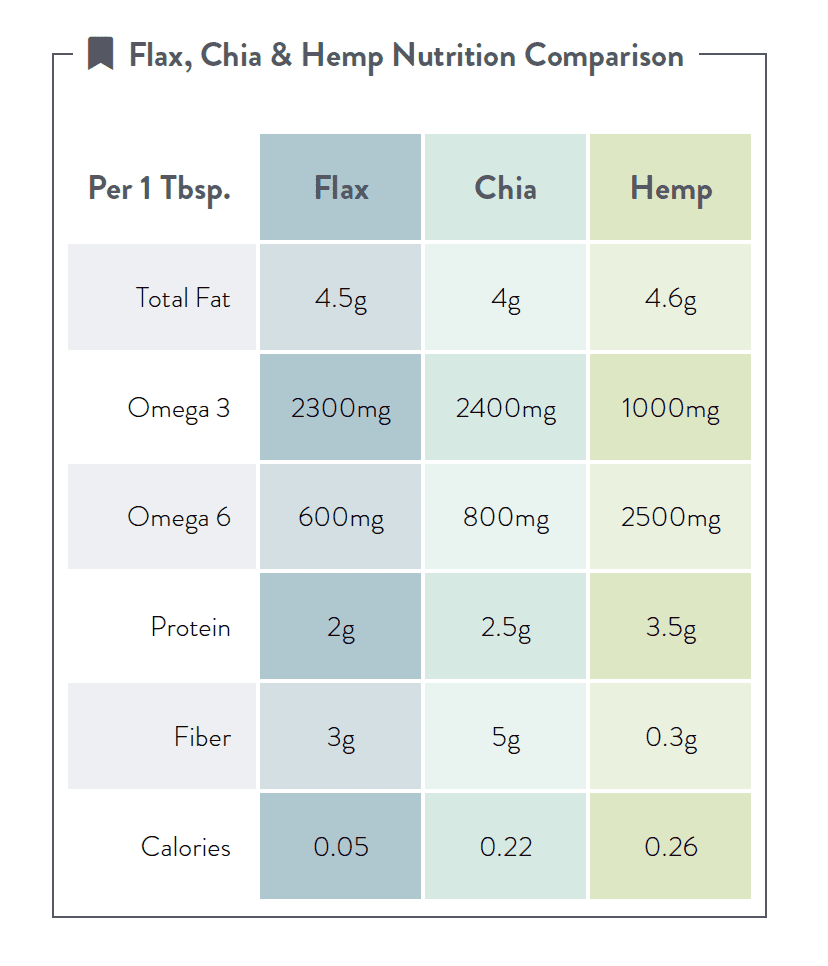
While some studies have found a high variability in hempseed composition through its genotypes and environmental factors, it typically contains between 25%–35% lipids, 20%–25% proteins, and 20%–30% carbohydrates as well as vitamins and minerals. Moreover, it is not an international allergen, thus broadening its potential consumer appeal to those trying to avoid soy, lactose, or gluten.

Plant-Based Milk

Milk alternatives lead the plant-based market, serving as the growth engine for the entire milk category. In 2021, animal-based milk’s sales declined by $264 million across the category. The same year, plant-based milk sales grew 4%, reaching a category value of $2.6 billion. In conventional grocery stores, 16% of all retail milk sales were plant-based.

Almond milk accounts for 59% of the total category’s market share, followed by oat milk’s growth to become the second-largest segment, now comprising 17% of category sales (up from 0.5% in 2018, marking a 3,300% increase in the past three years). While the almond and oat products have a huge lead on hemp milk, the latter is highly nutritious. Compared to rice or almond milk, hemp milk has more protein and polyunsaturated fats (i.e., “healthy fats”). Compared to whole cow’s milk, hemp milk offers fewer calories, less protein, and reduced carbs, but an equivalent amount of fat.

Hemp milk companies like Tempt use aseptic packaging methods to increase the shelf life of products by up to 18 months without the need for refrigeration or other preservatives. A June 2021 report by Persistence Market Research projected the global hemp seed milk market to reach a value of $415 million by 2031, growing at a compound annual growth rate (CAGR) of 11%. Ingredient innovation is driving the plant-based milk category, as best exemplified by significant consumer adoption of oat milk. As PBFA notes, all that is required in the process for making plant-based milk is the liquifying of nutrients from a wide array of plant sources. Thus, the varieties and blends of plant-based milk are virtually limitless. As formulators continue to research and develop the taste, solubility, and texture of hemp milk, its adoption could be spurred.

Plant-Based Meat

Meat and milk are the categories spearheading the growth of the plant-based foods market. While conventional meat unit sales have grown 9% in the past three years, plant-based meat unit sales have outpaced that rate by nearly 6x, growing 51% over the same period. In 2021, plant-based meat sales topped $1.4 billion.

According to Kentucky-based Victory Hemp Foods, hemp grain’s qualities make it a highly suitable ingredient for formulation in plant-based meat products. The company’s specially formulated V-70

™
Hemp Heart Protein, which has both a highly desirable light color and neutral flavor for food formulation, has demonstrated a capacity to bind water and oils in meat analogue formats. That is essential for creating a moist, juicy plant-based patty to replicate the mouthfeel and bite of beef. 

Victory Hemp Foods contends that their V-70 product contains 70% protein with all 9 essential amino acids, while also providing a rich source of iron, magnesium, and zinc. Further, it is high in Edestin (the primary protein in egg whites) and Arginine (an essential amino acid for infants and seniors) while having low-fat content, including the ideal (roughly 3:1) ratio of omega-6 to omega-3 fatty acids.

While plant-based burgers lead the plant-based meat category, strong consumer desire exists for more variety. In 2021, the fastest-growing plant-based meat product types included meatballs, chicken cutlets, nuggets, and tenders, and deli slices.

Cost remains among consumers’ primary considerations. Against rising inflation, unit sales of plant-based meat were slightly down, and animal-based meat dropped significantly. As noted in the 2022 Power of Meat report from the Food Industry Association (FMI), high prices for animal-based meats led consumers to shop for them less frequently.

Beyond Plant-Based Foods

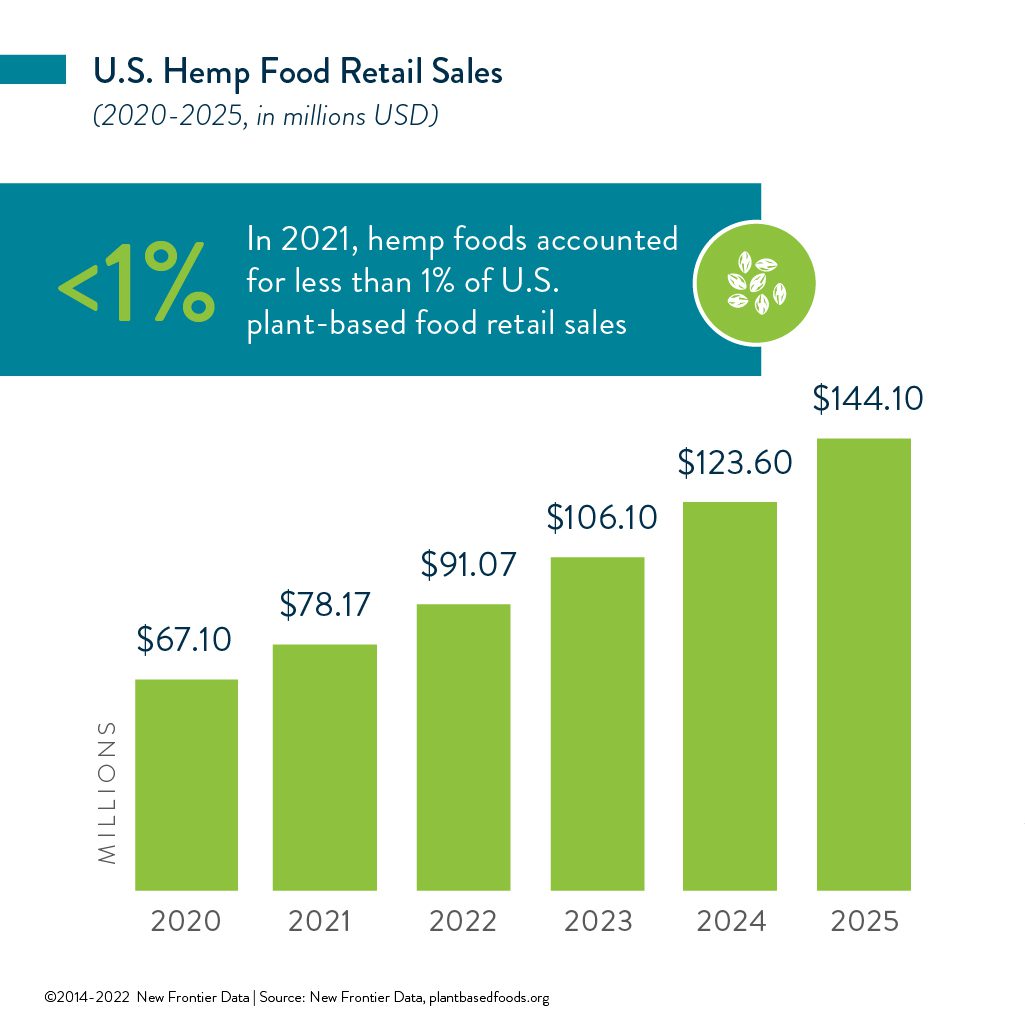
New Frontier Data estimates retail sales for hemp food products having reached $78.17 million in 2021, conservatively growing to $144.1 million by 2025 (a 16.5% CAGR).

Beyond the plant-based category, the rich nutritional value of hemp grain suggests its wide applicability as an ingredient in a vast array of staple consumer-packaged goods, including cereals, soups, or granola bars. Given the progressive nature of the plant-based foods category and its targeting of health and environmentally conscious consumers, however, hemp seems likeliest to first find a foothold within that category.

Ultimately, the success of brands like Beyond Meat and Impossible Foods spurred giants Tyson Foods and Nestlé to launch their own plant-based portfolios.

All that it takes to get Big Food’s notice is for a start-up brand or two to start diverting sales from a grocery shelf mainstay.  As soon as hemp proves itself in the market as a food ingredient, Big Food will want a piece of the action. Planet Based Foods, having rolled out a line of hemp burgers in February, may prove the point: Within two months, they had already inked a distribution deal with U.S. Foods, and began selling online through Amazon.

The post Hemp’s Role in a $7.4 Billion Plant-Based Foods Market   appeared first on New Frontier Data.


from New Frontier Data https://newfrontierdata.com/cannabis-insights/hemps-seat-at-the-table-for-a-7-4-billion-plant-based-foods-market/

source https://ozlemhermsen.tumblr.com/post/682832705369571328

Tuesday, 26 April 2022

Familiarity Breeds Contentment with Cannabis Consumers

top cannabis products

By Dr. Molly McCann Ed.D., Senior Director of Consumer Insights, New Frontier Data

As legal cannabis becomes ever more accepted by consumers, it becomes vital for brands, retailers, and operators to foster a nuanced understanding of who those consumers are, why they use the plant, and how their preferences are evolving amid rapid innovation in the product landscape.

Since 2018, New Frontier Data has surveyed more than 20,000 consumers to benchmark and analyze cannabis consumption behaviors. Cannabis Consumers in America: Dynamics Shaping Normalization in 2022, New Frontier Data’s latest report (published in partnership with cannabis wellness company Jointly), looks at behavioral drivers and social attitudes as the market’s maturity brings significant changes in how consumers are integrating cannabis into their lives. 

Expanding Intentions for Cannabis Consumption

The research findings continue to validate how, as the market of 49.5 million legal U.S. consumers matures, cannabis consumers are becoming more intentional about their use of the plant, both seeking specific experiences from their cannabis use and aligning the products they choose to those outcomes. While the top reasons for consuming cannabis remain largely unchanged – i.e., seeking relaxation, pain management, improving sleep outcomes, or treating medical conditions – the broadening ways to achieve desired outcomes from the wide array of products on the market is leading to significant changes to how consumers integrate cannabis into their lives. A majority (57%) of current cannabis consumers use both flower and nonflower product forms. One-quarter (25%) exclusively use flower, while 17% exclusively use nonflower forms.

Flower Remains Most Preferred

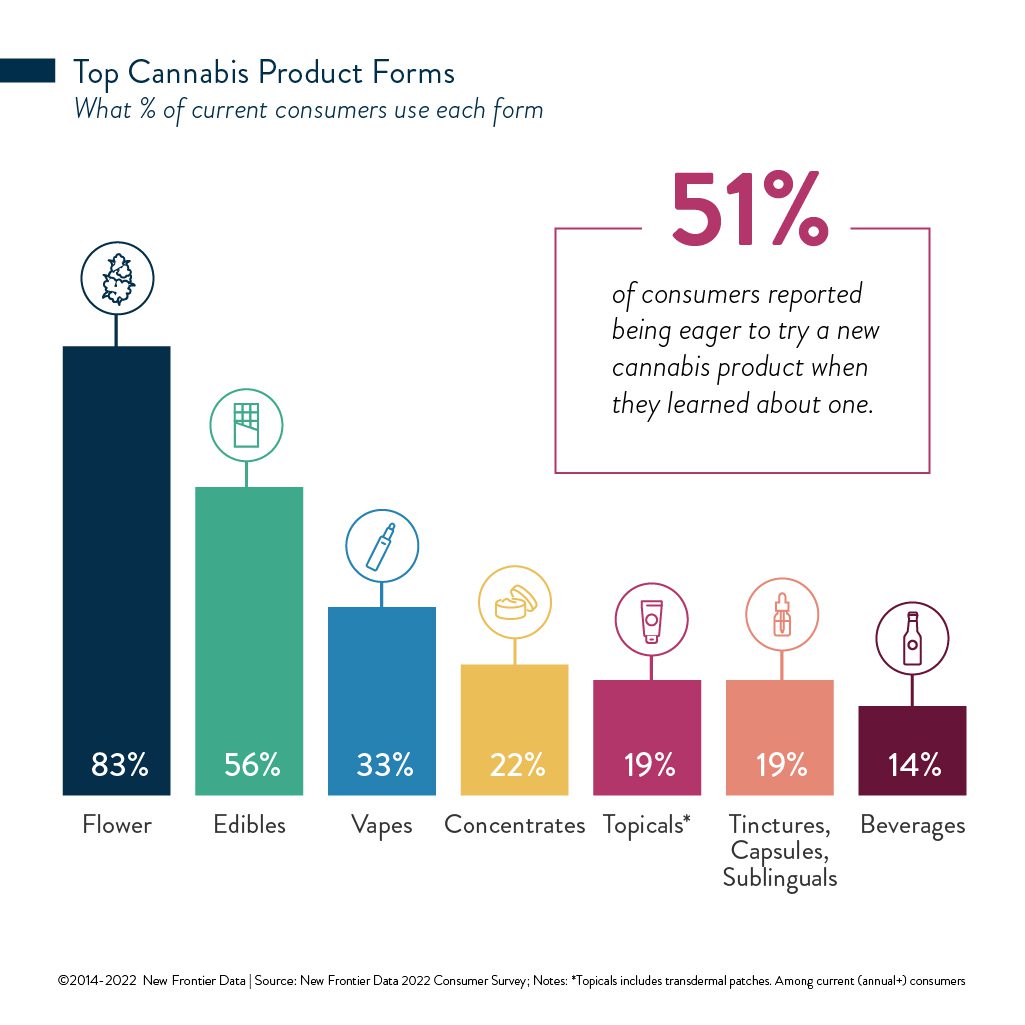
Flower remains the leading product form, currently used by 83% of consumers. Edibles were the second-most widely used product type, enjoyed by 56% of those who consume cannabis at least once per year. One-third (33%) of respondents reported using vapes, and roughly 1 in 5 (22%) reported using concentrates, while 19%, respectively, reported using either topicals, or tinctures, capsules, or sublinguals. Roughly 1 in 7 (14%) of current consumers reported drinking cannabis-infused beverages; virtually all cannabis beverage drinkers also consumed solid edibles.

In a fragmented product landscape, flower remains king. Even with hundreds of thousands of products now available in legal markets nationwide, flower’s dominance of consumer preferences and use remains unchallenged. It remains both the most widely used form of cannabis, and the favorite for consumers overall. As such, while emerging product categories including beverages and pills present significant potential opportunities to capture future demand, retailers should particularly notice the continued dominance of flower over the medium term.

When choosing which products to consume, function dictates form: Among the majority of consumers who use more than one form of cannabis, their chosen activity is the leading determinant (46%) for the form used. Consumers’ choice of product form is also influenced by whichever mood they want to create (38%), or the time of day (27%), indicating that context and intentionality are key factors in understanding consumer behavior.


Fitting Forms to Lifestyles 

The alignment of product form and activity is helping drive diversified product uses, resulting in ever more consumers’ using more than one form. For brands and product manufacturers, it is therefore increasingly important to consider the contexts for their products’ consumption. Any poor alignment can negatively impact consumer adoption, and subsequently also a company’s bottom line. 

Consumer excitement to try the latest thing highlights challenges for building brand loyalty in a nascent, highly dynamic market. Even as flower remains the dominant product category, consumers are eager to explore new product offerings. More than half (51%) of all consumers say that they are eager to try new products when they learn of them, and among consumers ages 18-35, 61% express eagerness. Such enthusiasm suggests a positive environment for brands’ launching new products, even in crowded spaces, as there remains a large cross-section of consumers interested in trying a latest thing. The challenge for brands, however, is that it also suggests that brand loyalty remains low, meaning that brands cannot rest on their laurels once they have secured a customer, as that customer might be readily poached by a new entrant.

The post Familiarity Breeds Contentment with Cannabis Consumers appeared first on New Frontier Data.


from New Frontier Data https://newfrontierdata.com/cannabis-insights/familiarity-breeds-contentment-with-cannabis-consumers/

source https://ozlemhermsen.tumblr.com/post/682656875687395328

Thursday, 21 April 2022

$97B in 2021 U.S. Cannabis Sales Fueled by Routine and Intentional Consumption

New Frontier Data’s research reveals normalization is accelerating cannabis as a mainstream consumer category.

Washington, April 20, 2022  — New Frontier Data (https://NewFrontierData.com), the premier data, analytics and technology firm specializing in the global cannabis industry, together with Jointly, a cannabis wellness company, have released Cannabis Consumers in America: Dynamics Shaping Normalization in 2022. Since 2018, New Frontier Data has surveyed more than 20,000 consumers to benchmark and analyze cannabis consumer behavior for endemic and non-endemic organizations.

“Cannabis is no longer a one-size-fits-all industry,” noted Gary Allen, CEO, New Frontier Data. “It’s now a commercial imperative for brands, retailers and operators to do the homework required to understand their ideal customer, why they consume and what products they prefer.”

Across both legal and illicit markets, consumption patterns are normalizing to where demographic variables such as age and gender are more influential than market legality in predicting behaviors that are increasingly routine. The report’s findings concluded that cannabis consumers are becoming more intentional with the plant’s use, and the primary reasons for consumption now span relaxation, pain management, improving sleep outcomes, treating medical conditions and improving overall wellness.

“Understanding what drives and defines optimal individual consumer experiences is increasingly important,” said Eric Gutshall, Co-Founder and CDO, Jointly. “As we continue to capture more experiential feedback, our partnership with New Frontier Data will provide the industry with a more holistic view into consumer behavior and preferences.”

Key Report Findings Include:

  • Nearly half (46%) of all survey respondents report using cannabis daily as product selection expands with more convenient, discreet and precise consumption methods.
  • With an estimated $97 billion in U.S. legal and illicit sales in 2021, cannabis consumer spending now exceeds spirits ($86 billion), validating the vast market opportunity.
  • Flower accounts for half of all legal sales nationally, but the majority of consumers are now using non-flower products, as the quality and selection of products expands.
  • The collective curiosity of consumers to try new forms of cannabis is fueling product innovation and highlighting the importance of targeted brand and loyalty strategies.
  • Positive outcomes from medical cannabis use are driving increased acceptance as half of medical cannabis patients report their conditions improved significantly and 93% report at least some improvement.


Download a complimentary copy of Cannabis Consumers in America: Dynamics Shaping Normalization in 2022: https://newfrontierdata.com/cannabis-consumers-in-america-2022/.

New Frontier Data will release the second part of the 2022 Consumer Report series later this year which will feature additional consumer survey data.

About New Frontier Data:

New Frontier Data is the premier data, analytics and technology firm specializing in the global cannabis industry, delivering solutions that enable investors, operators, advertisers, brands, researchers and policy makers to assess, understand, engage and transact with the cannabis industry and its consumers.

Our mission is to inform policy and commercial activity for the global legal cannabis industry. We maintain a neutral position on the merits of cannabis legalization through comprehensive and transparent data analysis and projections that shape industry trends, dynamics, demand and opportunity drivers. Founded in 2014, New Frontier Data is headquartered in Washington, D.C. with a presence in Europe, Latin America and Africa. For more information about New Frontier Data, please visit us at https://www.NewFrontierData.com.

About Jointly:

Jointly is a cannabis wellness company powered by a proprietary data platform to help people reach their full potential. The company was created on the premise that purposeful cannabis consumption is the key to unlocking a better you. It has the industry’s first – and only – experience-based wellness app for purposeful cannabis consumption.

Cannabis wellness enthusiasts use the platform to track their experiences to improve their results. Their authentic, unbiased experiences create Jointly’s trusted cannabis product ratings, setting the legal cannabis industry’s first experience-based standard for product performance, taste, and aroma. For additional information, visit jointlybetter.com and download the app for free on Apple / Google.

Media Contact: 

Susan Clayton Hammann
Marketing & Communications Director 

New Frontier Data
+1 844-420-3882 ext. 3 

media@NewFrontierData.com 


The post $97B in 2021 U.S. Cannabis Sales Fueled by Routine and Intentional Consumption appeared first on New Frontier Data.


from New Frontier Data https://newfrontierdata.com/cannabis-insights/97b-in-2021-u-s-cannabis-sales-fueled-by-routine-and-intentional-consumption/

source https://ozlemhermsen.tumblr.com/post/682126816221265920

Tuesday, 19 April 2022

Local Cannabis Laws Are Keys to Consumer Behavior

sources state market

By Dr. Molly McCann Ed.D., Senior Director of Consumer Insights, New Frontier Data

In the United States today, 74% of U.S. adults live in a state having some form of legalized cannabis with THC: 44% live in states which allow any adult to possess and use cannabis, and 30% live in states which permit cannabis for medical use (though the degree and type of restrictions in medical markets vary widely state to state).

As discussed in New Frontier Data’s upcoming report, Cannabis Consumers in America: Dynamics Shaping Normalization in 2022, we found that a consumer’s home state’s cannabis market regulatory framework was among the most consequential influences on consumer behavior—often a stronger predictor than a consumer’s gender.

Perhaps surprisingly, one element of cannabis-related behavior that is not affected by a state’s cannabis laws is how often consumers use cannabis. The distribution of use frequency is remarkably consistent across different state market types, meaning that whether cannabis is prohibited or legally available to adults in the state seems to have little or no impact on how frequently consumers use it.

Consumption patterns are normalizing across all markets

The legal status of a market is less influential in predicting frequency of use than are other demographic variables like age and gender. That indicates that while legalization may improve the quality and availability of cannabis products, the pervasive and deeply entrenched illegal market is not a barrier for consumers in unregulated markets, and consumer behavior is quickly normalizing across all markets. That is especially important in newly legal states which are likely to face considerably shallower consumer-adoption curves than in states which legalized earlier, when there were more substantial differences between consumer behaviors in legal versus adult-use markets.

An element of consumer behavior that does seem to be influenced by a state’s cannabis regulations is which high-quality cannabis product forms consumers in those states have access to, and therefore consume.

Consumers in illicit states were significantly more likely than were consumers in other markets to report using only flower: over one-third (34%) of consumers in illicit states consume only flower, compared to more than one-fifth (21%) of consumers in adult-use states. Regulated markets provide easier access to alternatives to smoked items, so consumers in adult-use markets are the most likely to use non-flower products, followed by consumers in medical-only markets.

Some may be surprised that flower-only consumption was not more dominant in illicit markets—even in those states, a majority (52%) of consumers reported using both flower and non-flower forms. Though they may not have as convenient or consistent access to high-quality, value-added cannabis products, many consumers in illicit markets are still occasionally acquiring products that originated in legal markets. More than 2 in 5 (43%) of current consumers report having sourced cannabis from outside of their home state—whether while traveling to legal markets themselves, or via friends or family when they traveled.

Sourcing is Vital

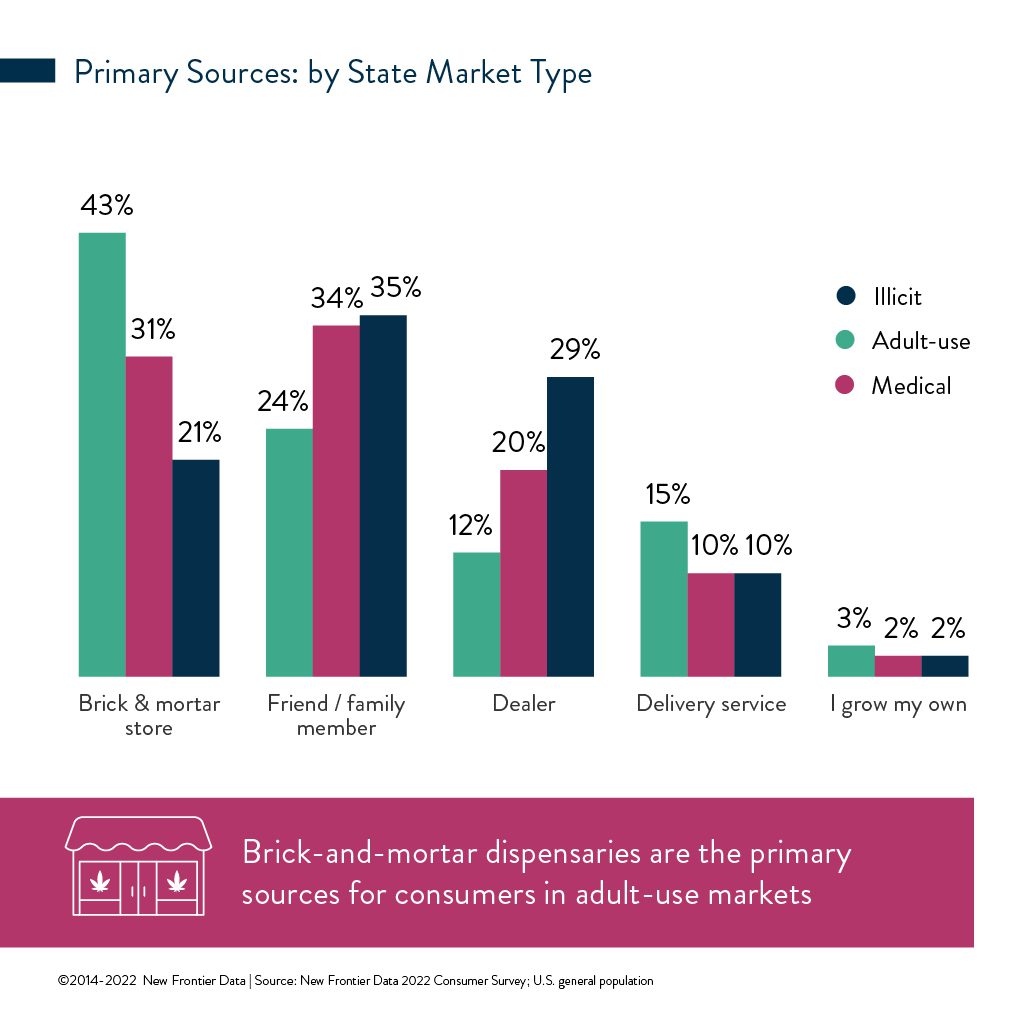
The greatest impact that state regulations seem to have on consumer behavior is on sourcing: a state’s cannabis laws greatly affect which sources its consumers use. Brick-and-mortar stores and delivery services — the primary regulated cannabis outlets — are utilized considerably more in adult-use markets than in other state markets. Informal sources like friends/family or dealers are the leading sources in illicit markets (where high-THC cannabis is completely prohibited).

In medical-only markets, brick-and-mortar dispensaries are primary sources for registered medical patients who have legal access to them. Friends/family are also major sources for consumers in medical-only markets, particularly among consumers who are not registered patients (and therefore cannot access cannabis directly through medical dispensaries). Notably, illicit dealers are significantly less utilized in medical-only states than in completely illicit states. That is likely because in medical-only markets, registered patients act as intermediaries between legal dispensaries and end users for many of their unregistered friends and family who consume. The existence of a group of people with legal access to cannabis means that there are fewer degrees of separation between a reliable, quality source and an unregistered end user, so reliance on dealers is lower.

Cannabis Consumers in America: Dynamics Shaping Normalization in 2022 discusses the findings of New Frontier Data’s 2022 U.S. Cannabis Survey, a demographically representative, census-aligned online survey of more than 5,900 respondents measuring cannabis-related beliefs, attitudes, and behaviors. The report will be released tomorrow.

The post Local Cannabis Laws Are Keys to Consumer Behavior appeared first on New Frontier Data.


from New Frontier Data https://newfrontierdata.com/cannabis-insights/local-cannabis-laws-are-keys-to-consumer-behavior/

source https://ozlemhermsen.tumblr.com/post/682006006906109952

INTERVIEW: CMC’s Moore Weighs in on the U.K.’s Legal Cannabis Industry

By Oliver Bennett, Special Contributor to New Frontier Data

Anticipating what he describes as the United Kingdom’s “first detailed blueprint setting out how the U.K. can fast-track its way to become the global leader in cannabinoid innovation,” Steve Moore is a reluctant optimist.

As much as he touts the U.K.’s potential to become a world leader in cannabis R&D and innovation – “We have already had a huge influence on the global cannabinoid market, including the most successful medical cannabis company in history in GW Pharmaceuticals, and could now lead the world by being the first to properly regulate CBD – he tempers his enthusiasm by criticism of “disjointed” policies lacking federal advocacy for “pipe dreamers” making ridiculous claims.

A cofounder of the U.K.’s Centre for Medicinal Cannabis (CMC), the Association for the Cannabinoid Industry (ACI), and the First November Group, Moore recently announced the Hodges Review – a commission led by Christopher Hodges (Emeritus Professor of Justice Systems of the Centre for Socio-Legal Studies at the University of Oxford) to  assess public policy relating to the UK’s cannabis industry. Due for a May release, the review will proffer an industrywide assessment of regulations and public policy relating to the UK’s legal cannabis industry.

Hodges Review Due in May

“It’s long overdue”, says Moore. “This nascent industry requires regulatory attention, as it has been developed by activists – including myself – meaning that it’s very disjointed from a public policy perspective.”

The expectation is that Hodges – who is establishing himself inside Whitehall (i.e., the British government) as an increasingly influential thinker regarding new approaches to regulation – will nudge policymakers like George Freeman, Minister for Science, Research and Innovation.

“So, Prof. Hodges is looking at how we could work more effectively, to help the U.K. become a world leader in cannabis R&D and innovation,” Moore added. “We have already had a huge influence on the global cannabinoid market – including the most successful medical cannabis company in history in GW Pharma – and could now lead the world by being the first to properly regulate CBD.”

Political Momentum Is Lacking

Moore claims to represent three platforms: medical CMC, the CBD-focussed ACI, and the First November group for professional services, companies, investors, and companies. CMC and ACI helped with the lifting of import restrictions for medicinal cannabis, and the new Food Standards Agency CBD regulations put into effect last year.

“But there’s still a long way to go,” Moore admits. “I am always conservative in terms of how I see the market growing here, and there’s a lot of evidence that the U.K. system won’t make concessions. There are no political incentives. Adult use is nowhere close to being the case, as the key political parties are committed to reducing public consumption of temptation goods, and there’s a lack of advocacy at government level.”

He says that while Minister Freeman is broadly sympathetic, the British government is not making a compelling case on behalf of the industry, despite GW Pharmaceuticals’ successfully producing licenced medicines since the 1990s.

“On the other side, there are a lot of pipe dreamers in the industry, fuelling an investment bubble with ridiculous claims as to how big the market will be, which isn’t borne out by reality”, Moore said.

“Take medical cannabis,” he continued. “The case of Billy Caldwell was important. His mother Charlotte broke the doors down with her ferocity and since then the medical focus has been how to deal with epileptic kids. But most British people are treated by the [National Health Service] that writes about 97% of all prescriptions in the U.K. There simply is not a great public clamour for the NHS to prescribe unlicenced medicines – and most people expect licenced medicines. Nor are doctors interested in experimental prescribing. We have a well-established healthcare system that’s rigorously assessed by [the National Institute for Health and Care Excellence] (NICE) and a smaller private sector, but it’s difficult to even get U.K. numbers of medical cannabis patients ­– it’s probably around the 10,000-plus mark –significantly lower than Germany with over 100,000 patients and a very different prescribing culture: Doctors in Germany can prescribe spa weekends or homoeopathic medicines. There just isn’t that culture in our care system. If we show evidence of its efficacy, then we could fill the evidence gap. But this will take time.”

Moore says that while the recreational market is already working for many people – citing a resilient supply chain that accommodates about 7% of British adults consuming at least once a year – “The American issues of incarceration and racial bias don’t cut through in the same way here. Regarding London Mayor Sadiq Khan’s recent initiative to decriminalise, I’m generally sympathetic, but it was badly handled, and most people already accept that the police already blind-eye the issue.”

As for production, he continued, “I don’t think Britain is a country to choose to grow cannabis, and with cultivation sites everywhere in the world we don’t need any more, although companies investing in specific R&D like Celadon are more likely to succeed.”

Though some in the U.K. aspire to have U.S.-style dispensaries, Moore says that the U.K.’s regulatory framework does not facilitate that model, given the greater stigma still attached to cannabis which keeps the cannabis culture largely more comfortable “in the shadows” compared to North America.

No Sizzle, Just Shade

“You don’t get celebrities talking about it like in the U.S.,” Moore notes, “and there are huge concerns about mental health coming from Sir Professor Robin Murray’s research”, referring to claims linking cannabis, psychosis, and violence.

Despite recent U.K. polling finding 55% support of legalisation, Moore says that he finds no political appetite for it.

“I’ve talked to numerous home secretaries, and they all say the same thing,” he says. “Why would we increase the market for an intoxicating substance, and what’s the public benefit? It’s difficult to envisage a policy path for recreational cannabis with those attitudes, although there may be subtle ways to use taxation to incentivize healthier use and acceptability. When I worked with the government, we introduced taxation to bring beer strength down and one brand went from 5.2% to 4.8% ABV overnight. No one noticed.”

CBD Has Popularity, Potential

“For me, where the potential really exists is first in CBD and nutraceutical and then in medical R&D. The U.K. has the potential to become the world leader in product research and innovation, building on our life sciences sector. We have a strong CBD market that’s been regulated by the Food Standards Agency (FSA) since February 2020 – the first regulator in the world to secure safety approval of CBD products – and have pretty good certainty over product quality. Behind the U.S., we are the second-largest market  for CBD, and have comfortably the biggest European market. CBD is already much more mainstream here than in other countries, and there’s barely a High Street pharmacy that doesn’t stock it.”

As of the first week of April, he noted, there were 3,500 products listed by the ACI, with published findings soon due out about toxicology pending full authorization of CBD.

“That’s why I think the most exciting sector here is consumer cannabinoids,” Moore asserted. “The U.K. can lead the way, and we’ll have a massive escalation after full authorizations take out the risks. I think we’ll see three things emerge: a lot of investment; much innovation including getting beyond oils into food and drink markets; and, thirdly, the emergence of FMCG companies into the space. So, of the three key verticals – recreational, medical and consumer CBD – the latter is the most immediate growth area, akin to the omega-3 market. After that, I think the best way of making money in cannabis is to go down the licenced medicine road – but that means investing in innovation and IT on a horizon of about 10 to 15 years.”

Ultimately, Moore suggested, “there are far more people who want to get a good night’s sleep than to get high. At least 10% of British adults are consuming CBD at least once a month. Even in California you wouldn’t find that amount using cannabis edibles every week. So I think the market will grow over the next few years, and 2025 will probably be a peak for consumer CBD, coming from the margins to the mainstream with CBD in chain coffee shops, Pepsi CBD drinks, and CBD-infused beers in pubs. The final aspect is about track-and-trace, and there’s innovation here with blockchain technologies. Quality control and governance will establish basic safety profiles driven by economic necessity.”

Whether CBD will lead the recreational and medical sectors, Moore suspects that to be possible, though “I’m not sure it’ll induce a public clamour to legalise recreational cannabis, although there could be a space between wellness and palliative medicine. Lots of small innovations could become really valuable as companies start to see the economic benefit of investing in R&D and innovation.”

The post INTERVIEW: CMC’s Moore Weighs in on the U.K.’s Legal Cannabis Industry appeared first on New Frontier Data.


from New Frontier Data https://newfrontierdata.com/cannabis-insights/interview-cmcs-moore-weighs-in-on-the-u-k-s-legal-cannabis-industry/

source https://ozlemhermsen.tumblr.com/post/682006006351446016

Is CBD an Effective Treatment for Obsessive Compulsive Disorder?

What Are the Symptoms of OCD?

Obsessive compulsive disorder involves complementary obsessions and compulsions. Obsessions refer to intrusive and distressing thoughts in an individual, and are frequently focused on the following topics:

•         Fears of contamination

•         Persistent obsession with order and symmetry

•         Unwanted and troubling sexual thoughts

•         Intrusive thoughts of violence or injury

•         Fears for the  safety of loved ones

OCD is a complex and varied disorder, and obsessions may also fall into other categories. Typically, obsessions produce a need to perform a behavior, or compulsion, in response, in part to quell the anxiety. Typical compulsions include:

•         Excessive handwashing, showering, or other behaviors to maintain cleanliness

•         Reordering objects

•         Performing repetitive tasks like checking locks, windows, stove burners, or other objects

•         Obsessive counting in patterns

Compulsions can also vary widely between individuals. What causes OCD is not entirely clear; there may be genetic predispositions, and a household member with the condition can heighten the risk of others developing it. It also shows connections to depression, anxiety, and other mental health issues.

Is CBD an Effective Treatment for Obsessive Compulsive Disorder?

CBD is widely marketed for stress and anxiety, but clinical research surrounding the treatment of CBD for stress and CBD for anxiety is still lacking. There is evidence that the endocannabinoid system has some function in mitigating feelings of fear and anxiety, providing some support for anecdotal use of cannabis and CBD to treat OCD. Indeed, a recent (but non-controlled) study showed CBD and cannabis having a positive effect on people with OCD. However, another recent and small study with a placebo control group showed CBD to have little effect of patients’ experience of OCD.

More research is ultimately needed to effectively determine whether CBD can be an effective remedy for OCD. Individuals suffering from OCD are advised to consult with a medical professional before using CBD as a treatment.

The post Is CBD an Effective Treatment for Obsessive Compulsive Disorder? appeared first on Smart CBD Hub.


from Smart CBD Hub https://smartcbdhub.com/obsessive-compulsive-disorder-cbd/
via IFTTT

source https://ozlemhermsen.tumblr.com/post/682004456835072000

Thursday, 14 April 2022

Mexico’s Muddled but Major Market Opportunities for Hemp

mexico hemp

By Eric Singular, Director, Hemp Business Journal

In 2018, Mexico’s Supreme Court declared the government’s nearly century-old, explicit prohibition of the recreational use of cannabis to be unconstitutional. Four years later, the Mexican Congress and the Comision Federal para la Proteccion contra Riesgos Sanitarios (COFEPRIS) are still working to promulgate a legal framework to specifically regulate the cultivation, manufacturing, and distribution of adult-use cannabis in Mexico.

Since the court’s mandated reversal, 20 separate cannabis-related regulatory proposals have been received by the Senate. In 2020, those were amalgamated in the Cannabis Regulatory Federal Law. While it was approved by the Senate and forwarded for review to the Lower House, the reviewing chamber’s heavy modifications of the original proposal forced another review in the Senate. There, it lost traction and was eventually discarded.

Meanwhile, COFEPRIS has approved and granted 60 permits to produce cannabis-based ingredients, food items, beverages, supplements, cosmetics, and pharmaceutical products having met the criteria of the 2018 case. Those guidelines positioned about 15 Mexican companies to build a domestic supply chain. Yet, that too proved short-lived when a new presidential administration took office. By March 2019, the approvals were revoked, and permits cancelled.

Finally, in January 2021, COFEPRIS published rules regulating the medicinal use of cannabis. In December 2021, Mexico’s Supreme Court further declared laws against cultivation with a THC concentration below 1% as unconstitutional, ostensibly removing barriers to hemp production. That ruling sided with Xebra Brands, Ltd., and its Mexican subsidiary, Xebra Mexico, in challenging COFEPRIS actions to block cannabis production except for medical and scientific purposes.

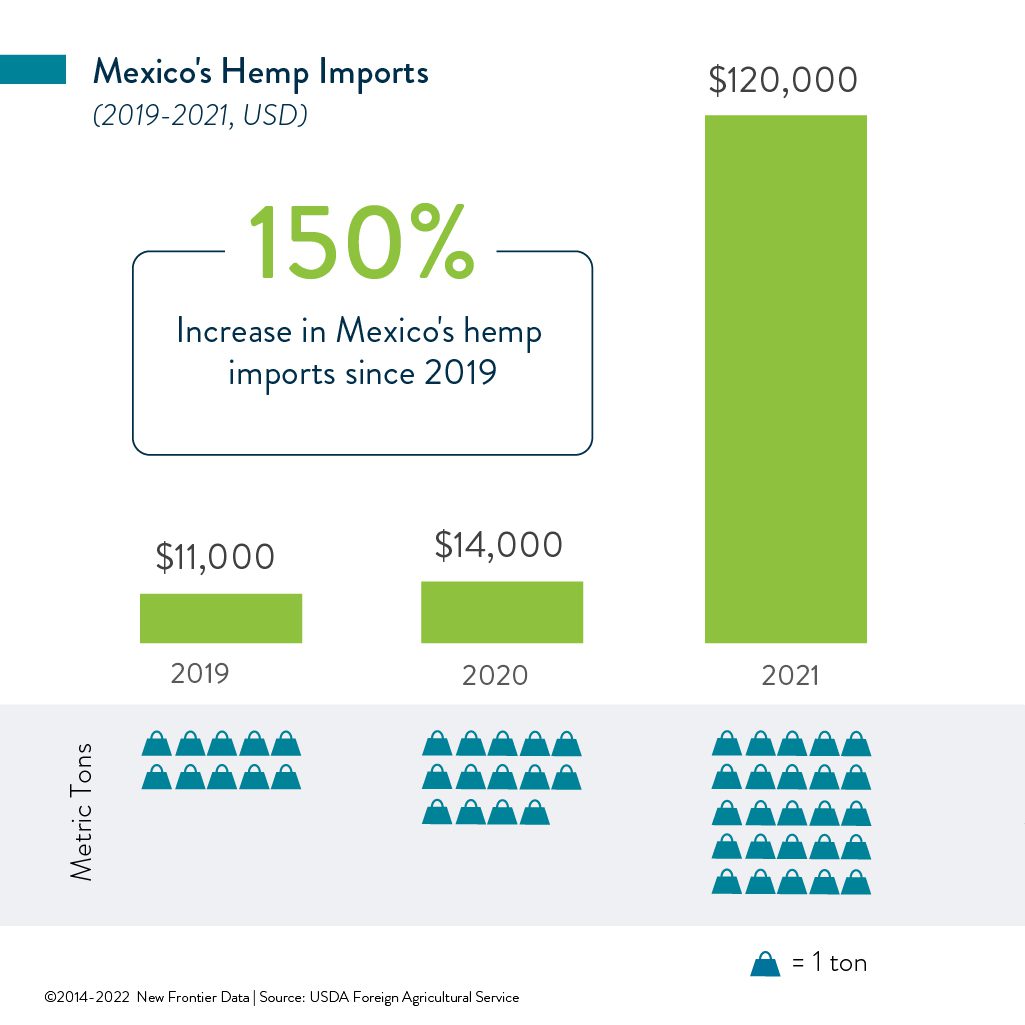
Since 2019, Mexico’s hemp imports have increased dramatically. The available trade data refers to two tariff codes which fall under the classification of raw or processed (but not spun) fiber, including yarn waste and garnetted stock. Mexico’s total 2021 imports of hemp fiber were worth $120,000, or 25 metric tons (MT). Among those, imports from the United States accounted for 63% of the total of the tariff group, with France second at 29%.

While the Mexican hemp industry is impeded by a lack of domestic production and a robust regulatory framework for cultivation, processing, and manufacturing, the potential market opportunity for the crop remains significant. Given the country’s low cost of labor, competitive logistics, and trade costs, manufacturing capability, and network of free-trade agreements with more than 50 countries, hemp could find a strong foothold in Mexico, with market opportunities for three hemp verticals: fiber, grain, and CBD. 

Fiber Segment

Short and long industrial hemp fibers could prove highly valuable for at least three sectors within Mexico’s core competencies: vehicle manufacturing, automotive components, and textiles.

Mexico’s automotive sector accounts for 17.6% of the country’s manufacturing overall. General Motors, Chrysler, Ford Motor Company, Nissan, Fiat, Renault, Honda, Toyota, and Volkswagen produce 2.8 million vehicles annually in 20 plants across the country. In 2019, BMW opened a billion-dollar, auto-assembly plant in San Luis Potosi featuring an annual production capacity of 175,000 vehicles.

BMW is already utilizing industrial hemp-based biocomposites in their i3 electric car, made from 95% recyclable materials. Due to hemp’s high cellulose content – hurd is approximately 80% cellulose – the natural fiber is particularly well-suited for factories seeking renewable materials. Apart from being biodegradable, the material has proven to be 3.5x stronger and 5x lighter than petroleum-based plastics. Engineers of the i3 have increased the car’s effective range by lowering the vehicle’s weight.

With hemp production underway in the U.S., and a handful of companies working toward building a supply chain for hemp-based biocomposites, it is conceivable that U.S. hemp processors over the next few years could supply raw or processed material to BMW’s San Luis Potosi plant for hemp-based door paneling.

On average, Mexico annually exports $4 billion worth of textiles and clothing. According to the Commerce Department’s Office of Textiles and Apparel, despite U.S. denim imports’ declining 25% to a value of $2.8 billion in 2020, the denim trade came roaring back in 2021, to $3.68 billion (a 31.4% increase). Mexico – the second-highest denim supplier behind Bangladesh – saw a 39.6% hike to $654.87 million for the year, rebounding from a 41.5% falloff in 2020.

According to Haluk Aksoy, senior vice president of Levi’s Latin America, two-thirds of the company’s denim production is in Mexico. Over the past four years, Levi’s has introduced jeans made with cottonized hemp. By the end of 2020, 83% of its cotton came from more sustainable sources, including organic and recycled cotton and the Better Cotton Initiative; the company plans to reach 100% more sustainable cotton before 2026.

As U.S. operators aim to meet the challenges of a domestic supply chain for hemp textiles, Mexico could become a major importer for apparel manufacturing. 

Grain Segment

In 2019, Mexico’s market for animal feed was valued at $6.5 billion; it projects to reach $8.3 billion by 2025.

According to the U.S. Department of Agriculture’s Foreign Agricultural Service, Mexico will continue to be a major importer of basic grains from the U.S. to meet growing Mexican demand for livestock feed. Mexico’s three primary domestically produced grain commodities are wheat, corn, and rice. The country is also a major corn producer, primarily for livestock and poultry feed.

While market opportunities for hemp grain for human consumption abound, use in animal feed likewise offers immense growth potential. Yet, hemp grain will first need to gain approval in Mexico from agricultural policymakers for use as an animal feed, a regulatory step which has proven arduous in North America.

Given Mexico’s proximity to the equator, the country has two growing seasons for corn. As hemp grain genetics advance, the ability to produce multiple hemp crops in a single year could prove to be a huge advantage for Mexico’s farmers versus their U.S. competitors. 

CBD Segment

In 2020, Mexico’s CBD market was valued at $9.2 million. Most of Mexico’s CBD products are imported from the United States and Canada. Expectations over the next seven years are for the market to reach $675 million. Such growth, however, will depend greatly on the passage and implementation of the Cannabis Regulatory Federal Law and the regulatory framework outlined by COFEPRIS for hemp-derived products containing less than 1% THC.

New Frontier Data estimates that Mexico has 2.2 million high-THC cannabis consumers. While there could be substantially more for nonpsychoactive cannabinoids (including CBD formulated as an ingredient in numerous food, supplement, and cosmetic products), Mexico’s consumer buying power will need to be considered, especially in comparison to premium prices which American brands command for CBD-infused products. 

North American Hemp Supply Chain

While prospects for a domestic hemp industry in Mexico will be hampered by the lack of a formal legal framework, industrial uses for the crop’s versatile natural fiber could prove it to be an important commodity for a global manufacturing leader.

Today, the U.S. has a four-year head start on hemp production and processing compared to its southern neighbor. When Mexican farmers begin producing hemp, there will be many obstacles to overcome in terms of sourcing high-performing genetics and solving the various processing woes which have stalled the U.S. hemp supply chain. However, ease of trade between the U.S. and Mexico could position the latter as a major importer of raw and processed hemp materials for automotive and textile manufacturing.

For the foreseeable future, Mexico will likely continue to increase its imports of raw hemp goods rather than emerge as a major producer itself. In the long term, that could shift, however, as Mexico builds a domestic supply chain for grain, fiber, and cannabinoids capable of supplying hemp ingredients and materials at much lower costs of production.

A more comprehensively thorough overview of the Mexican cannabis market is available in New Frontier Data’s Global Cannabis Report.

The post Mexico’s Muddled but Major Market Opportunities for Hemp appeared first on New Frontier Data.


from New Frontier Data https://newfrontierdata.com/cannabis-insights/mexicos-muddled-but-major-market-opportunities-for-hemp/

source https://ozlemhermsen.tumblr.com/post/681564361130655744

How To Calculate the Right Dose of CBD Oil for Dogs

Can CBD Oil Shrink Your Dog’s Tumor ? More research needs to be done on how CBD affects tumors in a dog, but recent studies show the potent...