Monday, 4 April 2022

Can CBD Help Chronic Sciatica?

What Causes Chronic Sciatica?

There are several reasons you may be diagnosed with chronic sciatica. Obesity and diabetes can increase the risk of chronic sciatica, but there are other causes as well. One of the most common is a herniated disc. While many herniated discs improve by themselves within a few weeks, some do not. The ones that don’t can pinch the sciatic nerve and cause ongoing pain. Chronic inflammation, abscesses on the spine, or spinal masses can also cause chronic sciatica. 

What Are the Symptoms of Chronic Sciatica?

While pain is the most common symptom of chronic sciatica, there are several other symptoms to look for as well. Because sciatic pain affects the nerves, there may be a feeling of electrical sensations up and down the leg. The pain may also radiate from the lower back to the hip or leg. Walking, intense movement, and even sneezing or coughing may increase the pain. You may also notice numbness in your hips, legs, or lower back. 

What Are the Treatments for Chronic Sciatica?

Typically, a doctor refers a sciatica patient to a physical therapist. Physical therapy exercises can help to strengthen the muscles and spine in the lower back and buttocks, increase core strength, and stretch tight muscles to improve range of motion. Light exercise such as walking or swimming are common for physical therapy patients. In some cases, doctors may also prescribe medication or even consider surgery.

Part of easing the symptoms of chronic sciatica is self-management. Many patients turn to CBD for sciatic pain. CBD’s analgesic and anti-inflammatory properties can numb the areas with the worst pain as well as relieve some of the overall symptoms as well. For some, stress causes inflammation that leads to pain. Using CBD for stress or CBD for nerves can help to prevent symptom flare-ups for some people. 

When using CBD for neuropathic and nociceptive pain, it is important to use the right type and dosage. A professional can help you to determine the best type of CBD oil for sciatic pain and the best dosage of CBD for sciatic pain. If you have never used CBD before, you’ll also learn how to apply it. 

CBD should be used in combination with physician treatment, not as a substitute. Always talk to your doctor to ensure CBD is safe for you to use with any other medications you may be taking.

The post Can CBD Help Chronic Sciatica? appeared first on Smart CBD Hub.


from Smart CBD Hub https://smartcbdhub.com/cbd-chronic-sciatica/
via IFTTT

source https://ozlemhermsen.tumblr.com/post/680619068430172160

Friday, 1 April 2022

CBD for Managing Symptoms of Hepatitis B

What Causes Hepatitis B?

Hepatitis B is spread through person-to-person transmission and through semen, blood or other bodily fluids. It cannot be spread through sneezing or coughing. Rather, typical modes of transmission include sexual contact, needle sharing, accidental needle pokes and mother to child transmission.

Symptoms of Hepatitis B

Symptoms of hepatitis B don’t typically develop until weeks to months after contracting the virus, though some people show signs within two weeks of infection. Other individuals never present symptoms at all. That said, common signs of infection are as follows:

•         Weakness and fatigue

•         Fever

•         Dark urine

•         Abdominal pain

•         Loss of appetite

•         Nausea and vomiting

•         Joint paint

•         Jaundice

Symptoms can interfere with one’s daily activities and overall quality of life, which is why researchers are constantly on the lookout for ways to better manage them and treat the underlying issue.

CBD for Inflammation

For decades, researchers have been attempting to gauge the effectiveness of CBD on inflammation. One group of studies focused on the role of cannabinoid receptors on inflammation. A review of those studies concluded that the activation of CB2 receptors by cannabinoids, either in vivo or in vitro, helps to decrease the activation rate of inflammatory cells. More notable findings suggest that, in addition to reducing inflammation, CBD can help slow the progression of certain diseases, such as the HBV virus.

The post CBD for Managing Symptoms of Hepatitis B appeared first on Smart CBD Hub.


from Smart CBD Hub https://smartcbdhub.com/cbd-for-symptoms-hepatitis-b/
via IFTTT

source https://ozlemhermsen.tumblr.com/post/680362398079696896

Dispatch from the NoCo Hemp Expo: The Capital Conundrum

farm bill

By Eric Singular, Director, Hemp Business Journal

Last week, stakeholders from the global hemp industry convened at the Gaylord Rockies Resort & Convention Center in Aurora, CO, for the 8th annual NoCo Hemp Expo. A resounding theme expressed during many of the event’s programs was the pressing challenge to secure hemp acreage with American farmers. The dearth of dedicated cultivators is due to record high prices for staple agricultural commodities (namely corn and soybeans, the latter reaching $17.10 per bushel last week), as each war, drought, and demand factor into increasing disruptions in the global food supply.

For fiber and grain processors, high agricultural commodity prices spell danger.  To secure acreage that would otherwise be used for corn or soybeans, processors must be willing to offer premium forward contract prices for hemp grain and fiber, particularly in lieu of federal crop insurance protection for hemp acres. However, premium forward contracts are out of reach to any but a well-capitalized processor. Unfortunately, that is a rarity for most operators who, over the few years, have had to shell out large amounts of cash to purchase facilities and processing equipment. Most processors were penciling 2022 as their year to start generating revenue. What they had had not accounted for were massive rises in prices-per-bushel for each corn, wheat, and soybeans. (For more comprehensive and specific data and analysis, visit New Frontier Data’s online business intelligence portal Equio® to gain additional insights available within the U.S. Market Dashboard.)

Subsequently, their ability to provide cash up front to cover seed costs and grower contracts presents a conundrum: Where does a high-risk industry turn when it is in need of capital? Judging from NoCo attendees, there seems to be three primary avenues being explored.

Venture Capital 

Gaining investors is straightforward enough.  Earlier this year, rePlant Hemp Advisors LLC was launched by Geoff Whaling (also chairman of the board for the National Hemp Association) and opened the rePlant Hemp Impact Fund 1 for investments reportedly focusing on “bio-based innovation, a carbon-negative domestic supply chain, good green jobs, sustainable consumer products, and the verifiable sequestration of CO2”. By 2030, rePlant Hemp Advisors aim to infuse $500 million into the hemp space, the fund’s first close is set at $75 million as managed by Entoro Investments LLC, and subadvisors Clearbrook LLC, and Merida Capital Holdings LLC  (full disclosure: Merida Capital Holdings is an advisor and investor for New Frontier Data).

That was welcome news to a host of U.S. hemp fiber processors and manufacturers who will undoubtedly make pitches to rePlant for engagement, though it would not mark Whaling’s first attempt to flood the domestic hemp industry with capital.

In March 2020, Whaling teamed with Bruce Linton and Tim Saunders to launch Collective Growth Corp., a special purpose acquisition firm (SPAC) seeking a targeted capital raise of $150 million-$175 million to purchase or invest in U.S. hemp companies active in the cannabinoid and fiber product markets. Nine months later, the SPAC had pivoted from hemp toward sensors and perception software for autonomous-driving vehicles. After evaluating non-cannabinoid hemp companies in North America, it became clear that none had the revenues and valuation to meet SPAC requirements.

USDA Partnerships for Climate-Smart Commodities

Another means is grant money. In February, the U.S. Department of Agriculture (USDA) announced the Partnerships for Climate-Smart Commodities program. USDA will provide for up to $1 billion in funding to support “climate-smart” agricultural markets and invest in American farmers, ranchers, and forest owners in rural and agricultural communities. USDA defines a climate-smart commodity as one produced using agricultural (i.e., farming, ranching, or forestry) practices which effectively reduce greenhouse gas emissions or sequester carbon.

In the Notice of Funding Opportunity announcement, USDA stipulated that proposals support production and marketing of such commodities through pilot projects that provide voluntary incentives for partnering producers and landowners (including early adopters) to:

a. implement climate-smart production practices, activities, and systems on working lands;

b. measure/quantify, monitor, and verify carbon and greenhouse gas (GHG) benefits associated with those practices; and

c. develop markets and promote the resulting climate-smart commodities.

One proposal can request up to $100 million over five years, with organizations submitting their own proposals encouraged to coordinate with other grant seekers to partner up per one other’s proposals. Proposals include meaningful involvement from small or historically underserved producers, consistent with preference to adhere to the Biden administration’s Justice40 Initiative.

Through numerous conversations with industry operators (particularly hemp-fiber processors) attending the NoCo Hemp Expo, it is evident that dozens of proposals will be submitted to USDA regarding sustainable applications for hemp. In particular, those companies pursuing funding opportunities will tout the crop’s ability to sequester CO2 both in soil through its cultivation using regenerative agriculture techniques, and in products by incorporating hemp fiber and hurd as raw materials.

A formidable case can be made for hemp as a climate-smart commodity. However, as a practical consideration the USDA has nevertheless rejected any animal feed studies from Europe and Australia that demonstrate safety and efficacy in hemp seed-derived ingredients for livestock. Given that the only peer-reviewed research on hemp’s ability to sequester carbon is from Europe and Australia, one may conclude that the USDA will push back against hemp proposals by arguing that U.S. universities have not verified the international research as they have with animal feed. Either way, the USDA is required to provide its grounds for why a proposal has been rejected. 

The 2023 Farm Bill 

Hemp industry operators with the longest institutional outlooks are setting their sights on the pending 2023 Farm Bill now being drafted. With the current legislation set to expire on Sept. 30, 2023, policymakers are already engaged in crafting the next federal omnibus bill to direct the nation’s primary agriculture and food policy legislation.

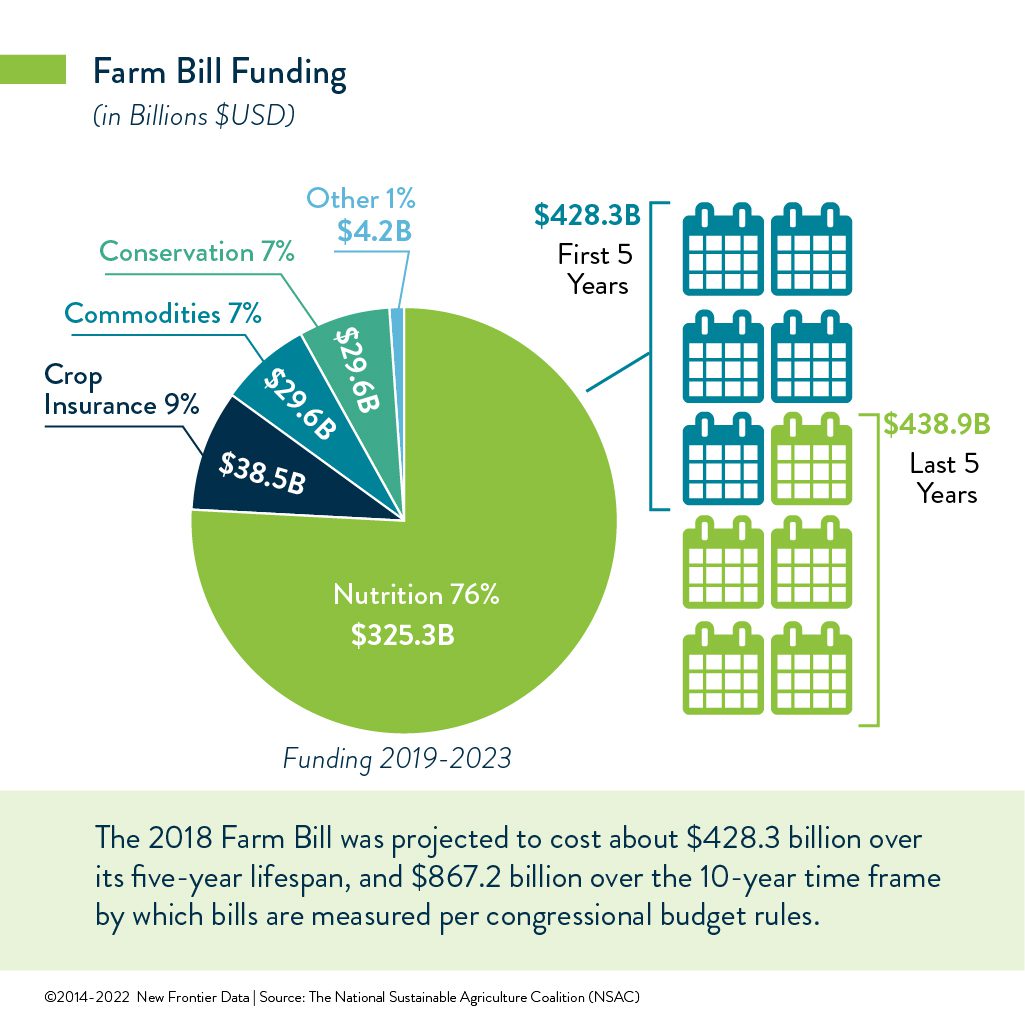
Unlike many authorization bills, the Farm Bill itself provides direct funding for many of its authorized programs, including those shepherding food assistance and natural resources. The currently active legislation, signed by President Trump in December 2018, authorized spending $428.3 billion over its five-year lifespan, and $867.2 billion over the 10-year period by which all bills are measured per congressional budget rules.

The National Association of State Departments of Agriculture (NASDA) plays a key role for shaping policy in the Farm Bill. Currently, NASDA’s hemp-focused recommendations concern amending the federal definition of hemp to increase the total THC concentration allowance from 0.3%  to 1.0%, and expanding eligibility for the Specialty Crop Block Grant Program funding to hemp crops with horticultural uses through the dual designation of hemp as a specialty crop based on its intended growth and purpose.

NASDA is also advocating for increased investments in climate initiatives, which could provide ancillary funding to the domestic hemp industry similar to the Climate-Smart Commodities grant opportunity. It would include research and incentive programs for voluntary on-farm practices capable of reducing greenhouse gas emissions and increasing carbon sequestration.

Another initiative gaining attention at the expo was the Grain and Fiber Industrial Hemp- Exemption Framework. Its purpose is to remove the burden of THC testing for hemp farmers growing it for fiber or grain. Already, legislation is being drafted for inclusion to the upcoming Farm Bill. The next step is securing bipartisan support.

Besides regulatory policy, there are also creative ways to spur more end-uses for hemp as a food ingredient through the Farm Bill. The biggest funding allocation is nutrition assistance in the form of the Supplemental Nutrition Assistance Program (SNAP). It is conceivable that given hemp’s robust nutritional profile, it could find a foothold in the SNAP program (as well as in school lunches, since many kids are eligible for free meals if their household participates in SNAP).

Markets Matter

Ultimately, without markets, capital can only float the industry for so long. Long-term growth will be wholly dependent on wider adoption of hemp as a plant-based food ingredient and renewable material. U.S. retail sales of plant-based foods grew 6.2% in 2021, bringing the total market value to an all-time high of $7.4 billion.

On paper, hemp should command a decent chunk of the booming market, but at present it represents a minuscule fraction. While it is encouraging that PepsiCo’s latest drink from Rockstar Energy is infused with hemp seed oil, without a flurry of supply-chain contracts from Big Food for domestic hemp grain ingredients, the U.S. hemp market will remain a limited niche. For lenders and investors, hemp is very much still a high-risk sector.

Capital will flow in parallel with the opening of markets. Otherwise, the industry risks another black eye with the investment community, which must be keenly avoided.

The post Dispatch from the NoCo Hemp Expo: The Capital Conundrum appeared first on New Frontier Data.


from New Frontier Data https://newfrontierdata.com/cannabis-insights/dispatch-from-the-noco-hemp-expo-the-capital-conundrum/

source https://ozlemhermsen.tumblr.com/post/680299792423862272

Tuesday, 29 March 2022

Geography Aside, Israel Is a Player in Europe’s Cannabis Markets

By Oliver Bennett, Special Contributor to New Frontier Data

While the cannabis industry’s eyes may be firmly on Europe, there is another country having been long positioned in the avant-garde of cannabis, and pushing the policy agenda once again. While Israel is not itself in Europe, it is adjacent to the continent, with significant linkage to that territory as well as to the U.S. and the Middle East and North Africa, including the Gulf of Guinea and sub-Saharan regions of Africa.

Israel is already a cannabis-friendly country. Per capita, it is among the world leaders in medical cannabis consumption, with more than 100,000 Israelis reportedly having medical cannabis permits. Cannabis possession has been decriminalized since 2019 for those ages 18 and over, and possession of homegrown cannabis is no longer a criminal offense.

Since then, Israel has not taken cannabis legislation much further, and efforts to enact full recreational legalization failed in 2020. This year, however, there seems to be some movement afoot. Israel’s Justice Minister Gideon Sa’ar has introduced a revised decriminalization plan aiming to change the status of cannabis offenses from criminal to civil, while expunging criminal records. With the support of President Isaac Herzog, Sa’ar called on Israelis convicted for possessing or using cannabis to submit requests to have their records erased, allowing them to retrospectively be considered innocent, while enabling those with pending proceedings to contact the police and ask that their charges be dropped. Their announcement noted that a 2019 order was set to expire – a statute of limitations that opens the way for legal amendments to reposition possession and use of cannabis as administrative offenses. In another move, it was announced in February that Israel would no longer include CBD in its Dangerous Drug Ordinance, allowing it more latitude in both use and importation.

Israel’s arguments for cannabis liberalization – as well as legalization – have friends in high places. Earlier this year, former prime minister Ehud Olmert, who has interests in the medical cannabis industry (most notably in the shape of start-up Univo), said that as part of a group of cannabis investors he hopes to get Israel to legalize cannabis. “Everything will change dramatically overnight if there will be legalization,” he said, leading to speculation that it could happen yet this year.

Those developments come as part of a long history of cannabis leadership in Israel. As available to review via New Frontier Data’s cutting-edge Equio platform, medical cannabis has been legal in Israel since the late 1990s; since the allocation of the first domestic licenses in 2006, the country has developed into a world-renowned cannabis R&D hub. Now the country has the most developed medical cannabis scheme outside of North America. Over 0.6% of the Israeli population is currently registered as users; in contrast, Germany – Europe’s leader for cannabis-based treatments – has a penetration rate of under 0.15%.

Israel has a strong biotech sector in general, which has prompted it to take cannabis seriously. Nationwide, 31 companies have been permitted to grow medical cannabis for 88,000 authorized patients, with five more producers authorized to process and manufacture medical cannabis products, according to the Israeli Medical Cannabis Agency. Dry flower dominates Israel’s medical cannabis program, and is likely to remain the medical model for the foreseeable future.

Indeed, Israel has a reasonable claim on being the historic global leader in cannabis research. THC’s discovery in the early 1960s by Israeli Professor Raphael Mechoulam is often cited as the key milestone for global cannabis research. That was followed in 1992 by the similarly significant discovery of the endocannabinoids system, courtesy of, among others, the eminent Professor Lumir Hanus.

Since those findings, Israel has sought to remain at the forefront of cannabis research while gaining headlines in the process. In 2020 Israeli scientists launched clinical trials to learn whether cannabis might be efficacious in stopping the spread of the COVID-19 coronavirus, while more recent trials between Soroka University Medical Center and the Israeli medical cannabis company Cannbit-Tikun Olam showed promising results for the treatment of post-traumatic stress disorder (PTSD).

Comparable to European efforts, Israel is also putting a domestic emphasis on business and job creation. In the Negev Desert, the town of Yeruham is growing a reputation as Israel’s powerhouse for medical cannabis technology, with lots of start-ups working on medical cannabis production. Efforts are being led by the incubator firm CanNegev, which is aiming to foster a creative cluster of cannabis companies.

Israel is involved in imports and exports to Europe with a thriving exchange of ideas and products. For instance, the large Israeli pharmaceutical chain Super-Pharm is set to import Portuguese producer Agrivabe’s Miracle Alien Cookies cannabis strain to sell as Cannavix Miracle. That brings Super-Pharm’s range of medical cannabis to about 200 different strains, and will bolster Israel’s educational retail approach with workshops and pharmacist training.

There are other recent cannabis firsts in Israel to illustrate the country’s general thinking. Tikun Olam is said to be the first American-style, stand-alone cannabis dispensary in Israel, while a medical cannabis café called Smokey Monkey (based in Tira), is the first such café where people can buy and use medical cannabis to treat themselves for more common conditions, including pain. Notably, the cafe is close to the Green Line demarcation border between Israel, Jordan, Egypt, and Syria.

Israel is pushing to expand R&D for specific conditions. Cannabotech recently released a study revealing the effectiveness of CannaboBreast medications for breast cancer – a potential treatment to be combined with more orthodox chemotherapy against the biological and hormonal processes of the disease. The Israeli company Gynica is working on cannabis-based treatments for women dealing with painful menstruation or intercourse, while last year medical cannabis giant Panaxia began exporting its medical cannabis vapes to Germany – the first country to gain approval to legally market a cannabis product in Europe. As European markets develop, Israel is certainly to remain a significant peripheral player.

The post Geography Aside, Israel Is a Player in Europe’s Cannabis Markets appeared first on New Frontier Data.


from New Frontier Data https://newfrontierdata.com/cannabis-insights/geography-aside-israel-is-a-player-in-europes-cannabis-markets/

source https://ozlemhermsen.tumblr.com/post/680103575478779904

Coexisting Cannabis Markets: The Interplay of Medical Versus Adult Sales

medical cannabis saturation

By John Kagia, Chief Knowledge Officer, New Frontier Data

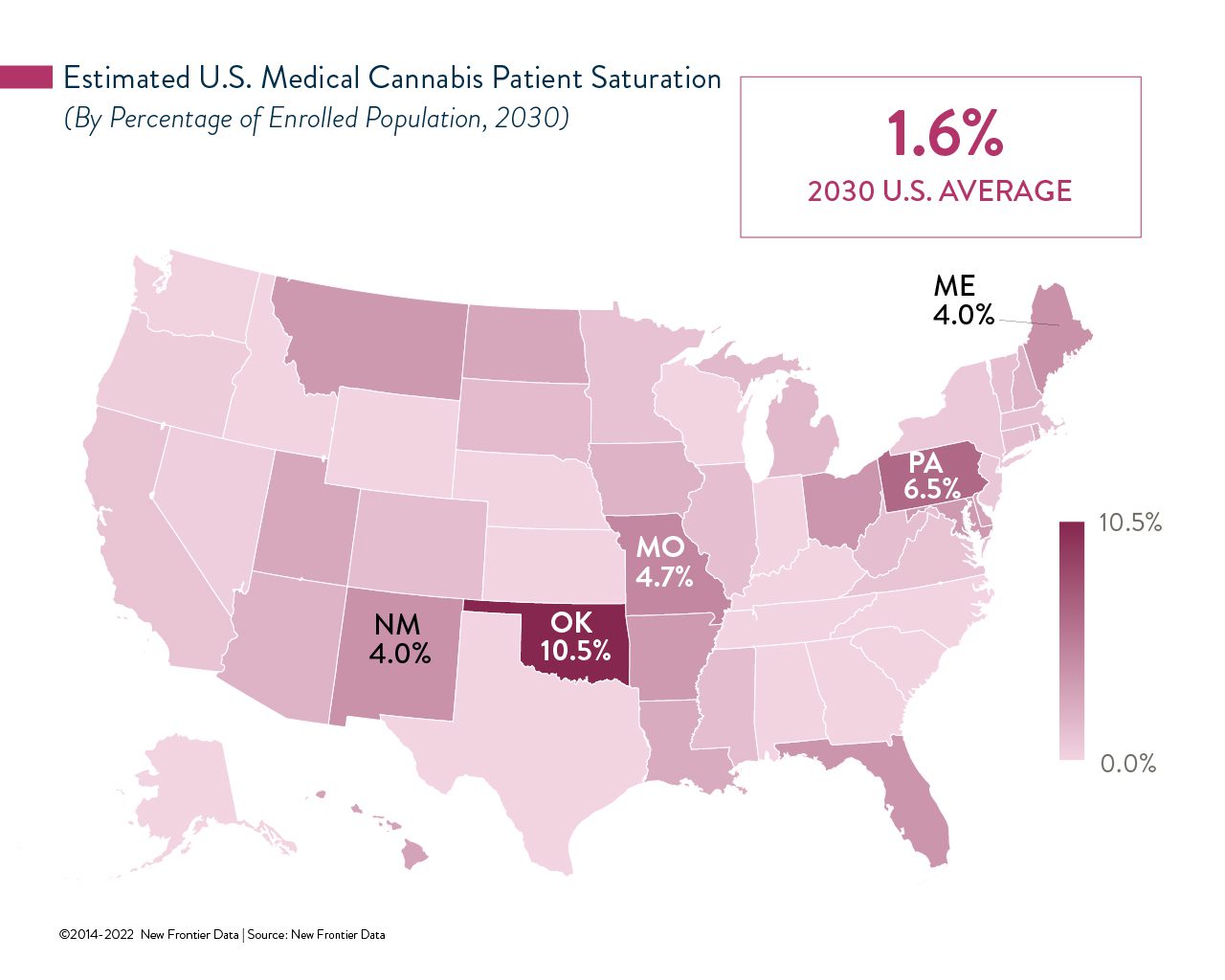
In the new 2022 U.S. Cannabis Report: Industry Projections & Trends, New Frontier Data analyzes growth and trends shaping the U.S. medical cannabis industry. With 38 state markets (plus Washington, D.C.) operating legal medical cannabis markets, the total number of registered medical cannabis patients nationwide surpassed 4.4 million in 2021. In those states where cannabis has been legalized for medical use (with no assumptions of any new medical markets by 2030), New Frontier Data projects that there will be a combined 5.7 million registered medical cannabis patients by 2030, representing nearly 2% of the nation’s entire population.

Patient Satisfaction

The central reason for states’ approving the inclusion of cannabis to their medical programs is broadly affirmative feedback from patients that it works. According to New Frontier Data’s latest cannabis consumer research, 93% of patients using cannabis medicinally report that their conditions have improved, with 57% reporting that they have improved significantly.

Chronic pain continues to be the leading reason patients participate in the medical market, with nearly half (47%) of consumers surveyed citing pain as a reason for medical use. However, those medical consumers also cited a wide range of other physical and mental conditions for their cannabis use, including anxiety/panic attacks (22%), depression and sleep disorders (9% respectively), PTSD (7%) or gastrointestinal disorders (3%).

While significant questions remain about precisely why cannabis seems effective for such a wide range of conditions, the fact that patients suffering so broadly also so consistently report improvement is increasing overall confidence within the healthcare community to recommend cannabis and further expand the base of patients willing to try medical cannabis.

Expanding Qualifying Conditions

The regulatory structure of each state market holds major implications for both how fast and how large that medical market will grow, with the list of qualifying conditions being the primary determinant of how quickly patients will join a program. While most states prescribe a specific list of qualifying conditions, some (including California, Oklahoma, and Washington D.C.) permit physicians and other qualified health-care practitioners to recommend cannabis for any condition which a provider believes might be improved through the use of cannabis.

Markets have also been seeing a general easing of medical cannabis regulations. Though states often begin with tight regulations governing their medical markets, those regulations over time are often eased, subsequently encouraging more patients to join a given program. For more comprehensive and specific data and analysis, visit New Frontier Data’s online business intelligence portal Equio® to gain additional insights available within the U.S. Market Dashboard.

That phenomenon typically happens in two ways, with the first being to add new qualifying conditions. Illinois, for example, in 2019 added 11 new conditions (including chronic pain) six years after the state first approved medical cannabis. The second method is by granting physicians’ discretion, allowing the assessment of qualifications to any patient’s health-care provider. New York is the most recent example: In January, the state not only granted physicians discretion to recommend cannabis as they see fit, but also added dentists, podiatrists, and midwives to the rolls of health-care providers authorized to recommend medical cannabis.

Patient Saturation Sets the Pace

Given such regulatory variability, the percentage of adults participating in state medical programs will vary widely in coming years. By 2030, New Frontier Data forecasts Oklahoma, barring major regulatory changes, to have the country’s highest patient saturation, including more than 10% of state’s residents registered in the program. Other leading medical markets are expected to include Pennsylvania, Missouri, Maine, and New Mexico – each of which is expected to see a patient saturation rate of at least 4%.

Regulatory interplay between a state’s medical and adult-use markets also plays a significant role. Colorado and Washington – two of the first states to legalize adult-use markets – illustrate well how different regulatory approaches can impact one’s medical market.

Eight years since adult-use sales began in Colorado, the state’s number of registered patients has fallen 22%, from a little over 111,000 to just over 86,000. That represents strongly sustained participation in the state’s medical market, where medical cannabis is not subject to Colorado’s 15% cannabis excise tax, and the retail prices for cannabis products are, on average, significantly lower than in its adult-use market. Furthermore, with a physician’s approval, medical patients may purchase beyond the state’s adult-use purchase limits, enabling price-conscious and high-consuming patients to enjoy significant savings.

Conversely, Washington State sought to harmonize its medical and adult-use markets by eliminating its medical market accommodations. By cutting benefits from the medical program (particularly a break from the state’s 37% excise tax rate, one of the highest in the U.S.), Washington eliminated the utility in participating in the state’s medical program, instead driving patients into the adult-use market or, worse, the more affordable illicit space.

With medical consumer feedback and clinical research both strengthening the case for medical cannabis, medical markets are expected to continue enjoying both robust growth and fewer limitations on who is allowed to participate in those programs. Furthermore, as the U.S. lumbers toward national reform serving to stimulate domestic investment in clinical research, New Frontier Data expects progressively sophisticated research to refine our collective understanding of why cannabis works, and for which among increasing catalogs of conditions and treatments it will be proven most effective and popular.

The post Coexisting Cannabis Markets: The Interplay of Medical Versus Adult Sales appeared first on New Frontier Data.


from New Frontier Data https://newfrontierdata.com/cannabis-insights/coexisting-cannabis-markets-the-interplay-of-medical-versus-adult-sales/

source https://ozlemhermsen.tumblr.com/post/680103574849699840

Monday, 28 March 2022

What Are the Possible Benefits of Taking CBD for Insomnia?

Also known as sleeplessness, insomnia involves difficulty falling asleep or staying asleep for a desired length of time. This sleep disorder is usually accompanied with daytime tiredness, lack of energy, irritability and a depressed mood. This lack of sleep can lead to serious problems such as lack of alertness when operating vehicles or heavy equipment. An inability to focus or learn may also result from insomnia which can last for a few days or weeks, or longer than a month. Sleeplessness sometimes occurs on its own or due to other issues. An estimated 10 to 30% of adults experience this disorder during their lifetime. It’s believed that only 6% of the population has long-term insomnia not connected to other issues. Lifestyle changes and medication offers mixed results. Given the many reports of how cannabis helps users relax, it’s worth exploring the effectiveness of taking CBD for insomnia.

All About Insomnia

Risk factors for this sleep disorder include late or overnight working periods and sleep apnea. Other conditions that may lead to difficulty with sleeping include the following:

•         Psychological stress

•         Recurrent pain

•         Heart failure

•         Heartburn

•         Hyperthyroidism

•         Restless leg syndrome

•         Menopause

•         Certain medications

•         Alcohol, caffeine, nicotine and other drugs

A patient may be screened for insomnia by asking about difficulty sleeping or trouble falling or staying asleep. Diagnosis may involve completion of a sleep study. Treatments will vary, but changes in lifestyle and sleep hygiene are often recommended. Sleep medication may also be prescribed for temporary use.

CBD for Insomnia

CBD is a cannabis compound that is widely believed to offer analgesic and anti-inflammatory benefits. While some patients report that CBD helps with sleep, these reports are largely anecdotal. There is research that shows a connection between better sleep and a CBD regimen, but this was a pediatric case study involving post traumatic stress disorder. Some people have experienced success taking CBD for mental health disorders, anxiety and other conditions related to insomnia. Some have had better sleep but it is not clear whether this is purely from CBD or other mechanisms. Before taking full or broad-spectrum CBD oil for sleep disorders, consult your physician.

The post What Are the Possible Benefits of Taking CBD for Insomnia? appeared first on Smart CBD Hub.


from Smart CBD Hub https://smartcbdhub.com/taking-cbd-for-insomnia/
via IFTTT

source https://ozlemhermsen.tumblr.com/post/680007573839151104

Wednesday, 23 March 2022

Can CBD Help Treat Tremors Caused by Parkinson’s Disease?

What Is Parkinson’s Tremor?

A tremor on one side of the body — often in one hand — is typically one of the first signs of Parkinson’s disease, and is one of the most identifiable features of the disease. While the disease will ultimately spread to both sides of the body, it is frequently worse on the side where it begins.

Parkinson’s tremor tends to be most noticeable and severe when the shaking body part is at rest. The tremor often relaxes during sleep, or when the body part with the tremor is in use.

What Are Effective Treatments For Parkinson’s Disease?

Some medications show success in treating patients with Parkinson’s, including in helping with tremors, by helping boost (or substitute for) dopamine levels in the brain. Medications include various forms of carbidopa-levodopa, MAO B inhibitors, catechol O-methyltransferase inhibitors, amantadine, and dopamine agonists.

For particularly severe or progressed cases, deep brain stimulation via electrodes can sometimes be an effective treatment.

Can CBD Help Treat Parkinson’s Tremor?

In general, CBD has not been effectively studied as a treatment for Parkinson’s disease. However, some evidence has suggested CBD may help sleep patterns, psychosis, and perceived quality of life in individuals suffering from Parkinson’s. Additionally, some evidence has also suggested that CBD improves tremors in individuals with Parkinson’s. However, all studies have been small, with generally limited follow-up, and there is no apparent evidence that CBD slows the progression of the disease.

Ultimately, more research is necessary to understand whether CBD can effectively help individuals suffering from Parkinson’s, including specifically with tremors. Patients with Parkinson’s should consult with a doctor before attempting to determine the dosage of CBD for Parkinson’s tremor, or using CBD generally to treat Parkinson’s.

The post Can CBD Help Treat Tremors Caused by Parkinson’s Disease? appeared first on Smart CBD Hub.


from Smart CBD Hub https://smartcbdhub.com/cbd-parkinsons-tremors/
via IFTTT

source https://ozlemhermsen.tumblr.com/post/679547006054776832

How To Calculate the Right Dose of CBD Oil for Dogs

Can CBD Oil Shrink Your Dog’s Tumor ? More research needs to be done on how CBD affects tumors in a dog, but recent studies show the potent...