Monday, 31 January 2022

Acute Pain: What Is It, and How Can CBD Oil Help?

What Is Acute Pain? 

Acute pain is sharp, sudden, and usually fleeting. Whereas chronic pain can last for months and often lacks an apparent cause, the opposite is true for acute pain, which tends to occur as the direct result of an underlying issue. Once that issue has been identified and treated, the pain typically disappears just as suddenly as it began. 

What Are Examples of Acute Pain?

There are a number of illnesses and accidents that can result in acute pain. A few of the most common include:

•         Cuts and bruises

•         Burns

•         Tooth pain or excision

•         Broken or sprained bones

•         Injury

•         Surgery

Since these issues are often visible to the naked eye, most patients find it easy to determine what causes acute pain. This enables patients to access fast, effective treatments even from the comfort of their own homes. 

How Can CBD Oil Help? 

Using CBD for inflammation may be an effective method to relieve acute pain, as inflammation often causes or accompanies that pain. Additionally, CBD oil helps your body’s pain receptors operate properly. The role of the endocannabinoid system is to identify and respond to perceived bodily dysfunction, illness, or injury. CBD interacts with the system’s receptors by aiding in the release of chemicals that reduce inflammation and pain. 

Studies suggest that CBD oil is a viable option for the at-home treatment of acute pain. Used in conjunction with medical advice and treatments, CBD oil continues to pave the road toward better researched and thus more effective natural remedies.

The post Acute Pain: What Is It, and How Can CBD Oil Help? appeared first on Smart CBD Hub.


from Smart CBD Hub https://smartcbdhub.com/acute-pain-what-is-it-and-how-can-cbd-oil-help/
via IFTTT

source https://ozlemhermsen.tumblr.com/post/674915264935165952

Thursday, 27 January 2022

Activity in European Markets Point to a Green 2022 for Cannabis

M&A worldwide

By Oliver Bennett, Special Contributor to New Frontier Data

With such a tailwind in the European cannabis sector, it is no wonder that investors are sizing up the continent. After a winter of optimism, fuelled by Germany’s plan to legalize adult-use cannabis, and Malta becoming the first European nation to legalize the plant, the prognosis for 2022 is strong and investor interest is high.

As New Frontier Data’s recent Cultivating Capital report details, the potential of investment in Europe in 2022 along with capital activity spread out from the established North American markets finds a “growing list of countries… [with] mid- and long-term growth opportunities for companies establishing themselves in legal regulated markets.”

The analysis notes that capital has begun to flow into the cannabis space at unprecedented levels – indeed, the first half of 2021 saw an unprecedented $7.9 billion in new cannabis capital into the industry, including all segments and its supply chain, from production facilities to intellectual property.

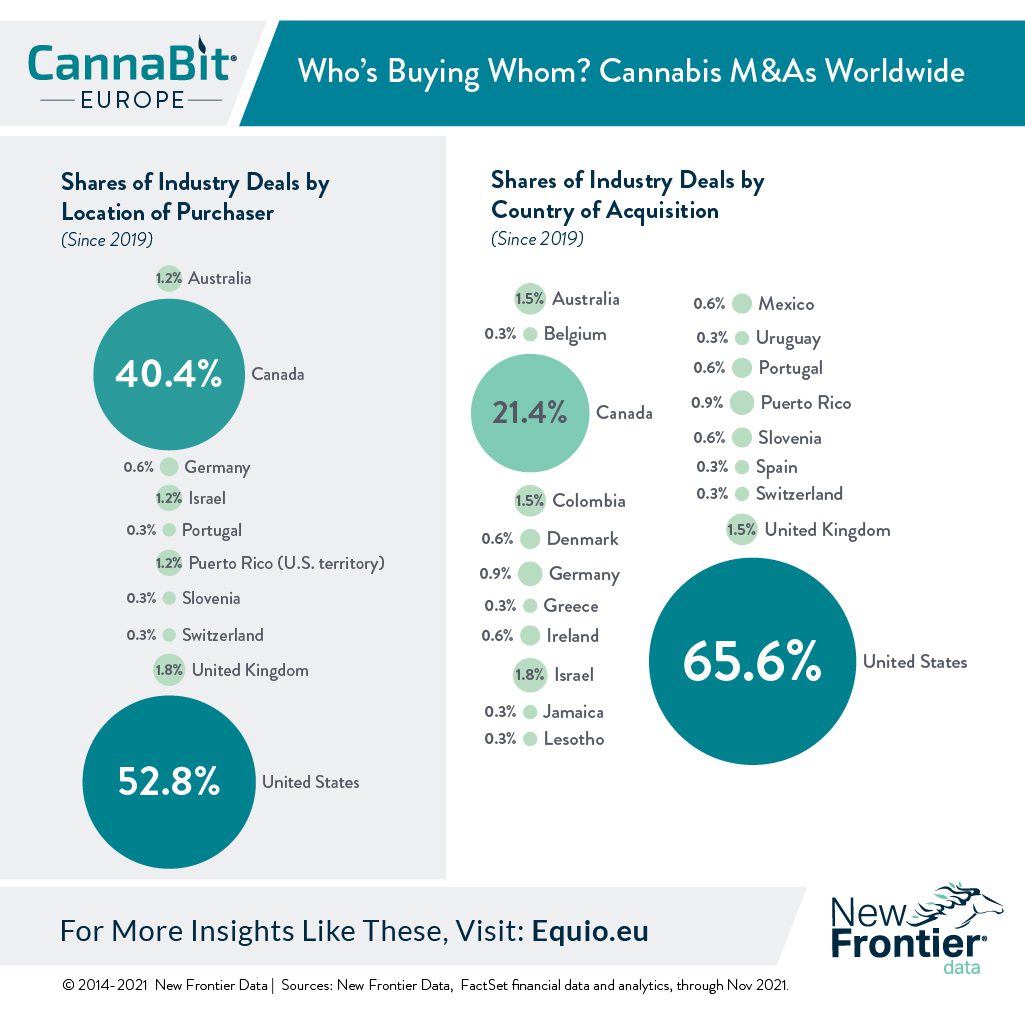
New Frontier Data reports how M&A activity has inexorably spread from North America to Europe – most notably Germany – and notes that the large Canadian companies which secured licences and sought partnerships in Europe “now stand to benefit greatly from legalization and the new access to large existing consumer bases in those markets.” The early adopters will likely have the richest pickings with largely affluent and health-conscious European consumers, and stand at the forefront, initiating 6x more transactions outside North America than their U.S. counterparts, driven in part by the push factor of the saturated domestic market.

From Cultivating Capital: “The large and well-capitalized companies (specifically Canadian LPs) that sowed early seeds in Germany and other progressive countries by securing licenses and signing local partnership agreements now stand to benefit greatly from legalization and the new access to large existing consumer bases in those markets.” Indeed, they could anticipate “strong medium-term returns due to the high spending nature of European consumers relative to consumers in the legal markets of Latin America or Africa.”

For example, Canadian cannabis giant Tilray, aware of a disappointing and oversupplied cannabis market in its home country, is one such company to seize the day in Europe as legislation on the continent inexorably changes. In the last quarter of 2021, Tilray grew international sales after merging with Aphria, and has now forged ahead with a new name, Tilray Brands. It has been suggested that Tilray expects to see $1 billion in revenue from Europe, with Germany at the forefront.

As Tilray’s CFO Carl Merton has said, the company has been laying the groundwork to leverage changing laws in Europe. With growing space in Portugal and Germany – Tilray remains the only company supplying Germany medical system with domestically grown cannabis – its size alone makes it one of the best-placed companies to gain market share.

There are, of course, others. Curaleaf Holdings has announced that it has set up a new division to target the European cannabis market. The high-rolling founder and chair of Curaleaf, Boris Jordan, has long been interested in the European cannabis space, and now sits on the board of the German cannabis company Bloomwell Group, which in October secured $10M investment – the largest public seed funding received in the European cannabis market. The lead investor was U.S. capital provider Measure 8 Venture Partners, specialists in cannabis industry investments.

Curaleaf’s subsidiary EMMAC Life Sciences Group has now been renamed to operate as Curaleaf International and explore those European opportunities. In a shareholders’ statement, its CEO Antonio Costanzo, said that the company is expecting to see Europe follow a similar trajectory to the cannabis industry’s growth in the U.S. and Canada: “The landscape in Europe is changing and we can see similar clear patterns to the progress in North America for adult-use cannabis.”

The company has expressed plans to have a different complexion from the U.S., weighted more towards the medical rather than recreational markets – along with the wellness market, which lies between the two.

As Bloomwell’s CEO Niklas Kouparanis has shared, “Our portfolio companies will radically focus on a consumer-centric approach along the entire value chain of medical cannabis, with the exception of cultivation. The era of natural-based medicine begins now and Bloomwell is taking the lead.” Within the past year Bloomwell has grown to 160 employees.

Thus, the likelihood is that European investment activity will first be concentrated toward medical cannabis, without taking its eye off the ball per the recreational segment. The Los Angeles-based venture capital firm Casa Verde, famously run by rapper Snoop Dogg, has invested $3.5m in Berlin-based cannabis firm Sanity Group – which is itself said to have raised  $76.5 million, the highest level of funding attained by any European cannabis start-up – and it is the company’s first investment in Germany.

Finn Hänsel, founder and MD of Sanity Group, said the commitment shows “evidence of growing momentum in the European market as more countries move to initiate pilot projects to legalize and improve access to medical cannabis programs.” 

While much of Europe’s medical cannabis production will be produced offshore, Lisbon-based medical cannabis company AceCann has announced a $15M round of seed financing led by Casa Verde alongside Portuguese venture capital firm, Lince Capital, to develop an integrated medical-cannabis production plant. As work began in September, AceCann CEO Pedro Gomes said that the company aimed “to create the gold standard in medical cannabis… with IP ownership at every step in the value chain.” The company anticipates legalisation sweeping across Europe.

But following the green rushes in both the U.S. and Canada, should investors be cautious that Europe will become overheated? Possibly, says Richard Tonthat of Greencare Capital, who has urged caution when investing in European cannabis and CBD, saying “… you should never take things at face value. Stress-testing assumptions also needs to be done…. Revenue growth and cash generation are important. That’s something which the industry is lacking.”

As Ken Shea, Bloomberg LP’s lead cannabis analyst, shared in Cultivating Capital, he harbours a similar sense that a feeding frenzy may ensue: “It’s all about top-line growth at this point,” he explained. “Everybody is scrambling for market share.” Pending a shakeout, investors would be advised not to expect huge gains in the short term.

Neither should all speculative eggs be placed in Germany’s basket. As New Frontier Data has detailed, several other European countries are viable spaces for investment, including Denmark, Germany, Greece, Ireland, Slovenia, Spain, Switzerland, and the U.K.

Indeed, perhaps the most optimistic aspect of Europe’s cannabis space is its capacity to encompass a wider ecosystem. As Greencare Capital notes, there are 12 countries with established medical cannabis legislation, with 16 more engaged in earlier stages of adoption in Europe – leaving 15 countries on the continent where the drug is strictly illegal in any form.

Thus, well beyond the plans of Germany and Malta, Europe offers plenty of other dominos to topple.

The post Activity in European Markets Point to a Green 2022 for Cannabis appeared first on New Frontier Data.


from New Frontier Data https://newfrontierdata.com/cannabis-insights/activity-in-european-markets-point-to-a-green-2022-for-cannabis/

source https://ozlemhermsen.tumblr.com/post/674543107296165888

Tuesday, 25 January 2022

Can CBD Help Treat Epilepsy?

What Causes Epilepsy?

In many cases, what causes seizures remains unclear, and many people develop epilepsy for no clear reason. However, there are factors that may predispose individuals to epilepsy, including the following:

•         Genetic and familial factors may play a role in causing epilepsy

•         Infections — including meningitis, HIV, and others — can cause epilepsy

•         Prenatal injuries may play a causal role

•         Head trauma can lead to the development of seizures

•         Brain conditions — including strokes, vascular conditions, or dementia — can be a significant cause of epilepsy

How Is Epilepsy Treated?

Treatment of epilepsy first begins with a diagnosis, resulting from a neurological exam, as well as potential blood tests or brain tests (including an EEG, MRI, or other tests). Effective testing can help pinpoint the source of seizures.

Many medications can be quite effective in treating epilepsy. Because there are many types of anti-seizure medications, and dosage can vary widely, it may take time to determine the ideal level of medication for a given individual.

Other techniques are also used to treat epilepsy, including deep brain stimulation, vagus nerve stimulation, and the employment of a ketogenic diet. In some cases, brain surgery can be a useful treatment for seizures.

Can CBD Help Treat Epilepsy?

There is some evidence that the use of CBD coupled with anti-epileptic medications can be helpful in treating epilepsy. There is also some evidence that CBD can reduce seizure frequency in individuals with epilepsy. However, there may be concerns about interactions between CBD and particular anti-epileptic medications, as well as concerns about a link between THC and seizures. 

Ultimately, more research is needed to better understand the role CBD can play in treating seizure disorder. CBD should not be employed as a treatment for seizure disorder unless done so in consultation with a medical professional.

The post Can CBD Help Treat Epilepsy? appeared first on Smart CBD Hub.


from Smart CBD Hub https://smartcbdhub.com/can-cbd-help-treat-epilepsy/
via IFTTT

source https://ozlemhermsen.tumblr.com/post/674386733180272640

Monday, 24 January 2022

Cannabis vs. COVID Study Illustrates U.S. Need for Key Research

cannabis legalization research

By J.J. McCoy, Senior Managing Editor, New Frontier Data

As culture wars are raging in the United States about COVID-19, masks, vaccinations, etc., the politicization of science and substances like cannabis becomes sensational, making it more difficult to separate fact from fiction.

This month alone, there have been widespread news reports that erroneously interpreted findings published January 10 by Oregon State University researchers in the Journal of Natural Products.

With headlines like “Cannabis Compounds Stopped COVID Virus from Infecting Human Cells in Lab Study”, and “Compounds in Cannabis Show Promise as a Treatment for Coronavirus Infections”, the prospects of cannabis offering protection from COVID-19 quickly went viral, aided by abbreviated, Twitter-shortened headlines that largely missed vital nuances of the science.

Mainstream coverage of the findings provoked overreach about the findings, and some consumers flocked to cannabis dispensaries and CBD outlets to buy products in hopes of defending people from COVID-19 infection. While experts urged caution about the findings, the public’s enthusiastic if ill-informed responses prompted jokes from late-night hosts like ABC’s Jimmy Kimmel, who quipped that “all this time we’ve been listening to the CDC, we should’ve been eating CBD.”

Important details commonly missed included the fact that Oregon State University’s in vitro study has not been subjected to human trials, and is not slated to be, since medical cannabis research remains federally limited. Other key takeaways ignored were that cannabigerolic acid (CBGA) and cannabidiolic acid (CBDA) appear in very small quantities in retail cannabis, and are converted to other compounds after decarboxylation and/or smoking. Ergo, smoking would not provide an efficient means for gaining any benefits.

The takeaway? The research does not, in any practical sense, mean that cannabis provides any preventative benefit against COVID-19 in the forms in which it is most commonly consumed.

That noted, the Oregon State study essentially confirms previous evidence that CBDA has medicinal properties. As Inesa Ponomariovaite, CEO of Nesas Hemp, told High Times, “the big takeaway from this study however, is that the compounds that help prevent the virus that causes COVID-19 from entering human cells are [CBGA or CBDA, but] not the generic CBD compounds that are found in so many hemp products today,” she said.

As Dr. Reggie Gaudino, VP Research & Development for Front Range Biosciences (and New Frontier Data’s Chief Science Adviser), reminded, previous research had suggested some potential for CBD to block the coronavirus, but much more study is needed.

“It still has to be investigated like a medication,” he said, “because it will have cross-interactions that potentially cause contraindications: Low doses don’t seem to do much, [while] high doses seem to slow down some drugs’ conversion. That could be a problem. Bottom line: If we want it to be considered a medicine it should be treated like one, and the proper studies done.”

As noted by Amanda Reiman, New Frontier Data’s VP of Public Policy Research, the fallout from the study and responses also illustrates how far the legal cannabis industry has to go in catching up after lost opportunities during U.S. prohibition of the plant. New Frontier Data addressed part of the issue in its report, Up in Smoke: Analysis of the Cannabis Administration & Opportunity Act, noting examples of how the U.S. federal government has served as an impediment to research, and citing the industry’s needs for fair and equitable oversight.

“Research has been stifled for decades because the government’s refusal to take cannabis seriously as a medicine,” Reiman said. “If we had started research on cannabis in the 1930s, think how far we would be with developing cannabinoid-based medications. With so much focus given to intoxication from THC and the psychotropic properties in cannabis, we keep missing the benefits from other cannabinoids. The inability through federal prohibition to do research on cannabis has stifled potentially groundbreaking discoveries, like the study’s hypothesized application against COVID-19. What else could we have used cannabis for? Will findings like these finally impact the government’s willingness to look at cannabis realistically?”

Last June, the Supreme Court refused to hear arguments in a May 2020 lawsuit filed by a group of scientists and veterans in an effort claiming that the federal classification of marijuana as a Schedule 1 drug under the Controlled Substances Act is unconstitutional based on the plant’s possible medical uses.

The move disappointed advocates who had hoped that a positive decision would compel the DEA to reschedule the plant. Now the likelier eventuality is that the U.S. Congress will either reschedule or deschedule marijuana.

Adding to the impediments for advancing cutting-edge science is that researchers have been limited to using cannabis products supplied to the National Institute on Drug Abuse by the University of Mississippi, which researchers have long described as substandard, bearing little resemblance to cannabis currently available in legal markets.

Any company seeking to study and test cannabis products for human use is first required to gain FDA approval, after permission from the Drug Enforcement Agency (DEA). Last year, the DEA finally eased some longtime restrictions when it awarded two private firms with contracts to produce cannabis for federally funded research, a development which National Institute on Drug Abuse (NIDA) Director Nora Volkow reportedly welcomed as “valuable” for U.S. researchers to access in better understanding the risks and benefits of cannabis and products consumed across the country.

As Ripple cofounder and CEO Justin Singer shared in a recent essay, “marijuana’s Schedule-I status doesn’t make it impossible to conduct human trials — just ridiculously difficult and expensive… The FDA should be pushing for more research to keep consumers safe, and instead companies such as mine have to do it on their own at great expense even though there are plenty of university scientists who would gladly put grant funding to work on the project. The federal government hasn’t gotten out of the way; it’s just become a more dissembling roadblock.”

Other countries have been more active and progressive. Israeli organic chemist Raphael Mechoulam, a professor of medicinal chemistry at the Hebrew University of Jerusalem, is credited for publishing more than 450 research articles. The “father of cannabis research” is best known for his work studying delta-9 tetrahydrocannabinol (THC) the active psychotropic component in cannabis. A specific study conducted by Mechoulam, a founding member of the International Association for Cannabinoid Medicines, focused on pain and the use of cannabis.

Working with medical cannabis does not require any abandonment of objectivity or skepticism, and mounting evidence being collected worldwide is increasingly affirming the plant’s broad therapeutic potential.

Advocates and scientists argue that for too long, marijuana was preordained by the U.S. government as having “no currently accepted medical use and a high potential for abuse” despite mounting contrary evidence from research being done globally, and from the feedback collected from the millions of patients participating in U.S. state medical cannabis programs.

Absent research to guide the U.S. industry’s regulation, the market for cannabinoid infused products has proliferated — especially since hemp became federally legal — thereby opening a patchwork of markets nationwide for CBD and other non-THC cannabinoids.

Interested shoppers today can find CBD-infused oils, drinks, vitamins, mints, cheeseburgers, shampoos — even clothing – though discerning which products are best suited for each consumers’ intended application is often a challenge due the lack of research and regulatory control. A notable 2017 report in the medical journal JAMA shared the findings of researchers who  analyzed 84 CBD products from 31 companies, finding that 69% were mislabeled if not altogether fraudulent, as some products had too much CBD, some too much THC, and some had no CBD at all.

Ultimately, the U.S. government’s lack of recognition of cannabis as a medicine has had deleterious, decades-long impacts on research and discovery. However, with signs that the U.S. may be on the cusp of foundational policy reform, cannabis may soon be officially returned the American pharmacopeia.

As Gaudino summarized, “80-plus years of prohibition has hampered cannabis from being placed back into the medical arsenal where it originally came from — Pliny the Elder spoke about boiled roots of cannabis in 79 A.D. — and the more work we do, the more we find that there may in fact be ‘a cannabis variety for that’.”

The post Cannabis vs. COVID Study Illustrates U.S. Need for Key Research appeared first on New Frontier Data.


from New Frontier Data https://newfrontierdata.com/cannabis-insights/cannabis-vs-covid-study-illustrates-u-s-need-for-key-research/

source https://ozlemhermsen.tumblr.com/post/674331699993346048

Thursday, 20 January 2022

Canada’s Lessons for North America’s Hemp Grain Market

industrial hemp supply

By Eric Singular, Director, Hemp Business Journal

When considering the growth and maturation of the U.S. hemp grain market, it would be foolhardy to ignore lessons learned from Canada over the past 20 years. For the better part of two decades since legalizing industrial hemp production in 1998, America’s neighbor to the north has commanded the global market for hemp foods.

When the U.S. legalized hemp in 2018, early movers were overwhelmingly focused on the business of hemp extraction. The promise of CBD has been the driving force behind the cultivation, processing, and marketing of hemp-based products in the U.S., with the lion’s share of U.S. acreage committed to cannabinoid production.

Yet for many growers and industry operators, the promise proved short-lived when oversupply sent CBD biomass prices crashing in 2019. Prices have yet to recover, and the growth of the retail CBD market has underperformed estimates, in part due to a lack of a regulatory framework promulgated by the U.S. Food and Drug Administration (FDA). In Q3-2021, Charlotte’s Web reported revenues of $23 million, down year-over-year from Q3-2020’s revenue of $25 million. In addition, CV Sciences reported $5.1 million in sales for Q3-2021, down 8% from $5.6 million in Q3-2020.

Four years since the U.S. legalization of industrial hemp, interest is turning toward hemp fiber and grain, while sorely needed infrastructure is finally finding its footing. Canada has seen its fair share of ups and downs in the industrial hemp market over the last 20 years (particularly for grain), and U.S. operators would be wise to heed those lessons.

In its 22-year existence, the Canadian hemp industry has largely ignored hemp-derived cannabinoids. Rather, Canadian operators like Manitoba Harvest (which was founded the same year that hemp was legalized) have cultivated a robust supply chain from seed to shelf for food products made from hemp grain. For years, Manitoba Harvest has been at the forefront of the global hemp grain market, with New Frontier Data estimating that the company commanded 58% of retail sales for hemp food products in 2020.

Fluctuations in Canada’s annual hemp acreage are broadly shaped by Manitoba Harvest’s retail sales to keep production balanced with consumer demand. In 2019, Manitoba Harvest was acquired by Tilray for $317 million; at the time, their products were available in approximately 13,000 U.S. stores and 3,600 Canadian outlets.

New Frontier Data spoke with Manitoba Harvest’s Pedigree Seed Production Manager/Agronomist, Darrell McElroy, and its Director of Farm Operations, Clarence Shwaluk, to discuss both the history of Canada’s hemp grain market and the forces shaping the upcoming 2022 production season.

Both are veterans of the Canadian hemp industry. While their optimism has at times wavered since the legal market opened, they maintain optimism for exponential growth in the hemp grain market during the years and decades to come.

Balancing supply and demand

Among the tried-and-true givens in agriculture is that farmers are always chasing demand. One year, a shortage or undersupply of a certain crop will fetch a premium, while the next year will see prices for the same crop fall sharply as opportunistic farmers hope belatedly to jump on the bandwagon, if instead just overproduce, causing an oversupply.

McElroy and Shwaluk recount three specific gluts in Canadian hemp production that crashed the market and caused growers to sell grain for bird seed, at substantial losses.

The first was in 2000, after two explosive years of market growth. In the fall of 1999, the Drug Enforcement Administration directed the U.S. Customs Service to stop the importation of hemp seed products to the U.S. The first seizure was a 53,000-pound load of sterilized seed (from Kenex, Ltd., Canada’s largest producer of hemp food) intended for sale as birdseed. The second glut came after overproduction in 2006, as growers sold their stockpiles to the European birdseed market at a huge loss, e.g., about $0.20 per pound compared to the typically expected $0.50-$0.60 rate which conventional hemp grain historically fetched.

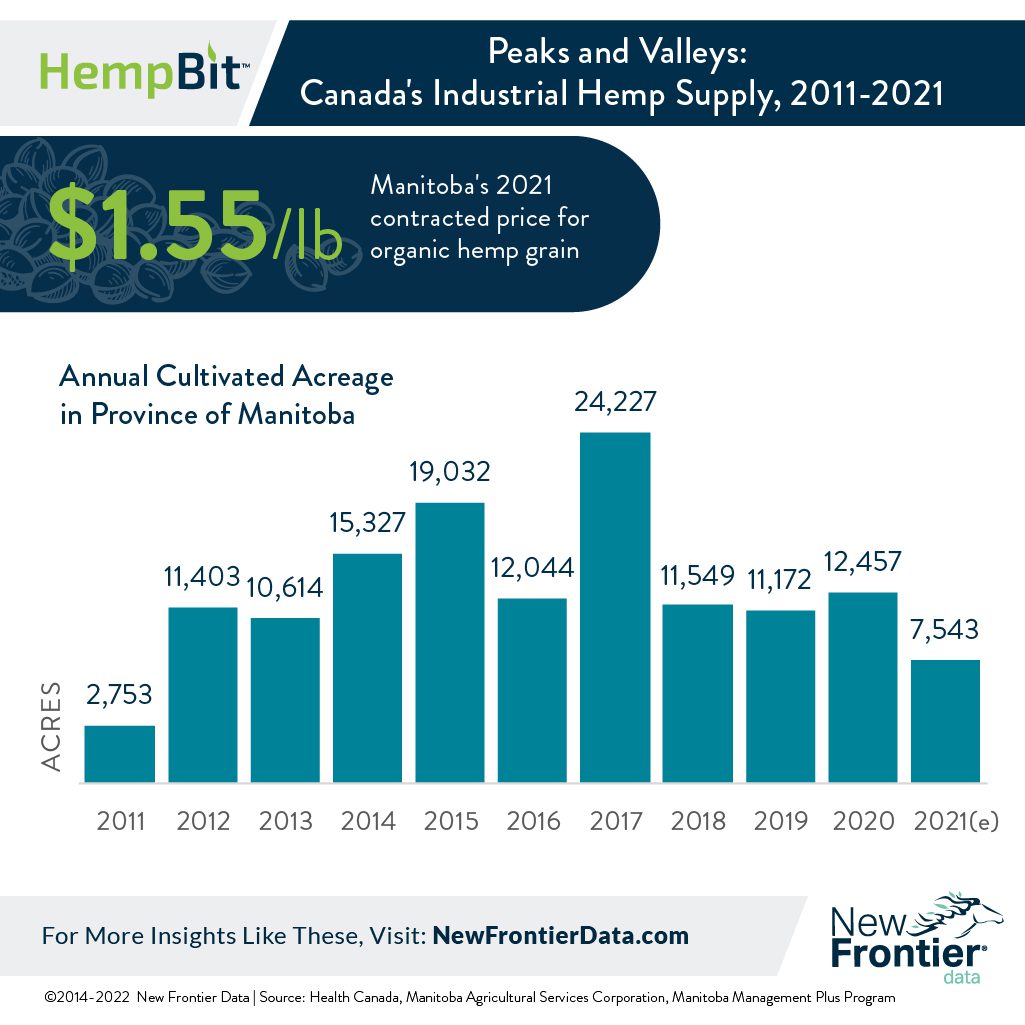
Most recent was the glut which followed South Korea’s purchasing close to 40% of Canada’s export crop in 2016. Fueled by that enthusiasm, Canadian growers in 2017 produced the most hemp acreage since its legalization, with growers in the Province of Manitoba planting 24,227 acres (up more than double from 12,044 the prior year), Canadian exports to South Korea subsequently fell 27%, as China undercut and displaced the Canadian supply with a lower price which crushed the market, taking the North American market years to exhaust the oversupply.

From 2018-2020, that oversupply kept prices low (going for an average of $0.50-$0.55/pound for conventional hemp grain), though the tide has at last seemingly turned, with prices for hemp grain on the rise. According to the province’s agency of Agriculture and Resource Development, the contracted price of conventional hemp grain in 2020 ranged from $0.75-$0.84 per pound. Generally, organic grain fetches a 30-40% premium above the conventional commodity.

Market growth has plateaued

Early on in Canada’s hemp industry, some believed that it would become a standard farm crop, alongside canola. While there have been periods reaching a consecutive compound annual growth rate (CAGR) between 25%-30% (most recently during 2014-2016), McElroy and Shwaluk note that the market has largely plateaued in the past five years. In 2021, Canadian farmers planted 22.5 million acres of canola, compared to approximately 60,000 acres of industrial hemp. They say that consumer education is still vital for increasing demand for hemp-based food products, but are quick to call out the challenge of food inflation. According to the latest Consumer Price Index data, food prices rose 6.1% between November 2020 and November 2021, greatly affecting choices for consumers at the grocery store. McElroy and Shwaluk conclude that typical purchasers of Manitoba Harvest’s hemp hearts may be prioritizing staple food products like milk during the inflationary period.

High agricultural commodity prices

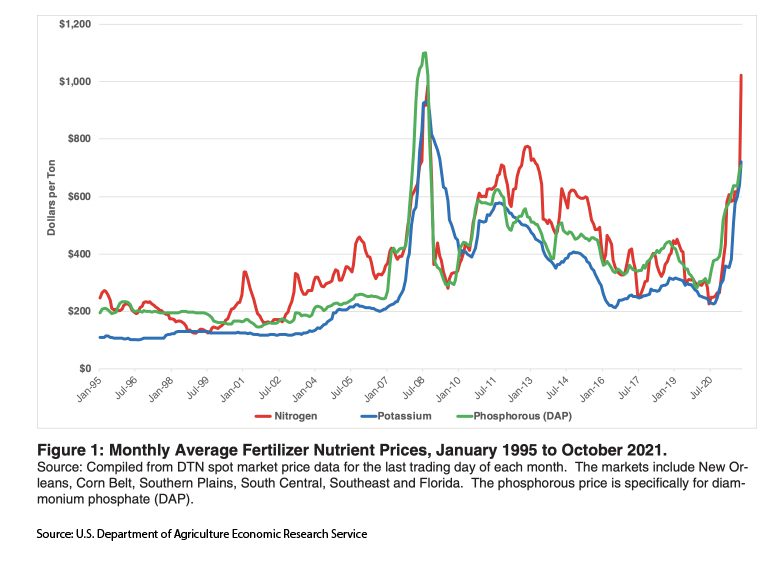
In the winter of 2020, canola was fetching about $12 per bushel. By November 2021, prices reached nearly $20 per bushel. In addition, farm inputs like fertilizer have seen tremendous price spikes throughout recent months. A report from Texas A&M’s University Agricultural and Food Policy Center (AFPC) estimates nitrogen prices at nearly 81% higher for corn farmers in 2022, averaging $52.07 more per acre in nitrogen costs while coming  on top of a 200% year-over-year spike in fertilizer costs. Consequently, corn farmers will need to collect $0.32 more per bushel in order to offset the higher nitrogen price.
The market demand for organic crops

McElroy and Shwaluk report that retail market demand is shifting heavily to organic hemp foods products. Manitoba Harvest offers both conventional ($0.63/oz.) and organic ($0.83/oz.) hemp hearts. With demand favoring the organic, McElroy and Shwaluk expect 70% of their 2022 contracted acreage with growers to be dedicated for organic production.

In 2021, Manitoba Harvest contracted organic hemp grain production at $1.55/pound, a premium up from $1.00-$1.25 in years past. McElroy and Shwaluk share another challenge in securing 2022 organic acreage: Some Canadian organic farmers are transitioning back to conventional production because of rising agricultural commodity prices, since conventional crops now fetch the premiums once reserved for organic crops.

According to McElroy and Shwaluk, Manitoba Harvest annually contracts an average of 35,000-40,000 acres. While Manitoba Harvest has contracted production with growers in the northern U.S. since hemp was legalized in 2018, greater demand to secure organic acreage may see more American farmers able to integrate with the Canadian hemp grain supply chain.

Processing capacity

An estimated 20 million-25 million tons of Canadian grain were processed in 2021, according to McElroy and Shwaluk. They believe that the capacity of the Canadian hemp grain industry could accommodate closer to 30 million-40 million tons yearly. Meanwhile, they posit that rising interest in Canadian hemp fiber production could require an additional 35,000-40,000 acres, nearly doubling the country’s total hemp acreage.

The question is how to grow the market to at least meet the country’s existing processing capacity. McElroy and Shwaluk can’t overemphasize the importance of consumer education. For them, the battle for shifting the public perception of hemp from drug to food is one that’s been ongoing for twenty years. They admit that when hemp gets clumped in with marijuana, whether in regulatory matters or marketing campaigns, it is unavoidably problematic.

“Maybe we should stop calling hemp a superfood,” they joke. Instead, we should start thinking about how hemp grain byproducts as ingredients that can be used to boost the nutritional value for a vast array of food products (without necessarily marketing the product as “hemp-based”). That is how North American hemp production could reach the milestone of a million acres, catapulting hemp from a cottage industry toward achieving status of a staple agricultural commodity. Otherwise, as noted by McElroy and Shwaluk, the market for hemp food products on grocery shelves has largely plateaued.

Manitoba Harvest is hard-at-work getting hemp grain into the hands of big food manufacturers as a plant-based protein and nutrition-packed ingredient. That seems the way toward the most fruitful next decade for the North American hemp grain market.

The post Canada’s Lessons for North America’s Hemp Grain Market appeared first on New Frontier Data.


from New Frontier Data https://newfrontierdata.com/cannabis-insights/canadas-lessons-for-north-americas-hemp-grain-market/

source https://ozlemhermsen.tumblr.com/post/673957994663444480

CBD and IBD: A Natural Solution for Colon Inflammation

What Causes Colon Inflammation?

Unfortunately, the root cause of colon inflammation is still unclear. It was assumed that external factors like stress and diet were to blame, but it’s now more widely accepted that these factors merely exacerbate symptoms, but are not the actual cause. Things like ethnicity and family history can play a part in one’s likelihood of developing IBD. Some even suggest that regular use of over-the-counter nonsteroidal anti-inflammatory drugs like naproxen or ibuprofen may be to blame. Whatever the root cause of these diseases may be, it’s important to know how to ease one’s symptoms.

Can CBD Help?

Studies are finding that there may be some merit to using CBD for colon health. CBD eases inflammation by way of the body’s endocannabinoid system and the CB2 reactors that govern the body’s inflammation. Since inflammation is responsible for much of the pain associated with IBD, reducing it can help alleviate the symptoms. 

Why CBD Over Other Options?

There are pharmaceutical drugs that can help with IBD symptoms, but they do come with a host of worrisome side effects. Aminosalicylates can cause fever, diarrhea and cramping. Corticosteroids can have psychological side effects and can cause high blood pressure, fluid retention and painful swelling. Immunomodulators can cause neuropathy or even serious blood clots. Luckily, CBD has shown to be an effective treatment with no side effects in doses up to 500mg.

When looking to ease the symptoms of colon inflammation, CBD is a great alternative. Living with inflammation can be difficult, so it’s important to find ways to make it easier and increase one’s quality of life.

The post CBD and IBD: A Natural Solution for Colon Inflammation appeared first on Smart CBD Hub.


from Smart CBD Hub https://smartcbdhub.com/cbd-and-ibd-a-natural-solution-for-colon-inflammation/
via IFTTT

source https://ozlemhermsen.tumblr.com/post/673948885222326272

Wednesday, 19 January 2022

California Tax Rates Impede Legal Operators

By John Kagia, Chief Knowledge Officer, New Frontier Data

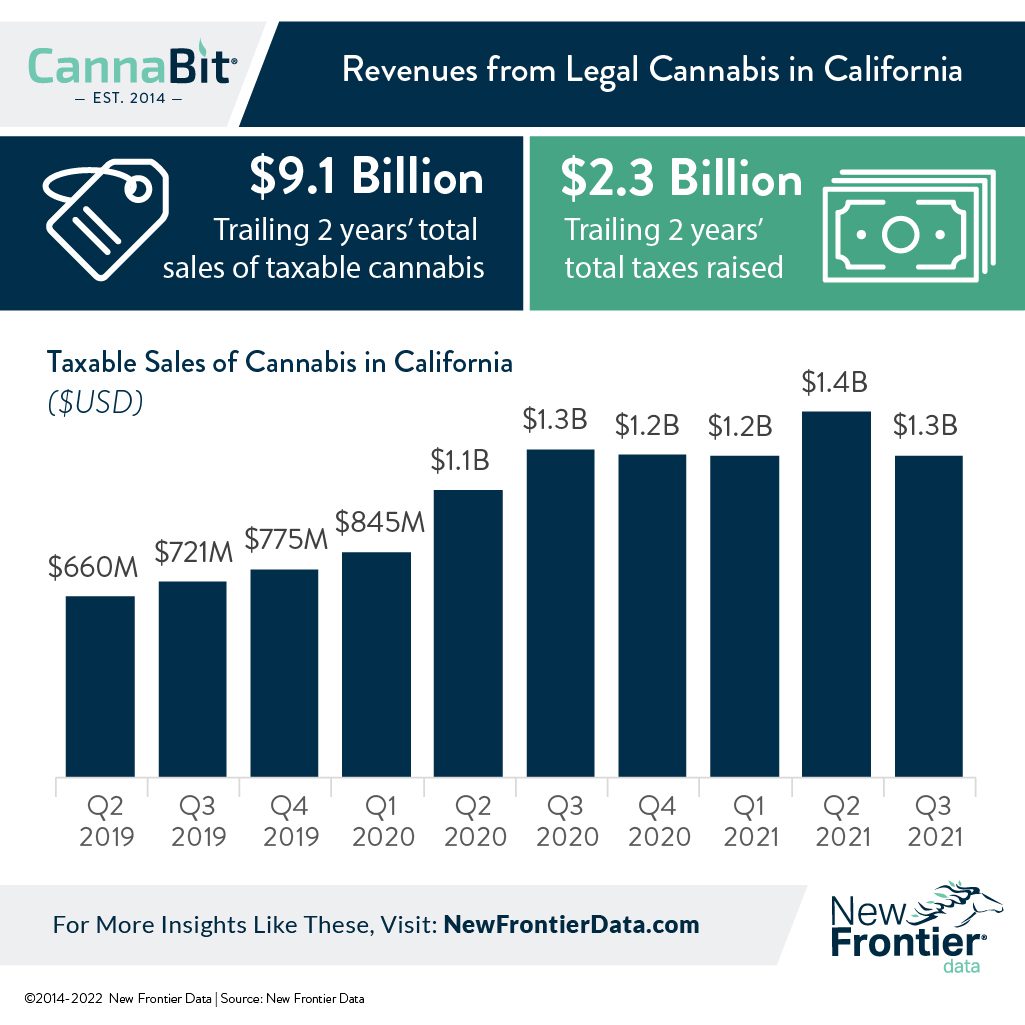
From September 2019 to August 2021, California raised $2.3 billion in tax revenue from $9.1 billion in sales. Since Q3-2020, however, tax revenues plateaued to average $321 million over four quarters, suggesting that the rate of ingress by consumers to the legal market has begun to slow.

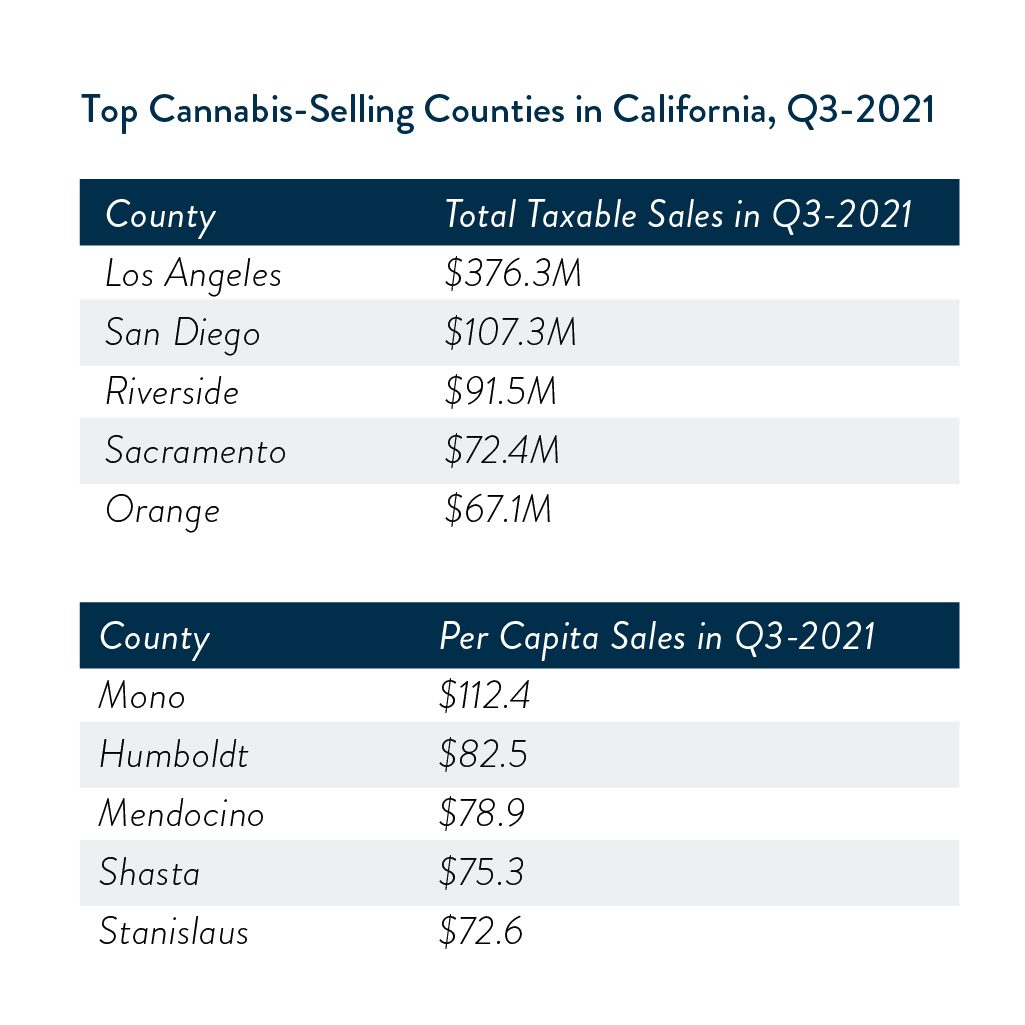
Despite earning significantly more revenues than other legal markets due to the state’s large population, California continues to underperform relative to other states for revenue per capita. Several factors are contributing to the slowing of California’s legal market:

  • With the highest cannabis retail taxes in the country, California’s price-sensitive consumers have little incentive to transition to the legal market, especially for flower (which remains widely available at dramatically lower prices, but with quality rivaling the legal market’s offerings);
  • The state’s very well-established illicit market is capitalizing on the tax-driven pricing differential; with limited enforcement resources, the increasingly savvy illicit operators have been able to disincentivize consumers from legal purchases; and
  • County and municipal ordinances which prevent legal cannabis businesses from operating in large swaths of the state have meant that consumers in many counties must travel long distances to make legal purchases. For those who had well-established sources in the illicit market, participating in the legal market is not worth the effort.

cannabis selling california

The widespread availability of high-quality flower has pushed demand in California to value-added products, which are more difficult to effectively produce at scale in the illicit market. Among established adult-use markets, flower (excluding pre-rolls) in California accounts for a smaller share of total sales (36%) than in other markets — including Nevada (49%), Michigan (48%), Massachusetts (45%), and Colorado (41%).

With the state poised to further raise cannabis taxes in 2022, legal market consumers are bracing themselves for further pain at the cash register. The dynamic is described in more detail in New Frontier Data’s latest report, 22 for 2022: Cannabis Industry Assertions & Predictions: “As of January 1, 2022, California’s cannabis tax rates have increased again. The cultivation tax — initially $9.25 per dry ounce of flower, then raised to $9.65 in 2020 — now stands at $10.08 per dry ounce. Since it is applied at the beginning of the production chain (where it can already represent roughly 25% of the wholesale cost of flower), the cultivation tax is compounded at every step of production, each of which has an additional tax.”

In a speech last week, California Governor Gavin Newsom expressed commitment to resolving the state’s cannabis taxation issues, but it remains to be seen by which forms those interventions will take. Regardless, the longer that the state continues to delay in addressing its cannabis taxes (which are the highest in the U.S.), operators will continue to underperform, the illicit market will become more difficult to dislodge, and the Golden State will continue to earn far lower revenues than it could through a more effectively modulated tax policy.

The post California Tax Rates Impede Legal Operators appeared first on New Frontier Data.


from New Frontier Data https://newfrontierdata.com/cannabis-insights/california-tax-rates-impede-legal-operators/

source https://ozlemhermsen.tumblr.com/post/673788106035560448

How To Calculate the Right Dose of CBD Oil for Dogs

Can CBD Oil Shrink Your Dog’s Tumor ? More research needs to be done on how CBD affects tumors in a dog, but recent studies show the potent...