Thursday, 14 April 2022

Mexico’s Muddled but Major Market Opportunities for Hemp

mexico hemp

By Eric Singular, Director, Hemp Business Journal

In 2018, Mexico’s Supreme Court declared the government’s nearly century-old, explicit prohibition of the recreational use of cannabis to be unconstitutional. Four years later, the Mexican Congress and the Comision Federal para la Proteccion contra Riesgos Sanitarios (COFEPRIS) are still working to promulgate a legal framework to specifically regulate the cultivation, manufacturing, and distribution of adult-use cannabis in Mexico.

Since the court’s mandated reversal, 20 separate cannabis-related regulatory proposals have been received by the Senate. In 2020, those were amalgamated in the Cannabis Regulatory Federal Law. While it was approved by the Senate and forwarded for review to the Lower House, the reviewing chamber’s heavy modifications of the original proposal forced another review in the Senate. There, it lost traction and was eventually discarded.

Meanwhile, COFEPRIS has approved and granted 60 permits to produce cannabis-based ingredients, food items, beverages, supplements, cosmetics, and pharmaceutical products having met the criteria of the 2018 case. Those guidelines positioned about 15 Mexican companies to build a domestic supply chain. Yet, that too proved short-lived when a new presidential administration took office. By March 2019, the approvals were revoked, and permits cancelled.

Finally, in January 2021, COFEPRIS published rules regulating the medicinal use of cannabis. In December 2021, Mexico’s Supreme Court further declared laws against cultivation with a THC concentration below 1% as unconstitutional, ostensibly removing barriers to hemp production. That ruling sided with Xebra Brands, Ltd., and its Mexican subsidiary, Xebra Mexico, in challenging COFEPRIS actions to block cannabis production except for medical and scientific purposes.

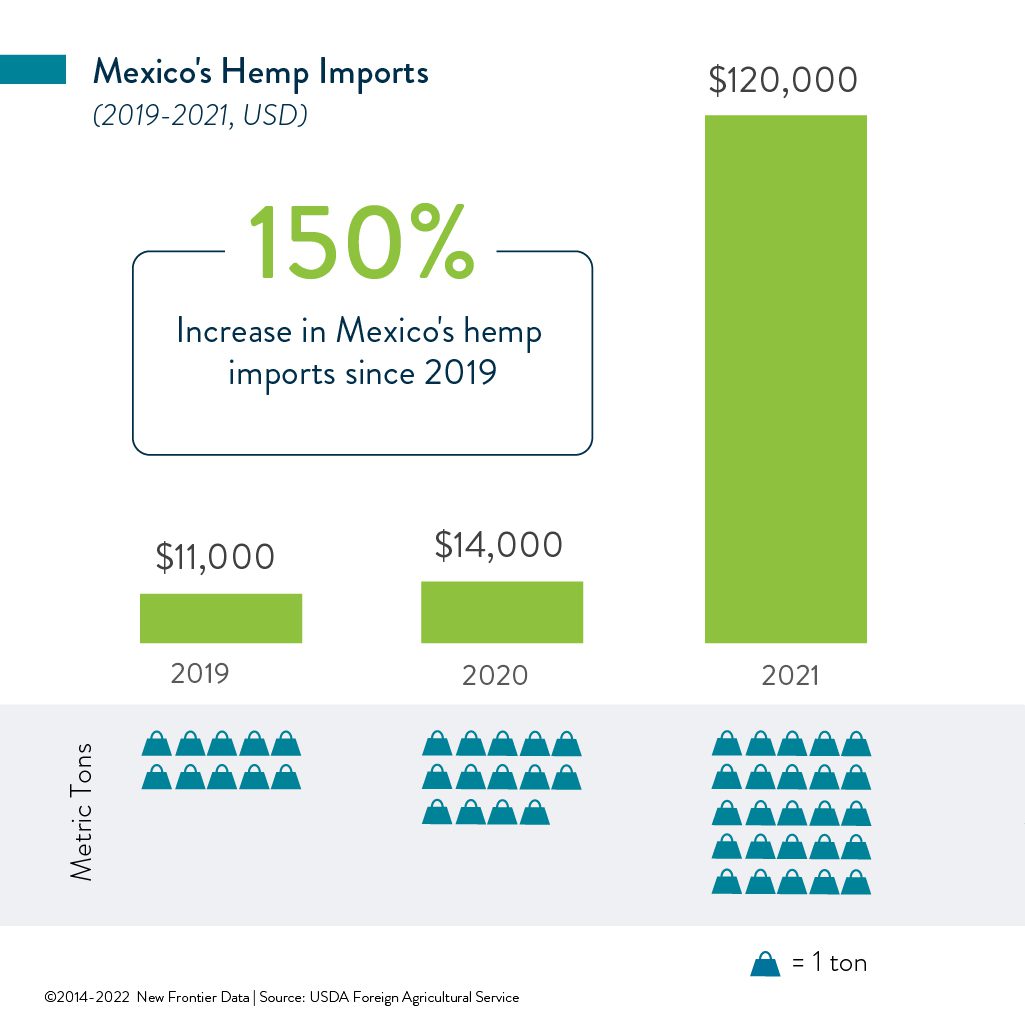
Since 2019, Mexico’s hemp imports have increased dramatically. The available trade data refers to two tariff codes which fall under the classification of raw or processed (but not spun) fiber, including yarn waste and garnetted stock. Mexico’s total 2021 imports of hemp fiber were worth $120,000, or 25 metric tons (MT). Among those, imports from the United States accounted for 63% of the total of the tariff group, with France second at 29%.

While the Mexican hemp industry is impeded by a lack of domestic production and a robust regulatory framework for cultivation, processing, and manufacturing, the potential market opportunity for the crop remains significant. Given the country’s low cost of labor, competitive logistics, and trade costs, manufacturing capability, and network of free-trade agreements with more than 50 countries, hemp could find a strong foothold in Mexico, with market opportunities for three hemp verticals: fiber, grain, and CBD. 

Fiber Segment

Short and long industrial hemp fibers could prove highly valuable for at least three sectors within Mexico’s core competencies: vehicle manufacturing, automotive components, and textiles.

Mexico’s automotive sector accounts for 17.6% of the country’s manufacturing overall. General Motors, Chrysler, Ford Motor Company, Nissan, Fiat, Renault, Honda, Toyota, and Volkswagen produce 2.8 million vehicles annually in 20 plants across the country. In 2019, BMW opened a billion-dollar, auto-assembly plant in San Luis Potosi featuring an annual production capacity of 175,000 vehicles.

BMW is already utilizing industrial hemp-based biocomposites in their i3 electric car, made from 95% recyclable materials. Due to hemp’s high cellulose content – hurd is approximately 80% cellulose – the natural fiber is particularly well-suited for factories seeking renewable materials. Apart from being biodegradable, the material has proven to be 3.5x stronger and 5x lighter than petroleum-based plastics. Engineers of the i3 have increased the car’s effective range by lowering the vehicle’s weight.

With hemp production underway in the U.S., and a handful of companies working toward building a supply chain for hemp-based biocomposites, it is conceivable that U.S. hemp processors over the next few years could supply raw or processed material to BMW’s San Luis Potosi plant for hemp-based door paneling.

On average, Mexico annually exports $4 billion worth of textiles and clothing. According to the Commerce Department’s Office of Textiles and Apparel, despite U.S. denim imports’ declining 25% to a value of $2.8 billion in 2020, the denim trade came roaring back in 2021, to $3.68 billion (a 31.4% increase). Mexico – the second-highest denim supplier behind Bangladesh – saw a 39.6% hike to $654.87 million for the year, rebounding from a 41.5% falloff in 2020.

According to Haluk Aksoy, senior vice president of Levi’s Latin America, two-thirds of the company’s denim production is in Mexico. Over the past four years, Levi’s has introduced jeans made with cottonized hemp. By the end of 2020, 83% of its cotton came from more sustainable sources, including organic and recycled cotton and the Better Cotton Initiative; the company plans to reach 100% more sustainable cotton before 2026.

As U.S. operators aim to meet the challenges of a domestic supply chain for hemp textiles, Mexico could become a major importer for apparel manufacturing. 

Grain Segment

In 2019, Mexico’s market for animal feed was valued at $6.5 billion; it projects to reach $8.3 billion by 2025.

According to the U.S. Department of Agriculture’s Foreign Agricultural Service, Mexico will continue to be a major importer of basic grains from the U.S. to meet growing Mexican demand for livestock feed. Mexico’s three primary domestically produced grain commodities are wheat, corn, and rice. The country is also a major corn producer, primarily for livestock and poultry feed.

While market opportunities for hemp grain for human consumption abound, use in animal feed likewise offers immense growth potential. Yet, hemp grain will first need to gain approval in Mexico from agricultural policymakers for use as an animal feed, a regulatory step which has proven arduous in North America.

Given Mexico’s proximity to the equator, the country has two growing seasons for corn. As hemp grain genetics advance, the ability to produce multiple hemp crops in a single year could prove to be a huge advantage for Mexico’s farmers versus their U.S. competitors. 

CBD Segment

In 2020, Mexico’s CBD market was valued at $9.2 million. Most of Mexico’s CBD products are imported from the United States and Canada. Expectations over the next seven years are for the market to reach $675 million. Such growth, however, will depend greatly on the passage and implementation of the Cannabis Regulatory Federal Law and the regulatory framework outlined by COFEPRIS for hemp-derived products containing less than 1% THC.

New Frontier Data estimates that Mexico has 2.2 million high-THC cannabis consumers. While there could be substantially more for nonpsychoactive cannabinoids (including CBD formulated as an ingredient in numerous food, supplement, and cosmetic products), Mexico’s consumer buying power will need to be considered, especially in comparison to premium prices which American brands command for CBD-infused products. 

North American Hemp Supply Chain

While prospects for a domestic hemp industry in Mexico will be hampered by the lack of a formal legal framework, industrial uses for the crop’s versatile natural fiber could prove it to be an important commodity for a global manufacturing leader.

Today, the U.S. has a four-year head start on hemp production and processing compared to its southern neighbor. When Mexican farmers begin producing hemp, there will be many obstacles to overcome in terms of sourcing high-performing genetics and solving the various processing woes which have stalled the U.S. hemp supply chain. However, ease of trade between the U.S. and Mexico could position the latter as a major importer of raw and processed hemp materials for automotive and textile manufacturing.

For the foreseeable future, Mexico will likely continue to increase its imports of raw hemp goods rather than emerge as a major producer itself. In the long term, that could shift, however, as Mexico builds a domestic supply chain for grain, fiber, and cannabinoids capable of supplying hemp ingredients and materials at much lower costs of production.

A more comprehensively thorough overview of the Mexican cannabis market is available in New Frontier Data’s Global Cannabis Report.

The post Mexico’s Muddled but Major Market Opportunities for Hemp appeared first on New Frontier Data.


from New Frontier Data https://newfrontierdata.com/cannabis-insights/mexicos-muddled-but-major-market-opportunities-for-hemp/

source https://ozlemhermsen.tumblr.com/post/681564361130655744

CBD Oil For Migraine Attacks

For dangerously high blood pressure, it’s important to consult with a doctor. There may be immediate treatments you need to undergo to avoid serious complications of your hypertension, including stroke or heart attack. However, if your blood pressure isn’t dangerously high, CBD oil may help relieve your symptoms while you work to adopt lifestyle changes that will give you better health going forward.

How CBD Can Minimize Headache Pain

It’s no secret that CBD oil for neuropathic pain works very well. CBD oil is also commonly used to help reduce anxiety. But many people aren’t aware that it can also relieve headaches. Recent studies show that cannabinoids may play an important role in controlling underlying migraine pain. Marijuana reduces the frequency of migraine headaches, but it also reduces severity.

The endocannabinoid system in the human body has a lot of responsibilities. A main role of endocannabinoid system is to regulate the immune response, memory, cell communication, metabolism, appetite and more. It is the body’s endocannabinoid system that works with CBD oil to allow it to treat headaches and general pain in the body. According to research, deficiencies in the endocannabinoid system are what contribute to a variety of painful conditions, including migraines and headaches. CBD oil works very closely with the endocannabinoid system to help prevent or at least minimize these painful conditions.

The post CBD Oil For Migraine Attacks appeared first on Smart CBD Hub.


from Smart CBD Hub https://smartcbdhub.com/cbd-for-migraine-attacks/
via IFTTT

source https://ozlemhermsen.tumblr.com/post/681528831394430976

Tuesday, 12 April 2022

Denmark’s Pilot Program Introduces Adult Use to Scandinavia

By Oliver Bennett, Special Contributor to New Frontier Data

Though proponents recently held hope that liberalising movements in Germany and Malta, respectively, would lead to a domino effect for legal cannabis among European neighbours like Luxembourg, other circumstances have held pre-emptive sway.

It simply did not happen in a manner either expected nor hoped for, whether impeded by a proposed Italian referendum being rejected by the country’s high court, or swamped by the violence and fallout of Russia’s invasion of Ukraine.

A month in since Vladimir Putin’s incursion, inflation has reached nearly 10% in several countries, mainly through rising oil and gas prices.

Danish Plan for Recreational Cannabis

Nevertheless, activity for the continent’s legal cannabis industry persists in pockets of Scandinavia — from Denmark to Sweden, Norway, and Finland, Russia’s northwestern neighbour.

Last month, Danish officials proposed a five-year, adult-use cannabis pilot plan. The policy aim within a five-year time frame is to sell legal, domestically produced cannabis for adult use, available through state-owned retail outlets similar to dispensary models seen in state markets among the United States.

As presented last month to the Dutch parliament (Folketinget) with support shared among all five of its political parties, the pilot project calls for centrally located, urban dispensaries staffed by trained budtenders to share information (including medical uses and responsible consumption) with citizens who could possess and grow their own cannabis kept at home.

In sponsoring the bill, officials cited statistics from the National Board of Health, including that 41% of the Danish population under age 40 has consumed cannabis at least once, and that the nationwide number of people reporting doing so within the previous month has doubled since 1994. In fact, parliament officials noted, the “existing ban on cannabis has not limited neither consumption nor sale of cannabis products in Denmark since the introduction of a ban 40 years ago.”

Thanks to a 2018 pilot program (since renewed) for a medical-use market, Denmark has already performed some organizational groundwork for its recreational model. The government has reportedly issued more than 40 cultivation licenses, and identified up to 200,000 square meters (about 50 acres) nationwide that could be dedicated for sufficient cultivation to make Denmark a sizeable cannabis producer.

In a preemptive effort to eliminate social harms from illicit drug-dealing gang activity, the policymakers intend for both the quality and prices of the state’s cannabis products to favourably compete with those offered in the illicit market. Assessments of progress would be evaluated throughout the pilot program, while proceeds from sales would be reserved for substance-abuse and recovery treatments.

As a country with Scandinavian progressive qualities – the epicentre of the socially conscious Nordic Model of government and an exemplar of the social bonds that create happiness – it is a surprise, perhaps, that Denmark has not come to this point already.

Christiania’s Cannabis Legacy

After all, in Copenhagen there has long existed a model in the so-called “free town” commune of Christiania, a 19-acre enclave in a former army base occupied by squatters in 1971, which in the subsequent half-century has evolved into an alternative community of about 1,000 residents. Its reputation for illicit cannabis (and other substances) is such that its main thoroughfare is known as Pusher Street.

To undermine the illicit market’s space, which relies on illegal back-door procurement, the pilot plan will incorporate best practices and lessons learned from the U.S., Canada, and Portugal. Along with trying to freeze out Christiana’s dealers, the government also intends to undercut the Netherlands’ notorious coffeeshops (which, while offering legal retail sales, still rely heavily on grey-market wholesale sales). This too, is part of a traditional Norden approach to social policy: caution and risk-aversion.

Logically, Denmark’s engagement is gaining interest from investors. Two large European productions have made a shareholders agreement with the Amsterdam-based JuicyFields crowdfunding platform to develop and build European Union (EU)-approved, good manufacturing practice (GMP)-compliant greenhouses with plans to produce an annual 40,000 kilograms of dried flowers. Aurora Europe, too, has a facility in Denmark which started producing in late 2020, in order to involve Aurora Nordic in a French medical programme by expanding its footprint and supplying medical cannabis in the form of dried flowers and extracts from its 9,200-square-mile greenhouse space in Odense, Denmark.

Scandinavia’s Conservative Reluctance Persists

That is the commercial beachhead for now, as policy positions across the rest of Scandinavia still lag behind. In Sweden and Finland, support for recreational use remains among the lowest in Europe. In particular, the Swedish strategy is to aim for a drug-free society; consequently, cannabis is treated as dangerous narcotic as the Swedish system does not differentiate between so-called hard or soft drugs, and medical cannabis is allowed only under special circumstances.

Fewer than 1 among 5 Swedes (17%) report having tried cannabis, and their political leaders have gone on record pledging that Sweden would be among the last European nations to legalise cannabis. CBD is illegal in Sweden if it contains THC; CBD oil not containing THC resides in a marketing limbo where it is somehow legal for purchase yet illegal for sale. Sweden has long had a strong system of state control over intoxicants (including its Systembolaget system of state-controlled alcohol sales), demonstrating some of the Nordic model’s more paternalistic aspects.

For its part, Finland is somewhat more liberal. Last September, Finland’s Green League party called for a policy of legalization of the domestic cannabis market – marking a first for a political party in the Finnish parliament to call for such a policy. Though it remains unlikely to proceed anywhere in the near future, it nevertheless represents a softening toward cannabis.  Though Finland legalized medical cannabis in 2008, a 2019 petition drive for adult-use cannabis was defeated.

In Norway, too, there are similarly tentative movements being made towards repealing long-held restrictions on cannabis, and early last year the Norwegian Liberal Party proposed a bill to end criminalization and make low-level possession a civil offense.

“Decades of repression have taught us that punishment doesn’t work,” said Education Minister Guri Melby, and the country allows for possession of cannabis in small amounts.

For its part, Iceland (geographically distant but often considered part of Scandinavia with strong links to the Nordic bloc), maintains tight restrictions on cannabis, though there seems little doubt that the Nordic bloc will eventually lean toward Denmark’s pilot scheme – possibly precipitating its own regional version of the domino effect throughout Scandinavia.

The post Denmark’s Pilot Program Introduces Adult Use to Scandinavia appeared first on New Frontier Data.


from New Frontier Data https://newfrontierdata.com/cannabis-insights/denmarks-pilot-program-introduces-adult-use-to-scandinavia/

source https://ozlemhermsen.tumblr.com/post/681386950250348544

Survey: More Americans Than Not Have Consumed Cannabis

american cannabis

By Dr. Molly McCann Ed.D., Senior Director of Consumer Insights, New Frontier Data

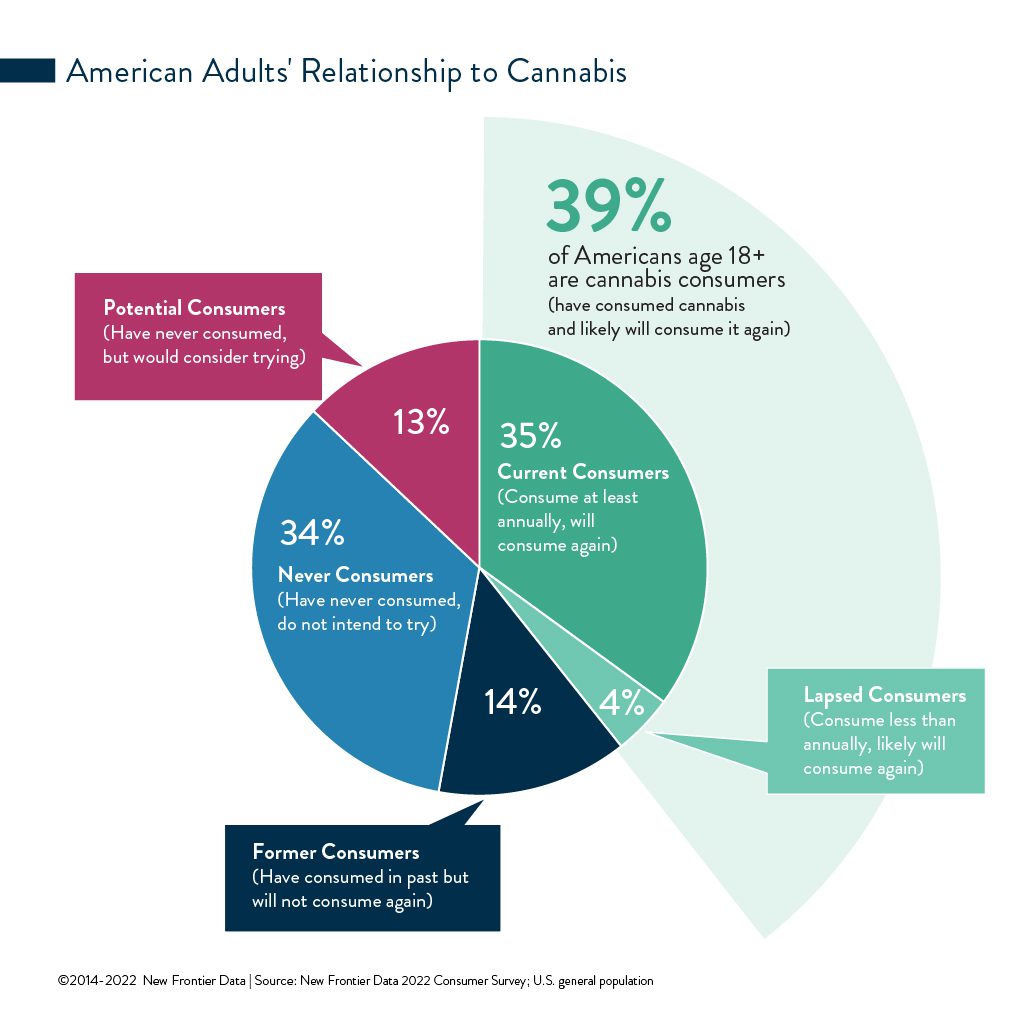
A majority (53%) of U.S. adults have consumed cannabis with THC, according to New Frontier Data’s latest cannabis consumers’ survey. Among those having tried it, two-thirds report having used it at least annually, and plan to consume it again. While more than one-third (34%) of adults have never tried cannabis and do not intend to, roughly 1 in 8 (13%) among adults have not tried it but would consider doing so in the future.

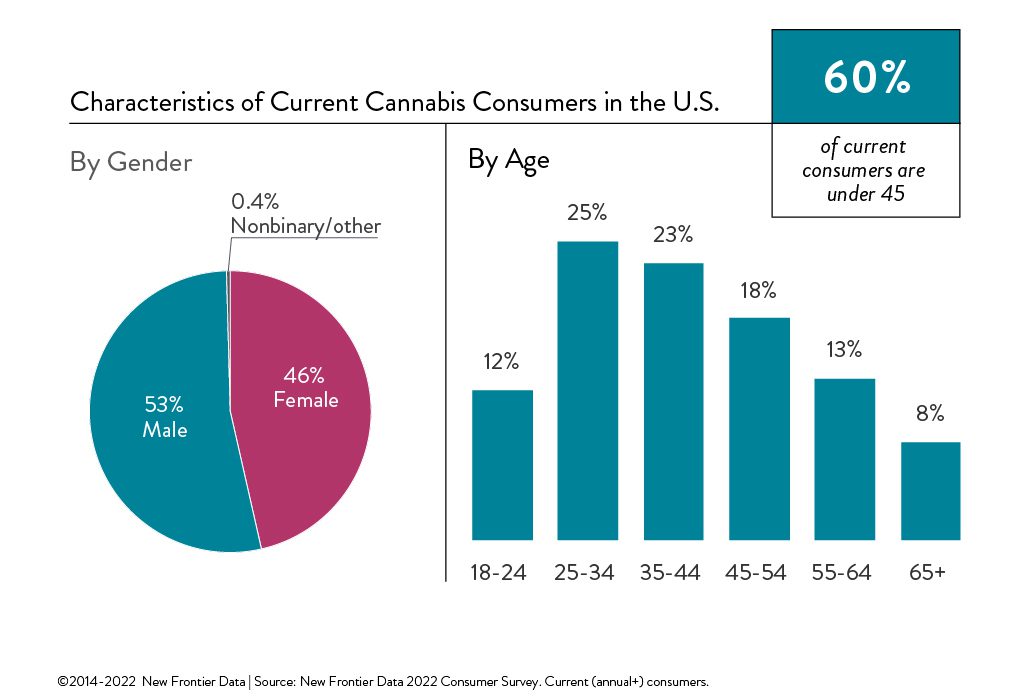
Those results are takeaways from New Frontier Data’s 2022 U.S. Cannabis Survey, a demographically representative, census-aligned, online survey of 4,682 consumers and 1,250 nonconsumers polled to assess cannabis consumer attitudes, perceptions, and consumption patterns across legal and unregulated markets. Likewise, the survey plumbed beliefs, attitudes, and potential future use among nonconsumers. Findings from the survey will be shared in New Frontier Data’s Cannabis Consumers in America: Dynamics Shaping Normalization in 2022, to be released next week. Meanwhile, a wide range of comprehensive and specific data and analysis is always available via New Frontier Data’s online business intelligence platform, Equio® including more, overlapping data points and insights available within the U.S. Consumer Dashboard and among our library of free reports.

Use Frequency

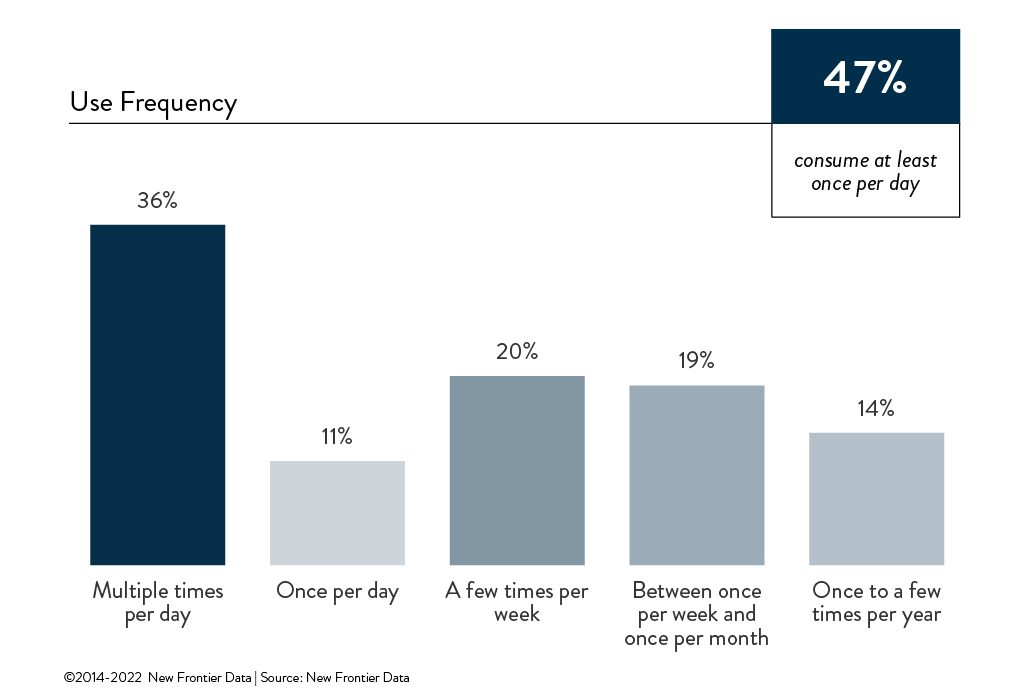
More than one-third (36%) of current consumers use cannabis multiple times daily. Another one-third consume once a day or every other day (31%), and one-third (33%) consume between once per week and once per year.

Among nearly half of consumers, cannabis use is routinized. Many cannabis consumers have integrated cannabis into their daily routines, with nearly half (47%) consuming cannabis daily, and two-thirds (67%) consuming at least once per week. The advancements in product innovation that enable consumers to use cannabis more conveniently and discreetly, coupled with the proliferation of products that can be used for specific use cases (e.g., pain, sleep, relaxation, exercise, creativity, etc.) have broadened the ways in which consumers can use cannabis per their specific needs and use cases.

Product Forms

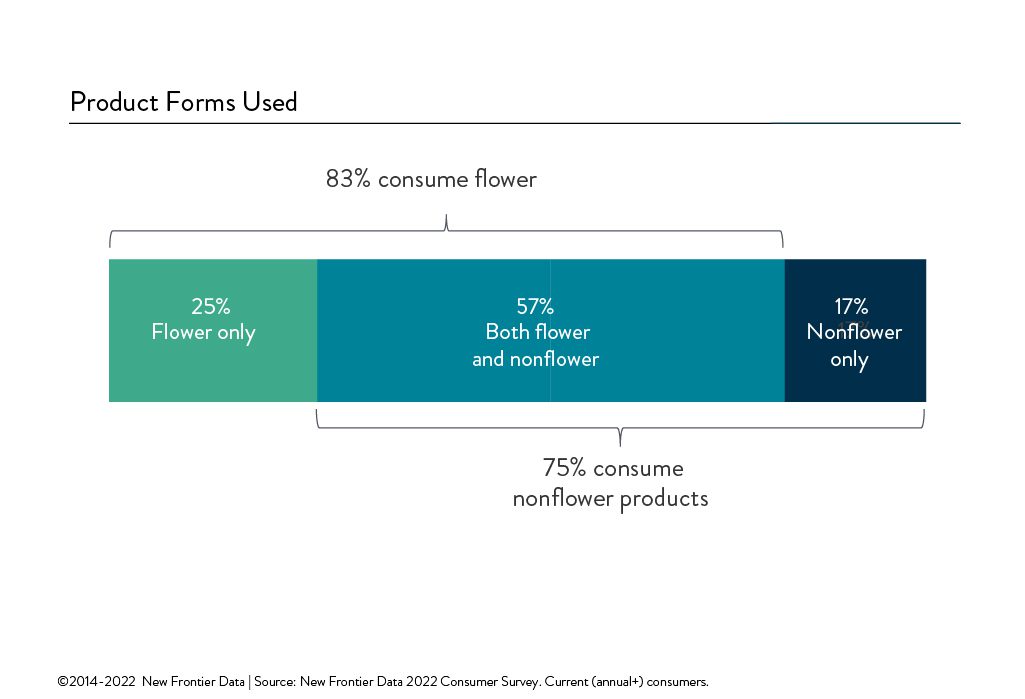
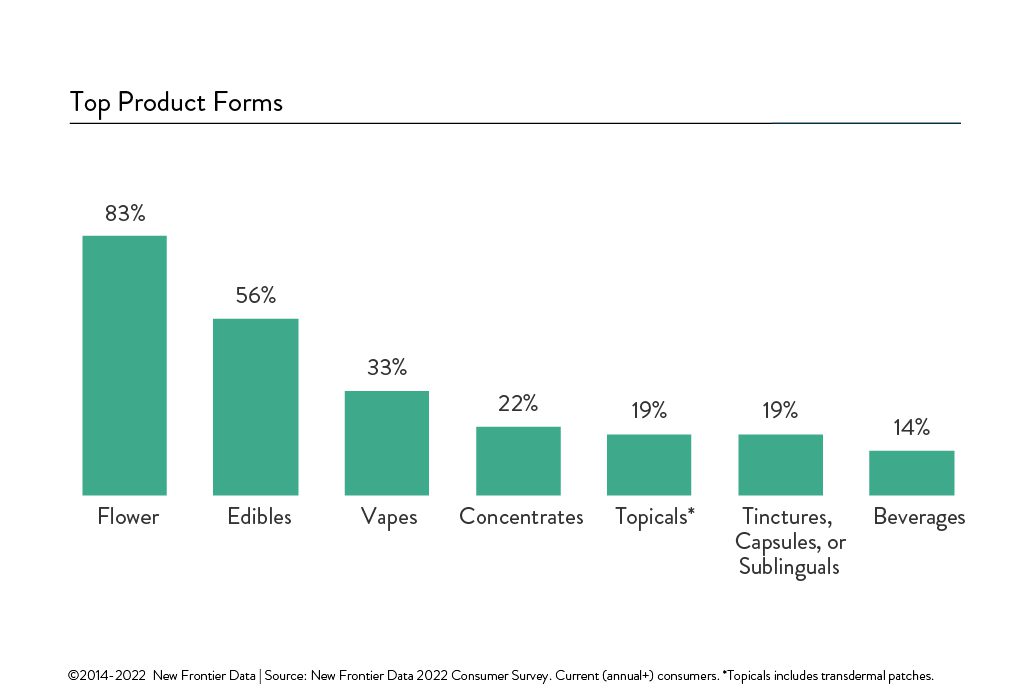
A majority (57%) of current consumers use both flower and non-flower cannabis products. One-quarter (25%) exclusively use flower, while 17% use exclusively non-flower forms.

Reasons for Use

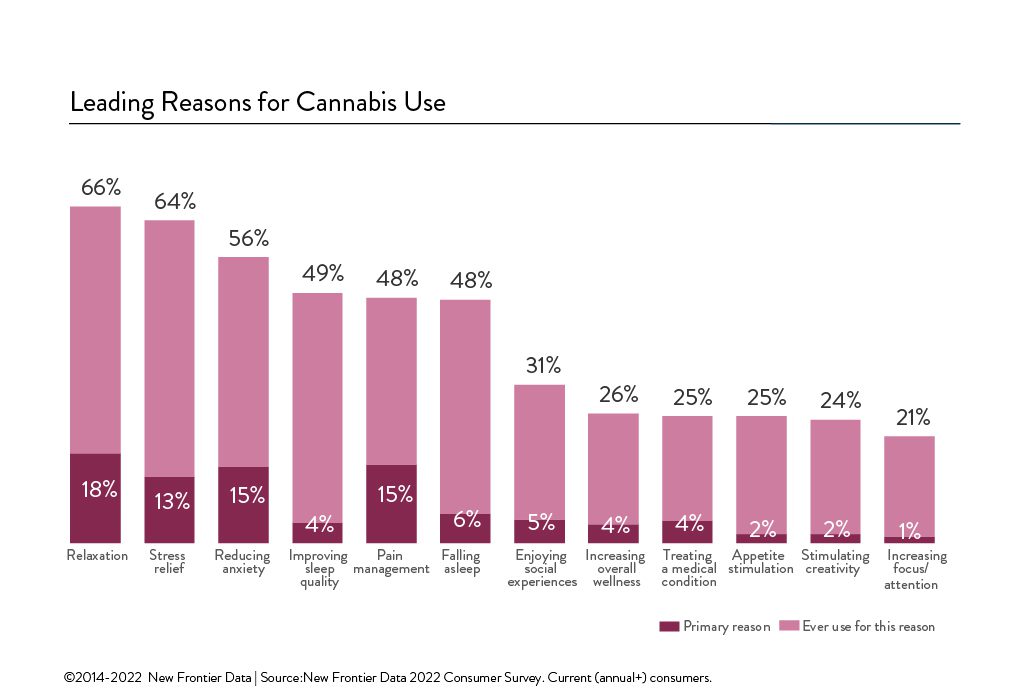
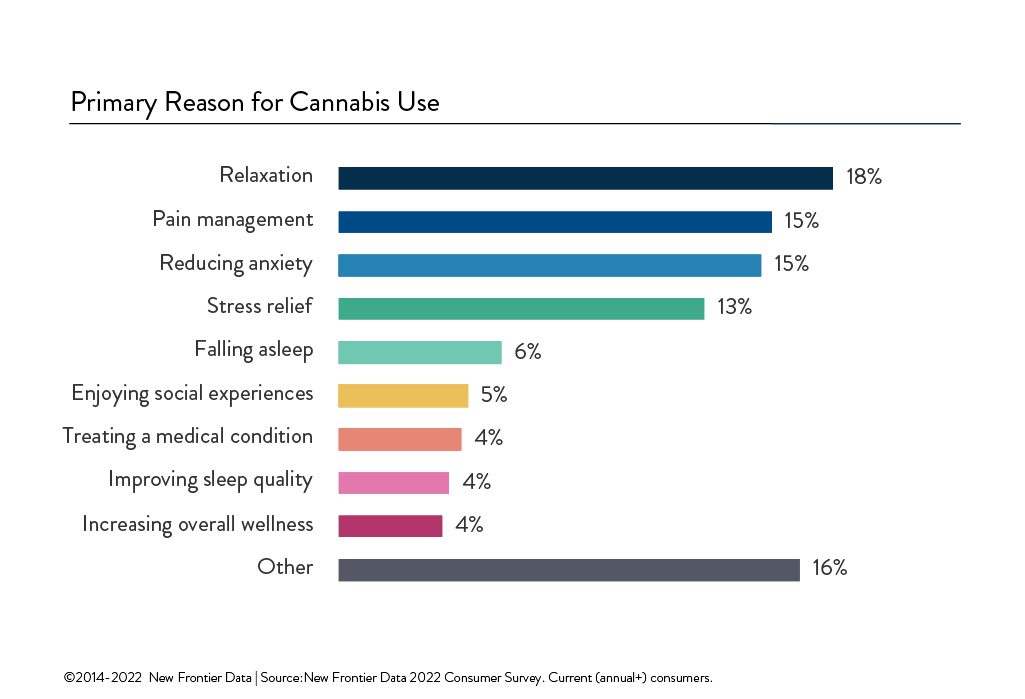
Together, aims for “unwinding” (i.e., relaxation, reducing anxiety, or stress relief) comprised the primary motivation for use among nearly half (46%) of current consumers.

Reasons for cannabis use remain highly diverse and personalized, raising the stakes for targeted consumer strategies. The industry is evolving beyond a one-size-fits-all approach during an era where brands could be indiscriminate about whom they targeted for their products. With consumers becoming far more intentional about their uses, and the primary motivations for consumption encompassing relaxation, pain management, improved sleep outcomes, treating a medical condition, or improving overall wellness, it is increasingly important for brands to invest in understanding both who their consumers are and why they consume. As the industry grows in scale and specialization, differentiated brands with resonant products aimed at well-defined target segments are far likelier to secure effective competitive market positions over the long term than are brands aspiring to serve the broadest base possible without tailoring to individual subgroups’ needs.

Acquisition & Spending

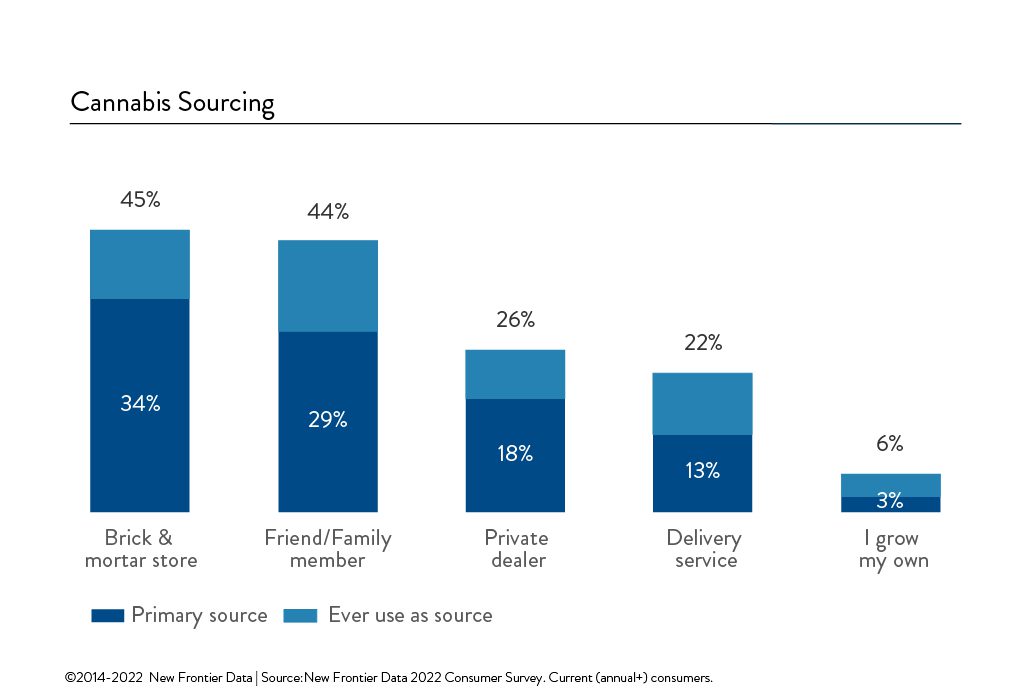
Brick-and-mortar stores are followed closely by friends/family members as consumers’ primary sources for cannabis. More than 4 in 10 (43%) of report supplying friends or family with cannabis, while 12% say that they do so regularly.

Likewise, 43% of current consumers also report having sourced cannabis from out of their state of residence, whether to consume while traveling or to bring products back home. 

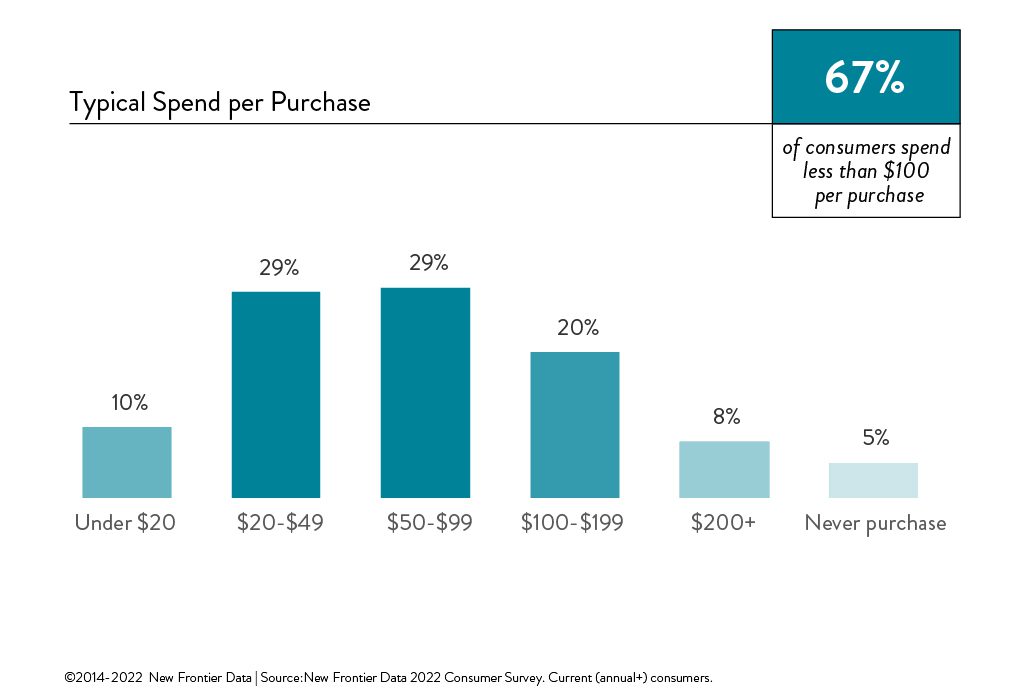
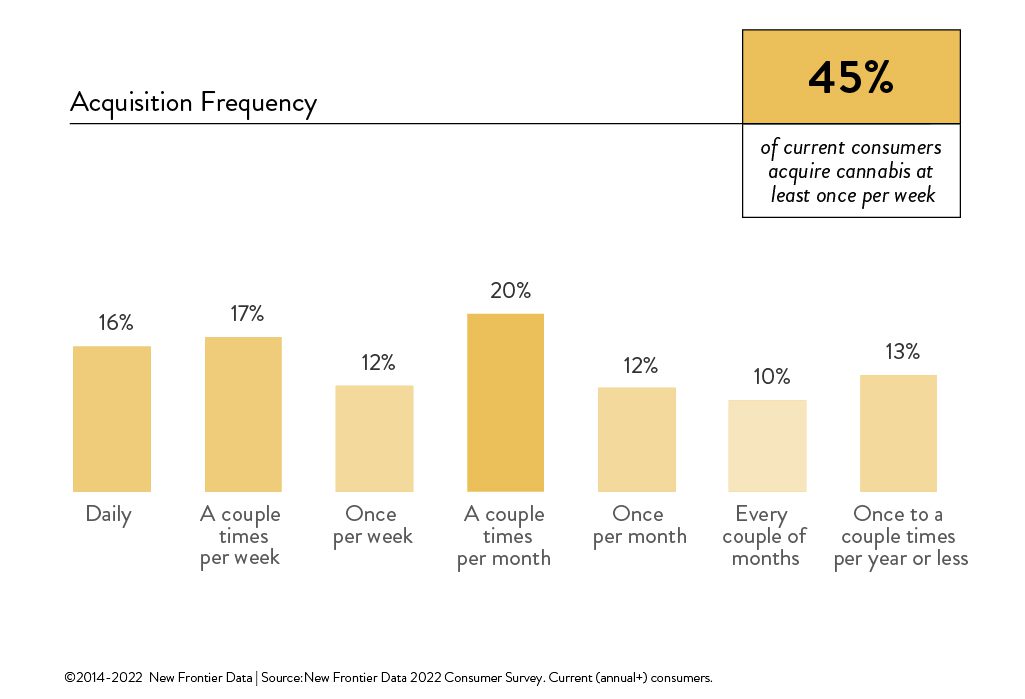
For most consumers, cannabis is a low-spend/high-frequency purchase. Nearly half (45%) of consumers purchase cannabis at least once per week, with 2 out of 3 (67%) among them spending less than $100 per purchase. The high-frequency nature of those purchases (coupled with keenly expressed interest in new products), signifies opportunities at each touchpoint for retailers and brands to engage and educate consumers.

The post Survey: More Americans Than Not Have Consumed Cannabis appeared first on New Frontier Data.


from New Frontier Data https://newfrontierdata.com/cannabis-insights/survey-more-americans-than-not-have-consumed-cannabis/

source https://ozlemhermsen.tumblr.com/post/681386949732450304

Sunday, 10 April 2022

Understanding CBD Benefits for High Blood Pressure in Parkinson’s Disease

How Parkinson’s Disease Can Affect Your Blood Pressure

Parkinson’s disease is typically thought of as a neurological disease that makes a patient’s hands shake, but it’s much more complicated. Parkinson’s and the medications that patients take for the condition can contribute to both high and low blood pressure. Low blood pressure symptoms often include dizziness and falling, while high blood pressure may have no distinct “feelings” associated with it. It’s well known, though, that high blood pressure can contribute to heart disease, stroke, and other health issues that can be avoided by lowering the patient’s blood pressure. 

Medications used to treat high blood pressure often cause symptoms that make patients feel worse including headaches, heart palpitations, heartburn, nausea, and dry mouth. High blood pressure medications, when taken the wrong way, can even make your blood pressure drop too low. Consider CBD benefits for high blood pressure when deciding whether you want to stay with conventional treatment or use a natural add-on treatment to manage your high blood pressure.

How CBD Can Help Parkinson’s Patients With Sexual Dysfunction

CBD can help Parkinson’s patients with high blood pressure to keep their numbers in control and lower their blood pressure. CBD benefits for high blood pressure include reducing resting blood pressure and heart rate. It’s important to speak with your doctor if you are thinking about using CBD for this purpose to make sure you are a good candidate for this type of supplemental treatment, but also to ensure that it does not conflict with any of your other medications. Typically, CBD is incredibly safe and is used as an add-on treatment in conjunction with Parkinson’s medications. It also shows promise in the treatment of MS, epilepsy, anxiety, depression, and PTSD.

The post Understanding CBD Benefits for High Blood Pressure in Parkinson’s Disease appeared first on Smart CBD Hub.


from Smart CBD Hub https://smartcbdhub.com/high-blood-pressure-in-parkinsons/
via IFTTT

source https://ozlemhermsen.tumblr.com/post/681177805176897536

Tuesday, 5 April 2022

Colorado: $12.3B in Legal Cannabis Sales in 7 Years

colorado cannabis market share

By John Kagia, Chief Knowledge Officer, New Frontier Data

New Frontier Data’s latest offering, the 2022 U.S. Cannabis Report: Industry Projections & Trends, comprehensively analyzes the growth and early maturation of legal markets nationwide. As of April, 19 states (and Washington, D.C.) offer high-THC cannabis through legal sales for adult use, and 39 (including D.C.) make high-THC cannabis legally available for medical use.

Though more limited reforms are likely to be implemented in the near term, especially banking reforms to enable the cannabis industry to fully participate in the national and global financial markets, the low likelihood of sweeping national decriminalization will perpetuate the current patchwork of state models for the foreseeable future.

Examining Colorado’s Efforts

As an example, since Colorado began its sanctioned cannabis sales in 2014, more than $12.3 billion worth has been sold in the Centennial State. Consequently, the state has collected over $2 billion to fund various projects statewide, from allocations for its general fund, to a school capital construction fund, and law enforcement.

Colorado’s Marijuana Enforcement Division’s annual report continues to provide illuminating insights into the country’s most mature legal cannabis market.

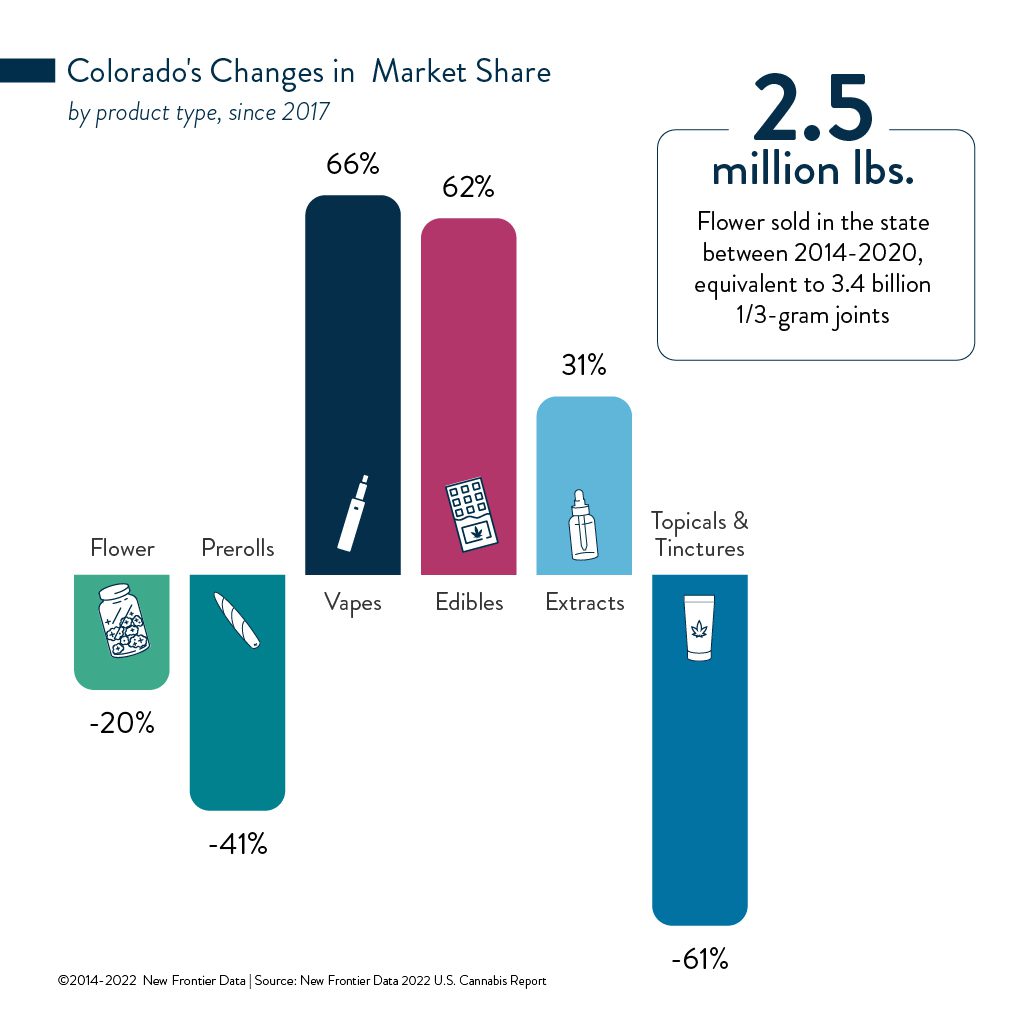
Between 2014 and 2020, Colorado sold 2.5 million pounds of flower, or the equivalent of 3.4 billion one-third gram joints. Loose flower remains the largest product category, though its share of the market has fallen 20% percent (from 50% in 2017, to 40% in 2021). Over the same period, all other categories (except prerolls and topicals/tinctures) gained market share: Vapes are up 66%, edibles by 62%, and extracts by 31%. It is worth noting that despite any disparities in shares, revenues earned in each product category have increased across the board (based on annual growth in overall consumer spending).

Since 2014, the total number of cannabis business licenses has increased 21% (from 2,249 to 2,727). During that period, medical licenses decreased by 21% while adult-use licenses increased by 94%. Nevertheless, the relatively sustained number of medical licenses reflects some strong continued participation by medical cannabis patients in the state, even as adult-use demand continues to drive most sales in the state. For more comprehensive and specific data and analysis, visit New Frontier Data’s online business intelligence portal Equio® to gain additional insights available within the U.S. Market Dashboard.

Adult-use manufacturing facilities in Colorado have grown faster than any other license category, fueled in large part by strong demand for noncombustible consumer products. Adult-use retail (+87%) and cultivation facility licenses (+78%) have also grown significantly. On the medical side, only medical infused-product manufacturers have increased since 2014, rising 32%. Medical cultivators saw the steepest decline, falling 39% since 2014.

The monthly average number of plants grown in Colorado has nearly tripled since 2014, from 439,000 to 1.23 million. While the number of plants for the medical market has increased incrementally (+11%, from approximately 299,000 to 333,000), adult-use cultivation has grown nearly fivefold, from approximately 139,000 monthly to nearly 900,000 plants monthly throughout 2020.

The seasonality in Colorado’s flower sales has become more pronounced as the market has grown, with sales peaking annually in August and September before falling steeply in the winter months. Between 2014 and 2020, Colorado sold 2.5 million pounds of flower, or the equivalent of 3.4 billion one-third gram joints.

Tracking Inventory Flows

Transfer flows measure the volume of product that is produced by cultivators, pushed through the legal supply chain, and ultimately sold to end consumers. Residuals are calculated as total supply minus both sales and inventory, and include:

  • Seizure or destruction of product by law enforcement;
  • Wet-versus-dry weight entries (post-harvest curing and drying);
  • Entry errors in the inventory’s tracking system database;
  • Extraction yield inefficiencies;
  • Removal of product for quality assurance purposes; and
  • Supply-chain product losses.

Since launching its market, Colorado’s product transfers through the supply chain have remained quite consistent, with just less than two-thirds of products being sold to retailers, and one-third remaining in inventory by the end of the year. Each year, approximately 5% of products are unaccounted for in the supply chain, including products that are destroyed due to test failures, manufacturing malfunctions, or other issues which prevent the product from being brought to market.

Loose flower remains the largest product category, though its share of market has fallen 20% (from 50% in 2017, to 40% in 2021). Over the same period, all other categories (except prerolls and topicals/tinctures) gained share: Vapes are up 66%, edibles 62%, and extracts 31%. It is worth noting that despite changes in market share, revenues earned in each product category have increased (based on annual growth in overall consumer spending).

Since 2017, both the average consumer spending per month and the average spending per transaction have increased approximately 50%. While average monthly consumer spending was on a steady upward trend, 2019 and 2020 saw the two highest increases in average monthly spending. In 2019, average monthly spending increased 26%, while in 2020 it jumped another 19%. The start of the COVID-19 pandemic also led to a sharp increase in average spending per transaction, which jumped 24% from $71/transaction in 2019, to $88 in 2020.

Data tracked by the state also shows the average retail costs of different product categories. These data reveal some notable differences among types of concentrates, as well as between medical and adult-use markets. In the adult-use market, a gram of resin was the most expensive of the concentrate categories (retailing for $23.11), with hash ($22.52) and oil (22.23) being the second- and third-most expensive items, respectively (The state does not make a distinction between distillates and isolates). Shatter is the least-expensive concentrate, priced at $14.54.

On average, concentrates were 29% more expensive in the adult-use market than in the medical one, with vape cartridges (+74%) and hash (+58%) having the greatest price differentials between the two markets. The significantly higher prices in the adult-use market denote one reason why participation in Colorado’s medical market has remained strong eight years since the state’s adult-use sales began. For patients who require high doses of concentrates to manage their conditions, the cost differential between the medical and adult-use markets offers a savings that can add up quickly, based on the quantities consumed.

A Diagnosis of the Medical Market

Now eight years since adult-use sales began in Colorado, the number of registered patients in the state has fallen 22%, from a little over 111,000 to just over 86,000. A few factors are driving such sustained participation in the medical market: Medical cannabis is not subject to the state’s 15% cannabis excise tax, retail prices for medical products are (on average) significantly lower than those of the adult-use market (as shown above in the concentrate market), and medical patients with a physician’s approval are permitted to purchase beyond the state’s purchase limits, enabling high-consumption patients to benefit from economies of scale.

The trend data on product volumes consumed per patient affirm that patients who choose to remain in the medical program stand to benefit most from lower-cost products and associated savings from not having to pay the excise tax.

For a medical patient who consumes cannabis intermittently and only spends $100 to $200 per year on cannabis, cost may be a less pertinent factor in their purchase decision than either convenience of their purchase location or the quality of service at their chosen dispensary.

However, the patients annually spending either hundreds or thousands of dollars are far more likely to be price-sensitive, making them more likely to remain in the medical market to select the products and purchase sources offering lower prices.

The greatest change seen since 2014 is among average concentrate units consumed per patient per year, which have increased more than threefold (from approximately 6 units per patient to nearly 25 units). Meanwhile, flower demand more than doubled (from 0.95 pounds per patient, to more than 2.1 pounds). Edibles saw a more incremental gain, up 24% from approximately 17 units per patient to 21 units.

While smoking shows resilience as consumers’ primary means for ingesting cannabis, a generational change is anticipated as more consumers either supplement flower with non-flower products or give up smoking flower altogether. The fragmentation of the product landscape is quickly reshaping the flower-dominant segment of the market; based on what has been seen in Colorado so far, consumers who use flower exclusively are likely to become predominantly older, male, and less-frequent users.

The post Colorado: $12.3B in Legal Cannabis Sales in 7 Years appeared first on New Frontier Data.


from New Frontier Data https://newfrontierdata.com/cannabis-insights/colorado-12-3b-in-legal-cannabis-sales-in-7-years/

source https://ozlemhermsen.tumblr.com/post/680752748279513088

Evolving Perspectives for LatAm Legal Cannabis Exports

By Esteban Rossi I., Ph.D., Analyst, New Frontier Data

As the legal cannabis industry matures, Latin American producers are paying increasing attention to emerging business opportunities in European markets. Undoubtedly, Western Europe constitutes the ideal market for lower-cost, South American flower and oil producers. Yet, it remains unclear how policymakers in Germany, Italy, France, and neighboring countries will regulate the nascent industry. Through analysis of regional regulatory advances and commercial milestones, New Frontier Data outlines three key potential scenarios for policy change along with their implications of Latin American firms.

Initial Advances

Across Europe, both policymakers and the public continue to implement reforms. In recent months, progress was seen in each Switzerland (via an adult-use pilot program), Denmark (municipal referendum) and France (medical pilot program). Italians attempted a national referendum, but the initiative was derailed by its constitutional court at the last minute. The initiatives illustrate changing perspectives among local political leaders, along with changing preferences and attitudes among voters. Moreover, impressive sales and tax revenues from the most mature markets in the United States (e.g., CO, CA, and WA) demonstrate opportunities for European jurisdictions. Colorado, for example, with a population of roughly 5.7 million, reported 2021 sales of $2.2 billion USD. Meanwhile, the 2020 U.S. legal market surpassed $22 billion USD.

Thus, policymakers on either side of the Atlantic cannot ignore the magnitude of consumer markets and their growing popularity. In jurisdictions worldwide, users from different age groups are turning towards (grey) consumer markets (whether physical or online) to acquire cannabis flower, edibles, and tinctures from undetermined sources. As online resources and social media become increasingly connected internationally, quality information is increasingly accessible to consumers, heightening the need to educate and capture young consumers by drawing them to legally regulated markets.

For more comprehensive and specific data and analysis, visit New Frontier Data’s online business intelligence portal Equio® to gain additional insights available within the Global Market Dashboard. If interested in a Spanish version, “El Informe Global de Cannabis: Panorama en America Latina” is available to paid subscribers to Equio®.

Scenarios for Policy Changes

How will Latin American producers step up to capture niches in European markets? Based on current trends and emerging European legislation, New Frontier Data identified potential opportunities for Latin American companies.

The analysis contains three basic scenarios to facilitate discussion and guide future research: a) business as usual; b) protectionism; and c) breakthroughs. The first resembles current dynamics in Colombia, and (to some extent) Uruguay, where large corporations with close affinity with governments — armed with quality certifications (e.g., EU-GMP) and strong lobbying — will grow to dominate the market.

Presently, a handful of large companies (some publicly listed) dominate LatAm export markets; once they find buyers in Europe, they position themselves for significant growth. The scenario presents some daunting challenges for small producers, while failing to provide social justice benefits if nevertheless being very comfortable for regulators.

Alternatively, European countries could choose a more protectionist approach, developing cannabis industries from the local level. Rather than establishing comprehensive national frameworks per Uruguay (with a public adult-use program), or Canada (deploying a privately administered adult-use program), local leaders could foster more pilot programs and decentralize decision-making to allow states or municipalities to develop their own approaches to advance gradually. Ongoing efforts in Denmark and the Czech Republic illustrate those scenarios. They will benefit domestic users and a portion of the public, but lead to slow growth in the import-export flower market that Latin firms seek.

Lastly, a combination of forces could build momentum toward a breakthrough with global consequences. For example, a small European country like Malta could establish a successful cannabis tourism program, draw users from other jurisdictions, and essentially force neighbors to regulate. Meanwhile, Mexico could take a step forward and approve a form of the adult-use bill as it has been discussing since 2019, prompting the government under Andres Manuel Lopez Obrador to turn the page on prohibition while creating the world’s largest adult-use market. Conversely, a bold country could follow Uruguay’s path, to endorse an alternative reading of the 1961 Drug Convention and redirect the global discussion. Perhaps a Costa Rica (which recently passed a medical program) could lead such an effort, which would offer a highly beneficial for Latin American firms in Colombia and Uruguay.

Maintaining a Vision

Regardless of the paths respectively chosen by countries and the required adjustments along the way, a broader global discussion should incorporate a few basic principles. First, to create a broad set of rules favoring creation of dynamic and inclusive domestic markets. Arguably, Spanish cannabis clubs represented a good step in that direction, allowing users to obtain and quality cannabis in secure ways, while under state supervision. Unfortunately, some club managers overreached, and clashed with regulators. Moreover, the policy discussion should balance and reconcile individual rights, consumers’ health and well-being, and companies’ opportunities for profit. For instance, Uruguay and the State of Florida (USA) offer contrasting but successful examples of how to balance competing interests and societal values, allowing for dispensaries or pharmacies to sell quality flower directly to patients or consumers.

Internationally, legal cannabis remains a promising if small industry, with room yet to establish a compelling vision for what all that a responsibly and efficiently regulated cannabis market could represent and generate in terms of social benefits. Whoever first outlines and implements such a vision will reap enormous success.

The post Evolving Perspectives for LatAm Legal Cannabis Exports appeared first on New Frontier Data.


from New Frontier Data https://newfrontierdata.com/cannabis-insights/evolving-perspectives-for-latam-legal-cannabis-exports/

source https://ozlemhermsen.tumblr.com/post/680752747588550656

How To Calculate the Right Dose of CBD Oil for Dogs

Can CBD Oil Shrink Your Dog’s Tumor ? More research needs to be done on how CBD affects tumors in a dog, but recent studies show the potent...