Tuesday, 8 March 2022

Which States Are Looking to Legalize Cannabis This Year?

US adult cannabis legalization

By J.J. McCoy, Senior Managing Editor, New Frontier Data

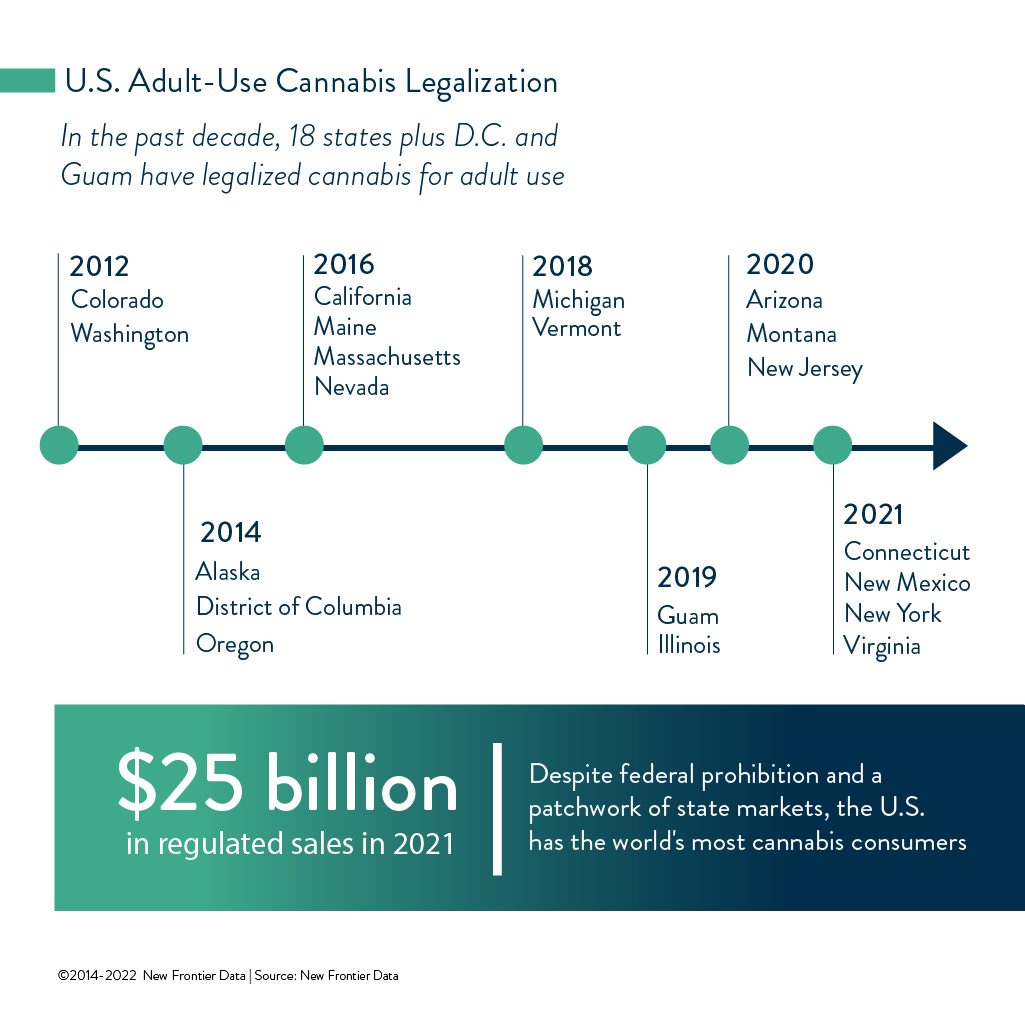
It was Election Day 2012 when Colorado voters approved a ballot initiative legalizing cannabis for sale, possession, and use by adults. In nearly a decade since the Centennial State became the first U.S. state to do so, 17 others (along with both the city of Washington, D.C., and the territory of Guam) have legalized cannabis even while the federal government maintains its longtime prohibition of marijuana. When Mississippi legalized medical marijuana last month, it marked more than twice as many (37) more states and territories (4) now permitting the use of cannabis to treat qualifying medical conditions. Worldwide, 33 countries have legalized its medical use since 2018.

Despite its prohibition, the U.S is home to the most cannabis consumers in the world, with 45 million people reportedly using cannabis annually. Nine of the 10 largest consumer markets are in North America or Europe, affirming strong market opportunities in both continents as lawmakers liberalize cannabis policies and transition to regulated markets.

U.S. Cannabis Sales Surpass $25 Billion

New Frontier Data notes that even while the U.S. lacks a federally regulated framework, the patchwork of state markets makes it the world’s largest legal cannabis market by a wide margin, generating over $25 billion in regulated sales in 2021. Even so, those U.S. legal sales captured slightly more than one-quarter of the country’s $90 billion in demand, underscoring the robust growth potential in the world’s largest consumer market, projected to surpass $40.5 billion in sales by 2025.

Today, eight months before the U.S. midterm elections, popular support for marijuana legalization has never been higher. Two years after legal cannabis was deemed by many jurisdictions as “essential business” during widespread shutdowns to mitigate the COVID-19 pandemic, mainstream acceptance has broadened Democratic and Republican political support for both state and federal reform measures.

Though there was initial enthusiasm for federal legalization after the election of President Biden in 2020, no action has been forthcoming from the administration. Instead, cannabis proponents and industry lobbyists expect to see a continuation of incremental measures come to pass, including several yet in 2022.

New Measures Taking Shape

Banking reform for cannabis businesses as detailed in the SAFE Banking Act would allow federally insured financial institutions to serve state-legal, plant-touching businesses without fear of legal jeopardy. The bipartisan Biological Medical Marijuana Research Act would expedite long-stifled research about cannabis, and the Veterans Equal Access Act of 2021 would allow Veterans Administration doctors to provide advice and treatment involving medical marijuana to former members of U.S. military services.

In a political era of fierce partisanship and sharp discord, the HOPE Act has the support of unlikely allies including Representative David Joyce (R-Ohio) and Representative Alexandria Ocasio-Cortez (D-NY) seeking to direct funding to states to expunge offenses for cannabis-related convictions.

Advocates also tout legal cannabis’ potential to create jobs and mitigate economic shortfalls from the pandemic. They welcome it as a moneymaker for states, and an overdue means for social justice for those demographic sectors most disproportionately affected by cannabis-related prosecutions and mass incarcerations.

Robust medical cannabis patient programs can help substantial portions of the populace, and help reduce stigma as positive precursors to adult-use regulations. The three leading U.S. medical markets by patient saturation (i.e., Oklahoma with 10% of its residents registered, New Mexico at 6%, and Pennsylvania at 4.5%) demonstrate successful levels of penetration where regulations and social acceptance have proved vital to the performance of those medical markets.

New Mexico has already moved into adult use, and Pennsylvania lawmakers have expressed intentions to do so. Oklahoma represents a real test of the medical-saturation effect, being a state that has fully embraced cannabis for medical use but stands down regarding progress towards full legalization.

Legalized Adult-Use States
Alaska (legalization passed in 2014), Arizona (2020), California (2016), Colorado (2012), Connecticut (2021), Illinois (2019), Maine (2016), Massachusetts (2016), Michigan (2018), Montana (2020), Nevada (2016), New Jersey (2020), New Mexico (2021), New York (2021), Oregon (2014), Vermont (2018), Virginia (2021), and Washington (2012), along with the District of Columbia (2014), and Guam (2019)

States on the Bubble for Legalization Measures in 2022

Delaware, Florida, Maryland, Minnesota, Missouri, New Hampshire, and Ohio for adult-use programs, and Texas for expanding its medical-use program

Delaware: Already having a well-established medical marijuana program, the House Health and Human Development committee in January approved HB 305, a bill awaiting consideration before a vote. Governor John Carney has been lukewarm to it, neither advocating legalization nor threatening a veto if the bill reaches his desk.

Florida: Though nothing will happen during this legislative session while the Sunshine State’s Republican majority and Governor Ron DeSantis oppose adult-use legalization, polled majorities favor it among both Democratic (76%) and Republican (64%) voters.

Maryland: With the Maryland General Assembly considering whether to debate adult-use cannabis legislation this year, support among polled residents decreased slightly (from 67% to 60%) between March and October 2021, according to Goucher College.

Minnesota: Though adult-use cannabis was technically legalized in May 2021, the measure stalled when the legislative session ended two days later. Lawmakers are now resuscitating it, and the governor has earmarked funding for legalization in his annual budget request.

Missouri: Multiple competing campaigns are afoot to present legalization bills; given that the Missouri General Assembly has not been as supportive as the overall electorate, pursuing the initiative petition process seems vital.

New Hampshire: Without including retail sales, state representatives voted in January to legalize possession and home cultivation. With another half-dozen cannabis proposals being considered, a more comprehensive program including commercial retail and cultivation looks due for passage this year.

Ohio: Featuring one of the nation’s top medical cannabis programs, Ohio has a measure headed for its November ballot amid strong voter support. Other reform measures are under consideration, including a Republican-backed adult-use bill.

Texas: The state’s Compassionate Use Program limits medical cannabis to low-dose THC containing no more than 1% THC by weight. Advocates like Americans for Safe Access want to expand the medical-use program, noting that the state’s registry of some 3,500 patients grew by 46% in 2021, even though only two Austin-area dispensaries exist throughout the nation’s second-largest state by area. Texas is notable as the largest state which has not yet approved a full medical market. Amid a population of nearly 30 million, the state’s prospective program could fast become the country’s largest medical market.

Local political dynamics — including specifics of the proposed language in each market — will influence the timing and likelihood of passage of each state’s reforms.

As seen in states including Mississippi and South Dakota, even broadly popular measures may face stiff opposition and legal intervention from conservative lawmakers who oppose expanding access to cannabis. However, with the tide of public opinion gathering strongly behind ending prohibition, the coming expansion of state markets in the U.S. is all but assured.

The post Which States Are Looking to Legalize Cannabis This Year? appeared first on New Frontier Data.


from New Frontier Data https://newfrontierdata.com/cannabis-insights/which-states-are-looking-to-legalize-cannabis-this-year/

source https://ozlemhermsen.tumblr.com/post/678216035724378112

Uruguay’s Legal Cannabis Market: Lessons Learned

uraguay flower export

By Esteban Rossi I., Ph.D., Analyst, New Frontier Data

Nearly a decade ago, Uruguay’s President José “Pepe” Mujica argued that no one should go to prison for smoking cannabis, and that it was absurd to allow illegal or informal actors to control the market. Subsequently, under his leadership, Uruguay embarked on a bold and unprecedented policy experiment to legally regulate cannabis for adult use. Though most of the Western world has since become familiar with Mujica’s legacy, the pressing question remains: What is the best path to establish regulate this young industry and create a new market?

In attempts to characterize the best policy approaches to cannabis legalization, New Frontier Data reviews the accomplishments, lessons, and perspectives from the Uruguayan experience. We draw from data and analysis available through, Equio our business intelligence platform, along with trade records, interviews with key stakeholders, and information provided by the Uruguayan Cannabis Institute (IRCCA).

Crucial milestones

After a slow and fitful start, the IRCCA achieved three important milestones and set the course for multiple jurisdictions. In a few years, Uruguay established a successful adult-use market, carved a niche in international flower markets, and managed the public narrative surrounding the legalization process.

Presently, Uruguay has approximately 260,000 adult users that obtain cannabis through different channels. According to IRCCA between 30%-35% of them regularly purchase cannabis through pharmacies (48,000), home cultivation (13,000), and clubs (7,000 users) distributed in 200+ clubs). Although the remaining 190,000 users still obtain cannabis in the mostly domestic grey market, the regulated market exhibited a 27% growth rate between 2021 and 2022.

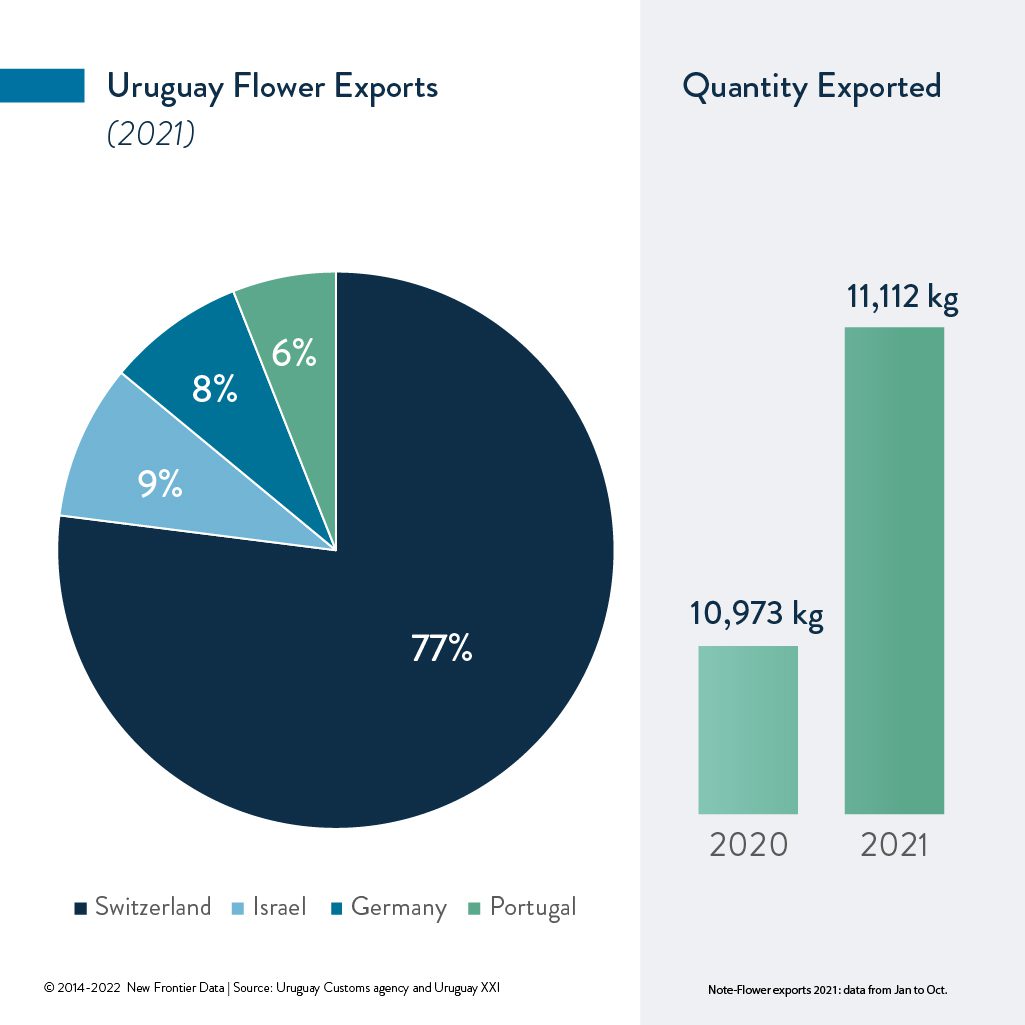
Local firms, licensed by IRCCA and supported by the agriculture ministry and export agency, found a niche in foreign markets. In 2020, shipment figures were as follows: THC flower for $5.2 million USD of THC-flower; CBD-flower for $2 million USD, for a total of $7.2 million USD. In addition, Uruguay exported a few small seed shipments along with Epifractan, a CBD tincture manufactured by Medicplast, in a deal worth $173,000 USD. Conversely, flower exports during the first 10 months of 2021 accounted for $5.1 million USD.

Over the past two years, Uruguayan THC-flower reached Germany, Portugal, and Israel while most CBD flower entered Europe via Switzerland. Tinctures or extracts, in turn, were mostly shipped to Brazil and Argentina. These figures represent the accomplishments of fewer than 20 firms that delivered quality products for international buyers. In addition, recent figures also provide a benchmark to evaluate the business projections for younger firms.

While these companies are well-positioned to take advantage of recent legislative advances in European markets, investors should remain cautious about potential protectionist approaches to regulation and international trade. If European countries like Malta, Luxembourg, and Germany choose quality and price advantages and favor free trade, Latin American firms will face soaring exports in 2022 and 2023. Conversely, if European lawmakers follow the Canadian example and restrict imports, the market will evolve much more slowly, and subject consumers to higher prices.

The Uruguayan regulatory model hinged on government control of the adult market and demonstrated that even in traditional societies, citizens dislike prohibitionist policies and actively seek alternative approaches. Uruguayan public officials carefully managed the public discussion regarding cannabis policy in Latin America. The IRCCA clearly communicated that substances like THC should not be consumed by teenagers and should be used under appropriate guidance. Still, the agency demonstrates how the state can play an active role in the cannabis market to ensure that users can safely access a quality product at a reasonable cost.

Lessons learned

So far Uruguay demonstrated that private-public collaboration yields results and that the premises defended by Mujica ring true today as back in 2013. Meanwhile, the public and financial markets benefited greatly from the creation of this new industry. Sadly, the kind of principled vision and strength of the Uruguayan government proved hard to find. In Colombia for example, although the government recently expanded access to generic formulations, incomplete technical and trade regulations continue to delay flower exports. The situation is particularly confusing since the president himself announced back in July 2021 that he would support the cannabis industry. In a similar vein, multiple Latin American governments continue to criminalize users and home-growers and have yet to develop a robust regulatory framework to reach regional or international markets.

In addition to the potential shortcomings of political leaders, users and firms must shoulder some of the blame for the incremental evolution of the legal industry in the region. All too often, cannabis enthusiasts and business leaders misunderstand the enormous impact of four decades of prohibitionist policies. In fact, few narratives in recent history have been so successful in shaping public imaginaries around social justice, public health, and police control. Therefore, the legal cannabis industry requires substantial communication and educational efforts to win the hearts of socially conservative leaders and their constituencies.

Expectations for 2022

Over the next several months we should expect incremental growth, closely tied to legislative advances in Europe as well as Israel and Australia. IRCCA is preparing to launch a new product (flower strain) with higher THC content to satisfy the needs of experienced consumers. Slowly but surely, Uruguayan and Colombian products will continue to chip away at the illicit market that comprises roughly 12 billion and look for customers in Europe, Australia, and Israel (see Latam, 2021. Global Report). Moreover, a growing number of small to medium firms will continue to develop new products for small or online markets. It is most likely that the next breakthrough product will be developed in one of these local niches. Lastly, new players recently jumped into the seed production business aiming to provide seeds to home growers, Uruguay and Colombia seem well-positioned to lead the way.

The post Uruguay’s Legal Cannabis Market: Lessons Learned appeared first on New Frontier Data.


from New Frontier Data https://newfrontierdata.com/cannabis-insights/uruguays-legal-cannabis-market-lessons-learned/

source https://ozlemhermsen.tumblr.com/post/678212273405362176

Monday, 7 March 2022

Should Patients With Congenital Heart Disease Use CBD?

Congenital Heart Disease Symptoms

In adults, common symptoms include:

  • Rapid heartbeat or too-slow heartbeat, known as arrhythmia
  • Bluish tint on the lips, fingernails and skin
  • Swelling in organs or tissues
  • Shortness of breath
  • Tendency to become easily fatigued

There are many variations of congenital heart disease. Some do not cause symptoms, while others may have symptoms that recur years after therapy. In most cases, the condition requires treatment throughout the patient’s life.

CBD for Heart Diseases

Researchers are studying the effects of CBD for heart attacks and strokes, and other heart conditions such as congenital heart disease. Studies on animals have presented positive effects of CBD on the cardiovascular system. CBD appears to have a protective role by reducing the effects of cardiac ischemia, a reduced ability of the heart’s muscles to pump blood. It also appears to offer a protective effect in models of stroke by maintaining cerebral blood flow.

In light of these findings, CBD could show a benefit for coronary heart disease patients or transient ischemic attacks. However, more analysis is needed. Researchers need to perform clinical trials to determine if initial findings translate into benefits for the human cardiovascular system.

Because the liver breaks down CBD in the body, the process can interfere with medications for heart conditions, such as warfarin, some statins, beta-blockers, calcium channel blockers and nitrates. Therefore, CBD can pose health risks to some patients with heart failure.

While initial trials indicate evidence of CBD’s positive effects on the cardiovascular system, patients with congenital heart disease and other cardiovascular conditions should speak with their doctor before using CBD.

The post Should Patients With Congenital Heart Disease Use CBD? appeared first on Smart CBD Hub.


from Smart CBD Hub https://smartcbdhub.com/congenital-heart-disease/
via IFTTT

source https://ozlemhermsen.tumblr.com/post/678078562404909056

Thursday, 3 March 2022

USDA’s National Hemp Report Is Feds’ First Look at U.S. Production

US hemp production

By Eric Singular, Director, Hemp Business Journal

A new report released by the United States Department of Agriculture (USDA)’s National Agricultural Statistics Service (NASS) represents the feds’ first in-depth look at the U.S. hemp market since the 2018 Farm Bill.

Based on survey information collected throughout the fall, the National Hemp Report shares feedback from more than 13,000 producers nationwide to quantify the value and acreage of domestic hemp production. Up to now, U.S. hemp acreage was projected through patchwork estimates by advocacy groups like Vote Hemp using data from state agriculture departments and planting reports. Beginning last October, the Hemp Acreage and Production Survey was sent to furnish regulatory agencies with a hemp production benchmark to inform governmental policies. The findings will help regulators set allocations of grant funding, along with price assessments for each of the USDA’s Risk Management Agency (RMA)’s Whole-Farm Revenue Protection, Multiple Peril Crop Insurance (MPCI) coverage, and Farm Service Agency’s Noninsured Crop Disaster Assistance Program. It should likewise provide key market insights to producers, state governments, processors, and other industry stakeholders.

Measuring Crop Yields by Category

Data collected about indoor and outdoor hemp production were categorized by floral, fiber, grain, and seed yields to examine the U.S. market by the crop end-use (e.g., “grain” refers to hemp produced for food-grade human consumption, whereas “seed” refers to certified planting seed produced for further hemp production).

According to NASS, 2021’s total U.S. planted area for industrial hemp was 54,152 acres (i.e., about twice the area of New York’s Manhattan Island). Among more than 54,000 planted acres, a reported 16,000 acres were harvested for smokable flower and cannabinoid extraction, with another 12,700 for fiber, 8,255 for grain, and 3,515 for seed.

A primary goal of the NASS survey was to assess the national average yield per acre and price per pound of harvested hemp material being sold for varying end uses. As seen in years past, significant variability exists between licensed, planted, and harvested acreage, respectively. Crop failure due to extreme drought was a critical factor contributing to a 20,672-acre discrepancy between planted and harvested acreage in 2021. The RMA reports that U.S. hemp growers last year insured 12,189 acres under 59 policies to protect $10.9 million in liabilities, suggesting the critical need for establishing a baseline for federal crop insurance.

hemp yield

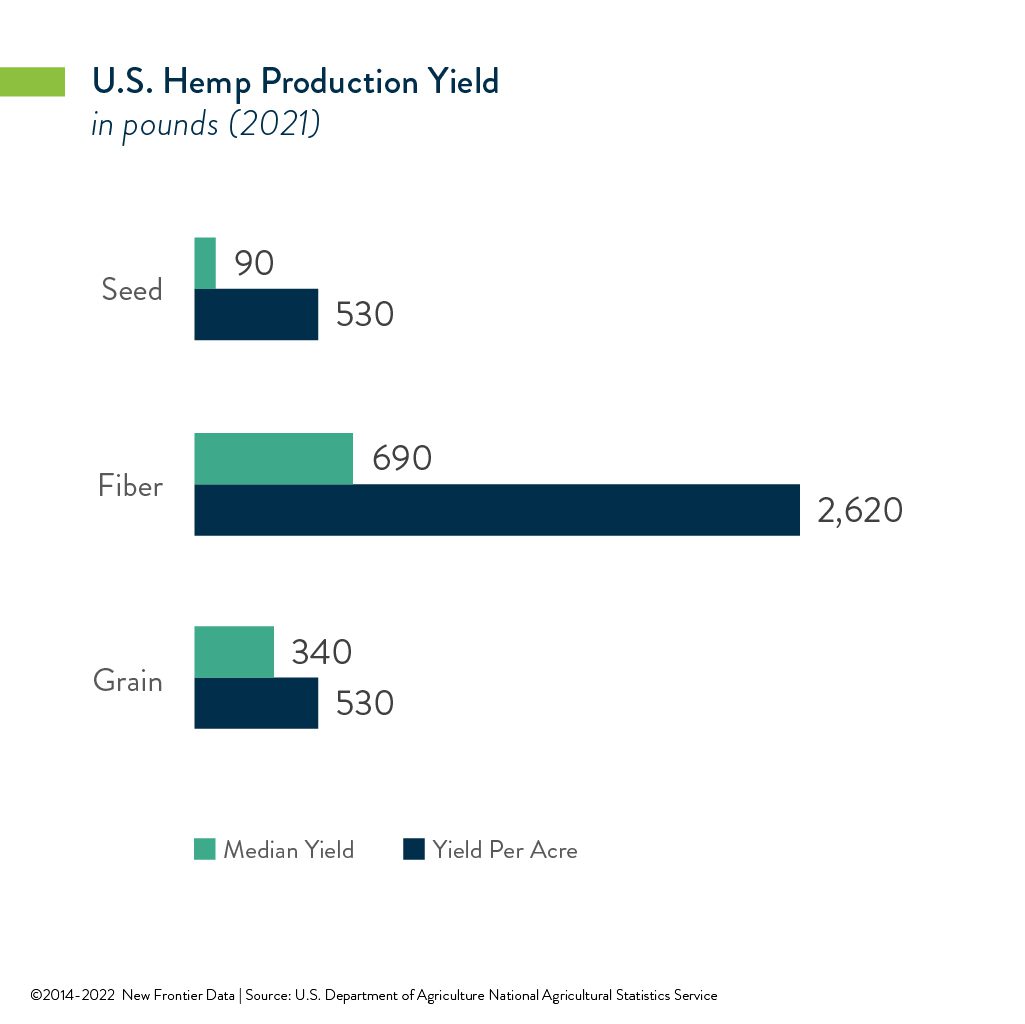
The average 2021 U.S. yield for outdoor smokable flower and cannabinoid hemp production was estimated at 1,235 pounds per acre, for a national total of 19.7 million pounds (15.7 million pounds sold). The value was totaled at $623 million. The average yield for grain production was estimated at 530 pounds per acre, for a national total of 4.37 million pounds (3.96 million pounds sold). The value was totaled at $5.99 million. The average fiber production yield was estimated at 2,620 pounds per acre, with a national total of 33.2 million pounds (27.6 million pounds sold) worth $41.4 million. The estimated average yield for seed production was 530 pounds per acre, for a total of 1.86 million pounds (1.68 million pounds sold) worth $41.5 million nationwide. The total U.S. yield for outdoor hemp production was worth $712 million, with indoor U.S. hemp production reaching $112 million.

Which States Fared Best?

Among individual states, Colorado led the nation in outdoor hemp production (with 10,100 acres planted), followed by Montana (7,900), and both Texas and Oklahoma (tied at 2,800 acres apiece). Montana led in acres harvested (4,500), followed by Colorado (3,100) and Minnesota (2,300). California led the nation’s indoor production at 3.9 million square feet, followed by Colorado (2 million square feet), and Oregon (1.7 million square feet).

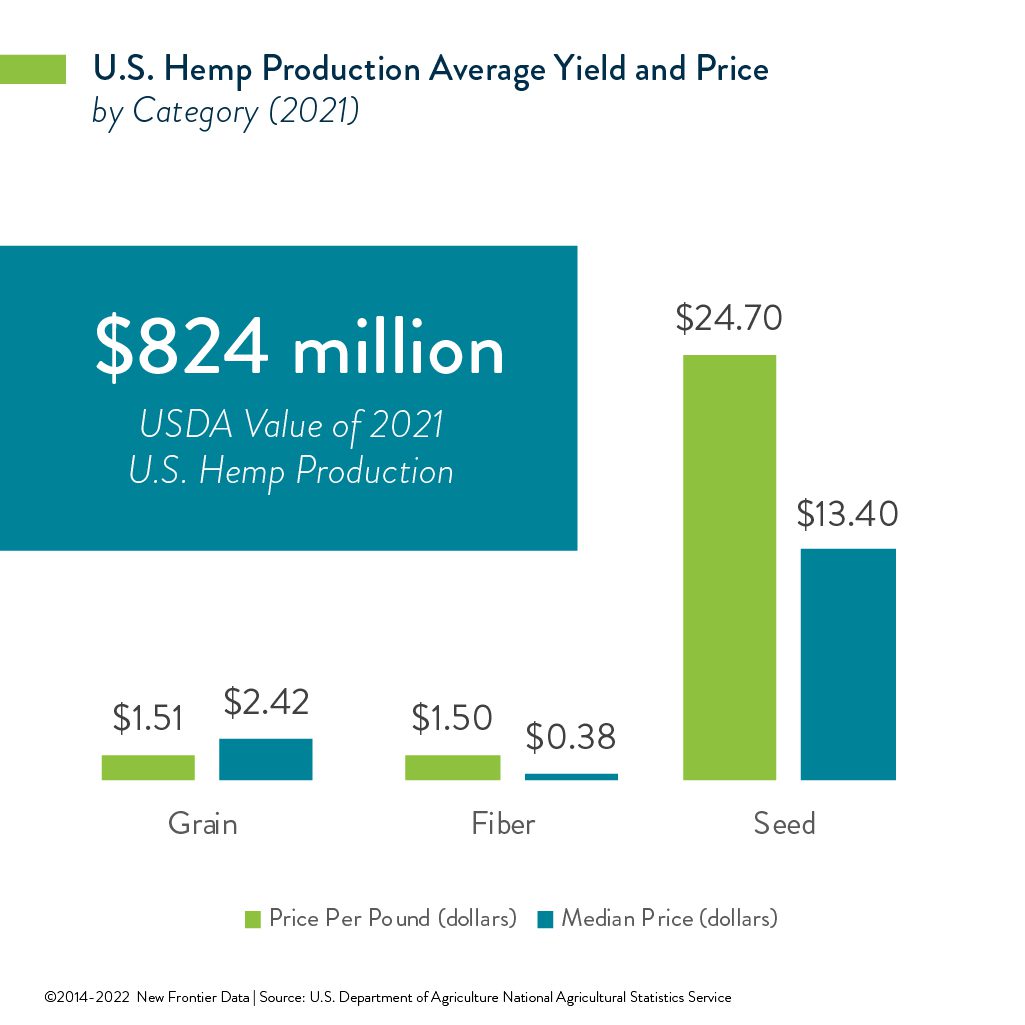
Notably, both the reported prices per pound and the median prices for most categories were significantly higher than anticipated. The average price per pound for grain was reported at $2.42. New Frontier Data found that the 2021 market was closer to $0.65-$0.85 per pound for conventional grain, and $1.15-$1.50 per pound for organic.

hemp price

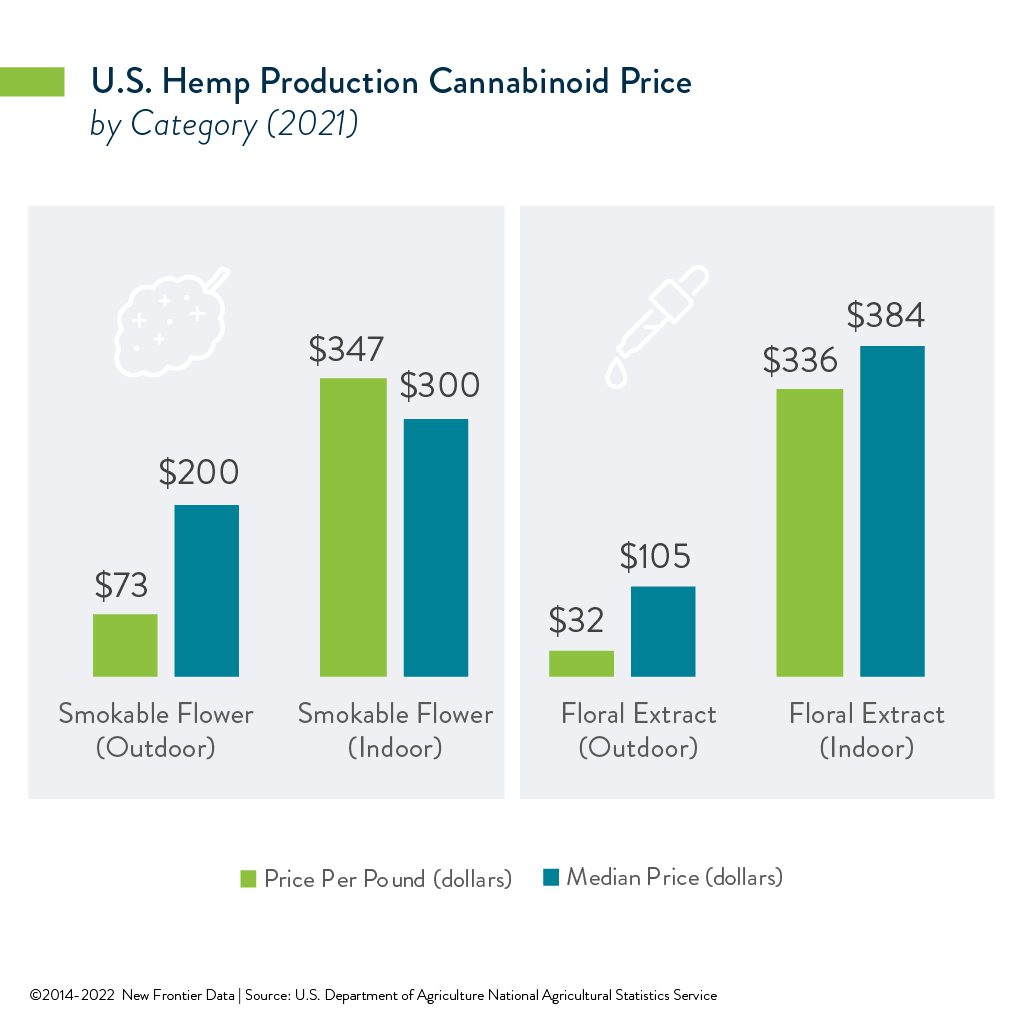
Interestingly, while Hemp Benchmarks assessed the 2021 annual average price for smokable hemp flower at $265 per pound, the National Hemp Report pegged it at $347 per pound. One possible explanation for the discrepancy is whether survey respondents reported higher prices so as to skew the benchmarking for crop insurance more favorably. It’s also worth noting that USDA did not differentiate between crops grown for biomass for cannabinoid extraction and those grown for smokable flower. This certainly skews the pricing data for the floral category as smokable flower commands a much higher premium than biomass.

In 2021, floral hemp production was insurable under both the Nursery Commodity Insurance

program and the Nursery Value Select pilot crop insurance program. There is also an MPCI pilot insurance program to provide Actual Production History coverage for eligible industrial hemp producers in 24 states, though access to federal crop insurance is still extremely limited.

This year, hemp producers need a contract for the purchase of their hemp while meeting all applicable state, tribal, and federal regulations to receive insurance. As in 2021, crop insurance does not cover any loss due to exceeding the allowable THC threshold of 0.3 percent.

The Outlook for 2022 and Beyond

Last summer the National Industrial Hemp Council, a U.S. trade organization, released a report which estimated that the value of domestic hemp prediction will surpass $10 billion by 2025. Given how the National Hemp Report pegged the value of U.S. hemp production at $824 million in 2022, that projection would mark a 1113.6% increase within three years’ time. Meanwhile, the report projected that grain production would rise to 65.8% of total acreage, with fiber accounting for 31.4%, reducing cannabinoid production to only 2.8% by 2030.

Given all of the regional fiber and grain processors which have become operational in the past 12 months, a significant increase in U.S. hemp acreage is due in 2022, particularly for seed, grain, and fiber. Yet, as agricultural commodities and fertilizer prices are skyrocketing, competition for acreage becomes increasingly challenging.

Many U.S. hemp processors will be challenged this year to find regional growers willing to contract for hemp production while price competition for staple agricultural crops like corn, wheat, and soybeans is so high.

New Frontier Data will be closely analyzing the status and forecasting the near-term growth of the domestic hemp market in the forthcoming U.S. Hemp Report, due this spring.

The post USDA’s National Hemp Report Is Feds’ First Look at U.S. Production appeared first on New Frontier Data.


from New Frontier Data https://newfrontierdata.com/cannabis-insights/usdas-national-hemp-report-is-feds-first-look-at-u-s-production/

source https://ozlemhermsen.tumblr.com/post/677759317495136256

Does CBD Help Patients With Tuberculosis?

What is Tuberculosis?

The bacterium Mycobacterium tuberculosis causes TB. It usually affects the lungs, but the bacterium can also affect the spine, kidneys and brain. Two forms of tuberculosis exist: latent TB infection, when the body’s immune system controls small numbers of bacteria, and TB disease, also known as active TB.

What Are the Symptoms of Tuberculosis?

TB symptoms include:

•         Night sweats

•         Chills and fever

•         Loss of appetite and unintentional weight loss

•         A cough that lasts for more than three weeks

If tuberculosis affects other body systems, the patient’s symptoms may be in other areas; for example, TB in the bones may lead to bone pain.

Can CBD Treat Tuberculosis?

Throughout the world, cannabis has historically been used to treat tuberculosis. Its application has been documented in India, Mexico, Argentina, Czechoslovakia and South Africa. In a modern study, a cannabinoid receptor demonstrated the ability to balance the body’s inflammatory response caused by mycobacteria. Another study conducted in 1960 showed CBD’s powerful antibiotic effect on TB bacteria, suggesting that CBD reduces growth of tuberculosis bacterias.

The historical use of CBD and modern studies both present a strong case that CBD’s antimicrobial characteristics are effective to treat tuberculosis. However, there are some risks of CBD for tuberculosis. CBD can have adverse side effects like many medicines and treatments. They include drowsiness, reduced appetite and fatigue. CBD can also interact with other drugs.

If you suspect you have been exposed to tuberculosis, see your healthcare provider right away. You may be prescribed a course of antibacterial medications to treat TB. Talk to your doctor before using CBD oil for symptoms of tuberculosis.

The post Does CBD Help Patients With Tuberculosis? appeared first on Smart CBD Hub.


from Smart CBD Hub https://smartcbdhub.com/cbd-tuberculosis/
via IFTTT

source https://ozlemhermsen.tumblr.com/post/677738861340901376

Tuesday, 1 March 2022

Bearing Out the Social Effects from European Cannabis Legalisation

By Oliver Bennett, Special Contributor to New Frontier Data

Amid European debates over whether to legalise cannabis, some intense controversies surround policy proposals for harm reduction. While advocates note that pro-legalisation outcomes will drive out organised crime, free up police resources for other priorities, and mitigate personal harms from problematic consumption patterns, opponents argue that legalisation will lead to increased use, particularly among young people, and result in greater harms.

As a tool to objectively gauge such outcomes, New Frontier Data’s cannabis business intelligence platform Equio now features a legality index (subscription required) as part of its Global Dashboard – providing an at-a-glance overview of legalization by country.

Debunking Fears of Increased Use Among Youths 

Every European country sees similar arguments being had between politicians and lobbyists, a recent Swedish report suggests that evidence does not support such fears about increased consumption by the young.

Using data gathered from each the Czech Republic, Germany, Italy, Netherlands, Norway, Portugal, Slovakia, Spain, Sweden, and the United Kingdom, and conducted among 18-to-34-year-olds between 1994 and 2017, the findings revealed that while cannabis use varied widely within the long study period and between countries, cannabis use overall proved to be stable or “weakly increasing” in countries where legislation was not changed, while average use in those countries actively decreased following enacted measures, whether stricter or more lenient.

In the United States, too, a 2020 study published in the Journal of Adolescent Health examined state-level cannabis prohibition laws between 1999-2017, and likewise found evidence lacking that legalisation spurred cannabis use by younger consumers.

Such findings reflected a 2018 BMJ study drawn from studies across the U.K., Netherlands, and Czech Republic – along with the U.S. and Australia – which concluded that “cannabis policy liberalisation does not appear to result in significant changes in youths’ use, with the possible exception of legalisation for recreational purposes that requires monitoring.”

It has long been reported in the U.S. that teenage cannabis use has not been seen to increase in adult-use states. Furthermore, legal cannabis consumption has compared well against the use of alcohol by adults aged 21-25, posing an either/or choice between intoxicants: “If younger adults are allowed to make their own decisions about this far more dangerous substance, they should also be allowed to decide whether to use cannabis.” After the states of Colorado and Washington respectively legalized cannabis in 2012, both conducted surveys about it with high-school students who showed modest decreases in their rates of using it.

Echoes of ‘Reefer Madness’ Paranoia

While research is helping to erode calcified attitudes about cannabis, politics and policy can nevertheless lean on old saws and the status quo supporting prohibition.

In the Australian state of Victoria, a legalisation effort proposed by Reason Party MP Fiona Patten and based around harm reduction was voted down due to the major parties’ commitment to outlawing drug use as posited by a claim that “decriminalising dangerous drugs sends the wrong message and won’t help Victoria recover and rebuild.”

Similarly, alarmist messages about heightened cannabis potency levels and an increased potential for mental illness rates among users have found currency among opponents in Europe. Mental health concerns are among the most powerful anti-legalisation tools, and in the U.K. a recent report cited a professor of psychiatric research at the Institute of Psychiatry, King’s College London, who said that nearly a third of the psychosis patients seen at his London practice in south London were impacted by the use of high-potency, hydroponically grown “skunk” cannabis.

Conversely, in the U.S., Canada, and the U.K., publicized stories about sick kids being denied life-changing cannabis medicine have helped promote acceptance of medical cannabis, as has consumer access to CBD products to promote wellness applications. In the U.S., states with legal cannabis have had a few more years to test assertions made by anti-legalisation forces,  and several popular prohibitionist arguments have been debunked, whether relating to crime rates or higher rates of traffic accidents and fatalities.

Post-Pandemic Optimism

Ultimately, in a post-pandemic environment welcoming socioeconomic buoyancy from creation of an estimated 77,000 U.S. jobs created during 2020, and some unexpected windfalls from unanticipated tax revenues, increasingly positive risk-benefit analyses centred on adult-use cannabis are helping to push public acceptance ever closer to adult-use legalisation.

However quickly that politicians will decide to lead, follow, or get out of the way is another matter yet to be determined.

The post Bearing Out the Social Effects from European Cannabis Legalisation appeared first on New Frontier Data.


from New Frontier Data https://newfrontierdata.com/cannabis-insights/bearing-out-the-social-effects-from-european-cannabis-legalisation/

source https://ozlemhermsen.tumblr.com/post/677581862298845185

Survey Says: Opposition Keeps Fading to Legalization’s Favor 

US support cannabis legalization

By John Kagia, Chief Knowledge Officer, New Frontier Data

Considered the statistical standard since 1972, the biennial update of the General Social Survey (GSS) from the University of Chicago’s National Opinion Research Center is out, and it is a veritable diamond mine of data points from public opinion polling. By parsing and juxtaposing nearly 6,000 variables, the GSS provides a vast array of insights to the American public’s attitudes, beliefs, and experiences about broad socioeconomic issues, cultural behaviors, and the national institutions and policies involved with them.

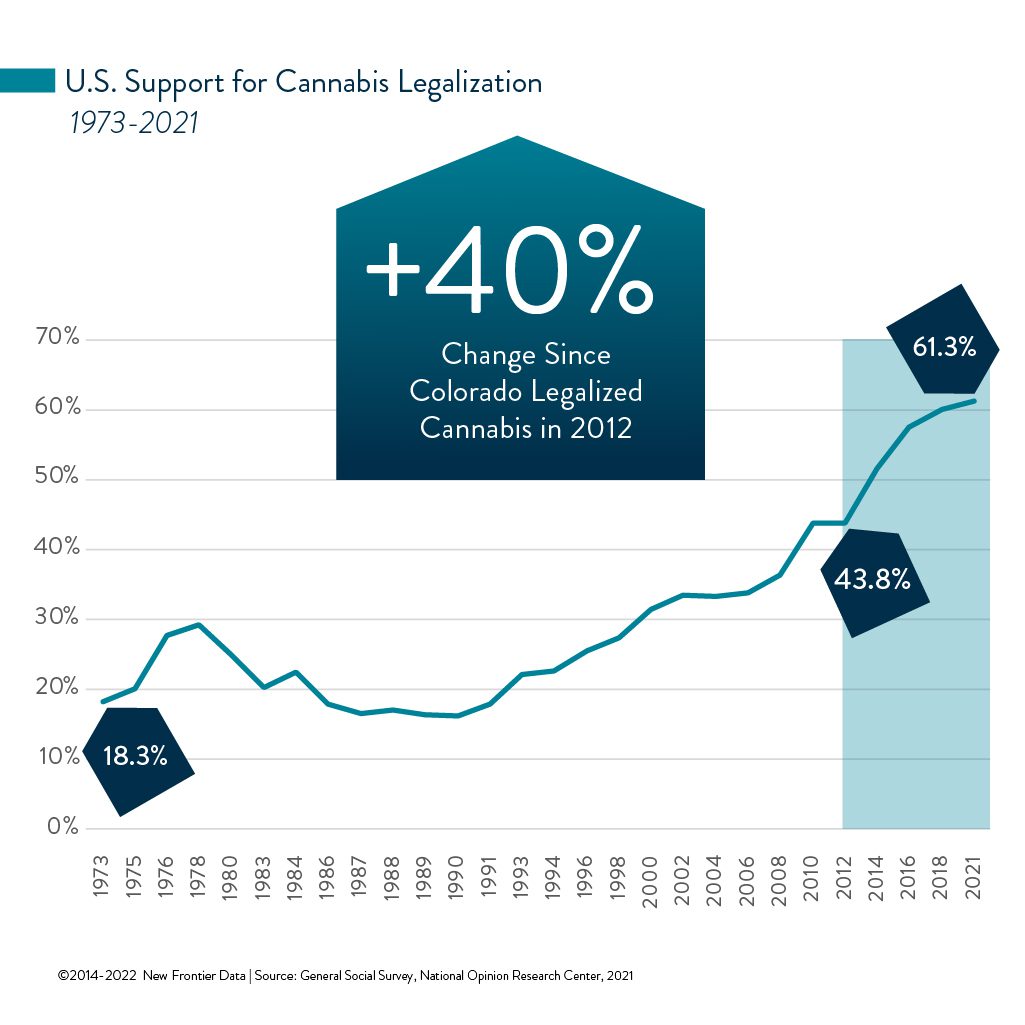
Where the legal cannabis industry is concerned, the newly released 2020 survey’s results show that support for cannabis legalization remains strong and steady, incrementally increasing from 60% in 2018 to 61% in 2020. Amid that national consistency, however, some striking demographic differences persist.

Support for legalization is now highest among adults of ages 26-35, approximately three-quarters (72%) of whom favor legalization, while support is conversely lowest (52%) among Americans over the age of 65. Nevertheless, even among those relative splits, a majority among every surveyed age group supports legalization.

Political Disparities Remain

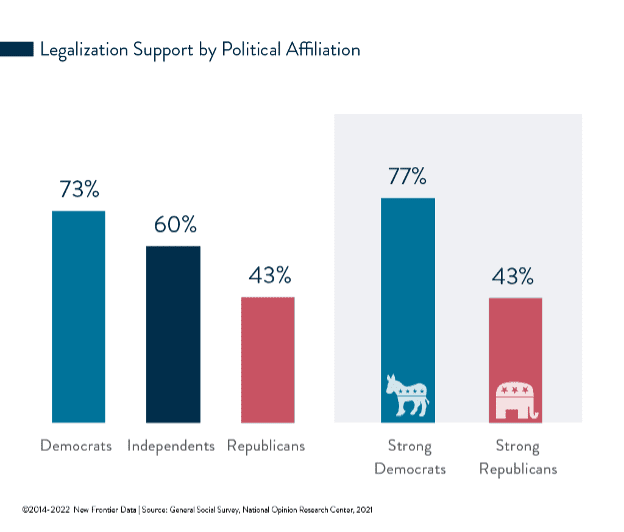
Sharper contrasts were revealed according to political orientation and party affiliations. Democrats (at 73%) were far more likely than were Republicans (43%) to support legalization, with independents (60%) virtually mirroring the overall national average. Among self-described liberals (91% in favor), support for legalization was 35 percentage points stronger than it was among self-identifying conservatives (55%).

Since the GSS began in 1972, the number of Americans who self-identify as independents has increased, from 26% then to 40% in 2020. Most of that growth has come at the expense of Democrats, with affiliation decreasing from 47% to 34%, while Republican identification has remained virtually unchanged (from 22% to 23%).

Predictably, attitudes toward crime and justice have strongly correlated to views on legalization. One GSS question asked respondents what should be a bigger priority for the justice system: Strengthening law and order through more police and greater enforcement of the laws, or reducing bias against minorities in the criminal justice system by reforming court and police practices?  Respondents who prioritized addressing biases in the criminal justice system were three times likelier to support legalization than were those preferring greater investment in enforcing the law (by 77% to 23%, respectively).

Attitudes Per Sexual Orientation and Religion

Another category of notable difference was based on respondents’ sexual orientations. Though there is almost no difference separating the views between males (60% in favor) and females (62%), dramatic differences were defined by sexual orientation. Strong majorities among those identifying whether as gay, lesbian, or homosexual (86%), or as bisexual (84%) more strongly supported legalization when compared to heterosexuals (59%). The higher levels of support among the LGBTQ community correlate to significantly higher rates of cannabis use seen within that community relative to among heterosexual adults. In New Frontier Data’s last cannabis consumer survey, cannabis use among LGBTQ adults was demonstrably three times higher than among heterosexual adults.

The GSS data affirms a potentially vital takeaway about national attitudes toward cannabis policy as the country approaches the 2022 midterm elections: There is no significantly obvious constituency which strongly favors cannabis prohibition.

Even among religious groups which historically have strongly expressed opposition, cannabis legalization is no longer a reliable indicator of support. Among 13 religious affiliations participating in the GSS, only two groups – Hindus and Muslims – opposed legalization by clear majorities (with 39% of Hindus and 19% of Muslims, respectively, supporting reforms). Comparatively, majorities among all other identified religions – including Orthodox Christians (69%), Jews (67%), Buddhists (60%), Catholics (54%), and Protestants (53%) supported legalization.

The seismic shift in public support across nearly 50 years of the GSS justifies optimism about federal cannabis reform. New Frontier Data’s cannabis business intelligence platform Equio provides insights, data, news, and analysis of vital industry metrics about the rapidly evolving cannabis industry.

The markedly diminishing political bases which once fiercely opposed legalization will offer commensurately few obstacles for national politicians seeking to address incongruities between federal and state laws.

The post Survey Says: Opposition Keeps Fading to Legalization’s Favor  appeared first on New Frontier Data.


from New Frontier Data https://newfrontierdata.com/cannabis-insights/survey-says-opposition-keeps-fading-to-legalizations-favor/

source https://ozlemhermsen.tumblr.com/post/677581861616238592

How To Calculate the Right Dose of CBD Oil for Dogs

Can CBD Oil Shrink Your Dog’s Tumor ? More research needs to be done on how CBD affects tumors in a dog, but recent studies show the potent...