Tuesday, 29 March 2022

Geography Aside, Israel Is a Player in Europe’s Cannabis Markets

By Oliver Bennett, Special Contributor to New Frontier Data

While the cannabis industry’s eyes may be firmly on Europe, there is another country having been long positioned in the avant-garde of cannabis, and pushing the policy agenda once again. While Israel is not itself in Europe, it is adjacent to the continent, with significant linkage to that territory as well as to the U.S. and the Middle East and North Africa, including the Gulf of Guinea and sub-Saharan regions of Africa.

Israel is already a cannabis-friendly country. Per capita, it is among the world leaders in medical cannabis consumption, with more than 100,000 Israelis reportedly having medical cannabis permits. Cannabis possession has been decriminalized since 2019 for those ages 18 and over, and possession of homegrown cannabis is no longer a criminal offense.

Since then, Israel has not taken cannabis legislation much further, and efforts to enact full recreational legalization failed in 2020. This year, however, there seems to be some movement afoot. Israel’s Justice Minister Gideon Sa’ar has introduced a revised decriminalization plan aiming to change the status of cannabis offenses from criminal to civil, while expunging criminal records. With the support of President Isaac Herzog, Sa’ar called on Israelis convicted for possessing or using cannabis to submit requests to have their records erased, allowing them to retrospectively be considered innocent, while enabling those with pending proceedings to contact the police and ask that their charges be dropped. Their announcement noted that a 2019 order was set to expire – a statute of limitations that opens the way for legal amendments to reposition possession and use of cannabis as administrative offenses. In another move, it was announced in February that Israel would no longer include CBD in its Dangerous Drug Ordinance, allowing it more latitude in both use and importation.

Israel’s arguments for cannabis liberalization – as well as legalization – have friends in high places. Earlier this year, former prime minister Ehud Olmert, who has interests in the medical cannabis industry (most notably in the shape of start-up Univo), said that as part of a group of cannabis investors he hopes to get Israel to legalize cannabis. “Everything will change dramatically overnight if there will be legalization,” he said, leading to speculation that it could happen yet this year.

Those developments come as part of a long history of cannabis leadership in Israel. As available to review via New Frontier Data’s cutting-edge Equio platform, medical cannabis has been legal in Israel since the late 1990s; since the allocation of the first domestic licenses in 2006, the country has developed into a world-renowned cannabis R&D hub. Now the country has the most developed medical cannabis scheme outside of North America. Over 0.6% of the Israeli population is currently registered as users; in contrast, Germany – Europe’s leader for cannabis-based treatments – has a penetration rate of under 0.15%.

Israel has a strong biotech sector in general, which has prompted it to take cannabis seriously. Nationwide, 31 companies have been permitted to grow medical cannabis for 88,000 authorized patients, with five more producers authorized to process and manufacture medical cannabis products, according to the Israeli Medical Cannabis Agency. Dry flower dominates Israel’s medical cannabis program, and is likely to remain the medical model for the foreseeable future.

Indeed, Israel has a reasonable claim on being the historic global leader in cannabis research. THC’s discovery in the early 1960s by Israeli Professor Raphael Mechoulam is often cited as the key milestone for global cannabis research. That was followed in 1992 by the similarly significant discovery of the endocannabinoids system, courtesy of, among others, the eminent Professor Lumir Hanus.

Since those findings, Israel has sought to remain at the forefront of cannabis research while gaining headlines in the process. In 2020 Israeli scientists launched clinical trials to learn whether cannabis might be efficacious in stopping the spread of the COVID-19 coronavirus, while more recent trials between Soroka University Medical Center and the Israeli medical cannabis company Cannbit-Tikun Olam showed promising results for the treatment of post-traumatic stress disorder (PTSD).

Comparable to European efforts, Israel is also putting a domestic emphasis on business and job creation. In the Negev Desert, the town of Yeruham is growing a reputation as Israel’s powerhouse for medical cannabis technology, with lots of start-ups working on medical cannabis production. Efforts are being led by the incubator firm CanNegev, which is aiming to foster a creative cluster of cannabis companies.

Israel is involved in imports and exports to Europe with a thriving exchange of ideas and products. For instance, the large Israeli pharmaceutical chain Super-Pharm is set to import Portuguese producer Agrivabe’s Miracle Alien Cookies cannabis strain to sell as Cannavix Miracle. That brings Super-Pharm’s range of medical cannabis to about 200 different strains, and will bolster Israel’s educational retail approach with workshops and pharmacist training.

There are other recent cannabis firsts in Israel to illustrate the country’s general thinking. Tikun Olam is said to be the first American-style, stand-alone cannabis dispensary in Israel, while a medical cannabis café called Smokey Monkey (based in Tira), is the first such café where people can buy and use medical cannabis to treat themselves for more common conditions, including pain. Notably, the cafe is close to the Green Line demarcation border between Israel, Jordan, Egypt, and Syria.

Israel is pushing to expand R&D for specific conditions. Cannabotech recently released a study revealing the effectiveness of CannaboBreast medications for breast cancer – a potential treatment to be combined with more orthodox chemotherapy against the biological and hormonal processes of the disease. The Israeli company Gynica is working on cannabis-based treatments for women dealing with painful menstruation or intercourse, while last year medical cannabis giant Panaxia began exporting its medical cannabis vapes to Germany – the first country to gain approval to legally market a cannabis product in Europe. As European markets develop, Israel is certainly to remain a significant peripheral player.

The post Geography Aside, Israel Is a Player in Europe’s Cannabis Markets appeared first on New Frontier Data.


from New Frontier Data https://newfrontierdata.com/cannabis-insights/geography-aside-israel-is-a-player-in-europes-cannabis-markets/

source https://ozlemhermsen.tumblr.com/post/680103575478779904

Coexisting Cannabis Markets: The Interplay of Medical Versus Adult Sales

medical cannabis saturation

By John Kagia, Chief Knowledge Officer, New Frontier Data

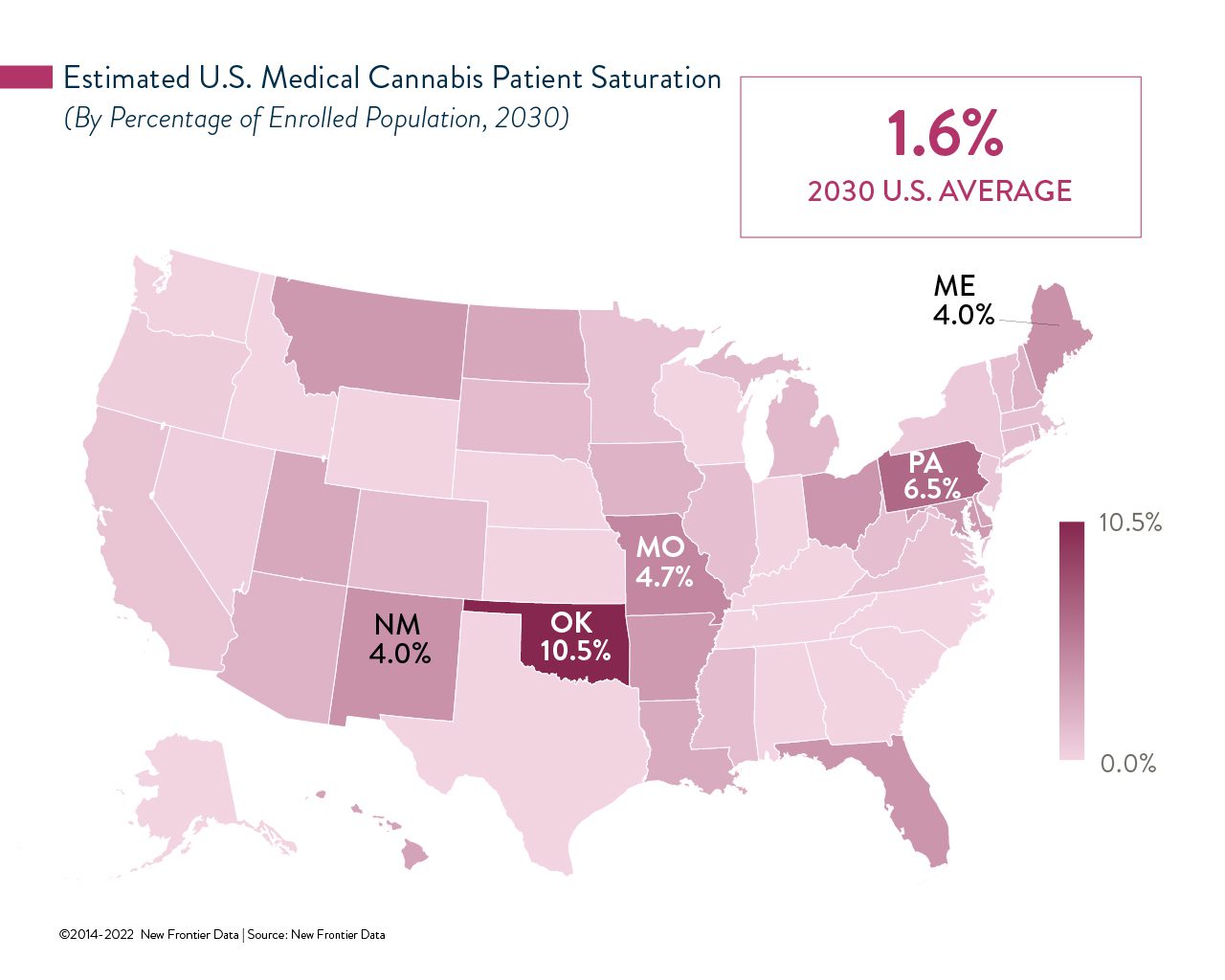
In the new 2022 U.S. Cannabis Report: Industry Projections & Trends, New Frontier Data analyzes growth and trends shaping the U.S. medical cannabis industry. With 38 state markets (plus Washington, D.C.) operating legal medical cannabis markets, the total number of registered medical cannabis patients nationwide surpassed 4.4 million in 2021. In those states where cannabis has been legalized for medical use (with no assumptions of any new medical markets by 2030), New Frontier Data projects that there will be a combined 5.7 million registered medical cannabis patients by 2030, representing nearly 2% of the nation’s entire population.

Patient Satisfaction

The central reason for states’ approving the inclusion of cannabis to their medical programs is broadly affirmative feedback from patients that it works. According to New Frontier Data’s latest cannabis consumer research, 93% of patients using cannabis medicinally report that their conditions have improved, with 57% reporting that they have improved significantly.

Chronic pain continues to be the leading reason patients participate in the medical market, with nearly half (47%) of consumers surveyed citing pain as a reason for medical use. However, those medical consumers also cited a wide range of other physical and mental conditions for their cannabis use, including anxiety/panic attacks (22%), depression and sleep disorders (9% respectively), PTSD (7%) or gastrointestinal disorders (3%).

While significant questions remain about precisely why cannabis seems effective for such a wide range of conditions, the fact that patients suffering so broadly also so consistently report improvement is increasing overall confidence within the healthcare community to recommend cannabis and further expand the base of patients willing to try medical cannabis.

Expanding Qualifying Conditions

The regulatory structure of each state market holds major implications for both how fast and how large that medical market will grow, with the list of qualifying conditions being the primary determinant of how quickly patients will join a program. While most states prescribe a specific list of qualifying conditions, some (including California, Oklahoma, and Washington D.C.) permit physicians and other qualified health-care practitioners to recommend cannabis for any condition which a provider believes might be improved through the use of cannabis.

Markets have also been seeing a general easing of medical cannabis regulations. Though states often begin with tight regulations governing their medical markets, those regulations over time are often eased, subsequently encouraging more patients to join a given program. For more comprehensive and specific data and analysis, visit New Frontier Data’s online business intelligence portal Equio® to gain additional insights available within the U.S. Market Dashboard.

That phenomenon typically happens in two ways, with the first being to add new qualifying conditions. Illinois, for example, in 2019 added 11 new conditions (including chronic pain) six years after the state first approved medical cannabis. The second method is by granting physicians’ discretion, allowing the assessment of qualifications to any patient’s health-care provider. New York is the most recent example: In January, the state not only granted physicians discretion to recommend cannabis as they see fit, but also added dentists, podiatrists, and midwives to the rolls of health-care providers authorized to recommend medical cannabis.

Patient Saturation Sets the Pace

Given such regulatory variability, the percentage of adults participating in state medical programs will vary widely in coming years. By 2030, New Frontier Data forecasts Oklahoma, barring major regulatory changes, to have the country’s highest patient saturation, including more than 10% of state’s residents registered in the program. Other leading medical markets are expected to include Pennsylvania, Missouri, Maine, and New Mexico – each of which is expected to see a patient saturation rate of at least 4%.

Regulatory interplay between a state’s medical and adult-use markets also plays a significant role. Colorado and Washington – two of the first states to legalize adult-use markets – illustrate well how different regulatory approaches can impact one’s medical market.

Eight years since adult-use sales began in Colorado, the state’s number of registered patients has fallen 22%, from a little over 111,000 to just over 86,000. That represents strongly sustained participation in the state’s medical market, where medical cannabis is not subject to Colorado’s 15% cannabis excise tax, and the retail prices for cannabis products are, on average, significantly lower than in its adult-use market. Furthermore, with a physician’s approval, medical patients may purchase beyond the state’s adult-use purchase limits, enabling price-conscious and high-consuming patients to enjoy significant savings.

Conversely, Washington State sought to harmonize its medical and adult-use markets by eliminating its medical market accommodations. By cutting benefits from the medical program (particularly a break from the state’s 37% excise tax rate, one of the highest in the U.S.), Washington eliminated the utility in participating in the state’s medical program, instead driving patients into the adult-use market or, worse, the more affordable illicit space.

With medical consumer feedback and clinical research both strengthening the case for medical cannabis, medical markets are expected to continue enjoying both robust growth and fewer limitations on who is allowed to participate in those programs. Furthermore, as the U.S. lumbers toward national reform serving to stimulate domestic investment in clinical research, New Frontier Data expects progressively sophisticated research to refine our collective understanding of why cannabis works, and for which among increasing catalogs of conditions and treatments it will be proven most effective and popular.

The post Coexisting Cannabis Markets: The Interplay of Medical Versus Adult Sales appeared first on New Frontier Data.


from New Frontier Data https://newfrontierdata.com/cannabis-insights/coexisting-cannabis-markets-the-interplay-of-medical-versus-adult-sales/

source https://ozlemhermsen.tumblr.com/post/680103574849699840

Monday, 28 March 2022

What Are the Possible Benefits of Taking CBD for Insomnia?

Also known as sleeplessness, insomnia involves difficulty falling asleep or staying asleep for a desired length of time. This sleep disorder is usually accompanied with daytime tiredness, lack of energy, irritability and a depressed mood. This lack of sleep can lead to serious problems such as lack of alertness when operating vehicles or heavy equipment. An inability to focus or learn may also result from insomnia which can last for a few days or weeks, or longer than a month. Sleeplessness sometimes occurs on its own or due to other issues. An estimated 10 to 30% of adults experience this disorder during their lifetime. It’s believed that only 6% of the population has long-term insomnia not connected to other issues. Lifestyle changes and medication offers mixed results. Given the many reports of how cannabis helps users relax, it’s worth exploring the effectiveness of taking CBD for insomnia.

All About Insomnia

Risk factors for this sleep disorder include late or overnight working periods and sleep apnea. Other conditions that may lead to difficulty with sleeping include the following:

•         Psychological stress

•         Recurrent pain

•         Heart failure

•         Heartburn

•         Hyperthyroidism

•         Restless leg syndrome

•         Menopause

•         Certain medications

•         Alcohol, caffeine, nicotine and other drugs

A patient may be screened for insomnia by asking about difficulty sleeping or trouble falling or staying asleep. Diagnosis may involve completion of a sleep study. Treatments will vary, but changes in lifestyle and sleep hygiene are often recommended. Sleep medication may also be prescribed for temporary use.

CBD for Insomnia

CBD is a cannabis compound that is widely believed to offer analgesic and anti-inflammatory benefits. While some patients report that CBD helps with sleep, these reports are largely anecdotal. There is research that shows a connection between better sleep and a CBD regimen, but this was a pediatric case study involving post traumatic stress disorder. Some people have experienced success taking CBD for mental health disorders, anxiety and other conditions related to insomnia. Some have had better sleep but it is not clear whether this is purely from CBD or other mechanisms. Before taking full or broad-spectrum CBD oil for sleep disorders, consult your physician.

The post What Are the Possible Benefits of Taking CBD for Insomnia? appeared first on Smart CBD Hub.


from Smart CBD Hub https://smartcbdhub.com/taking-cbd-for-insomnia/
via IFTTT

source https://ozlemhermsen.tumblr.com/post/680007573839151104

Wednesday, 23 March 2022

Can CBD Help Treat Tremors Caused by Parkinson’s Disease?

What Is Parkinson’s Tremor?

A tremor on one side of the body — often in one hand — is typically one of the first signs of Parkinson’s disease, and is one of the most identifiable features of the disease. While the disease will ultimately spread to both sides of the body, it is frequently worse on the side where it begins.

Parkinson’s tremor tends to be most noticeable and severe when the shaking body part is at rest. The tremor often relaxes during sleep, or when the body part with the tremor is in use.

What Are Effective Treatments For Parkinson’s Disease?

Some medications show success in treating patients with Parkinson’s, including in helping with tremors, by helping boost (or substitute for) dopamine levels in the brain. Medications include various forms of carbidopa-levodopa, MAO B inhibitors, catechol O-methyltransferase inhibitors, amantadine, and dopamine agonists.

For particularly severe or progressed cases, deep brain stimulation via electrodes can sometimes be an effective treatment.

Can CBD Help Treat Parkinson’s Tremor?

In general, CBD has not been effectively studied as a treatment for Parkinson’s disease. However, some evidence has suggested CBD may help sleep patterns, psychosis, and perceived quality of life in individuals suffering from Parkinson’s. Additionally, some evidence has also suggested that CBD improves tremors in individuals with Parkinson’s. However, all studies have been small, with generally limited follow-up, and there is no apparent evidence that CBD slows the progression of the disease.

Ultimately, more research is necessary to understand whether CBD can effectively help individuals suffering from Parkinson’s, including specifically with tremors. Patients with Parkinson’s should consult with a doctor before attempting to determine the dosage of CBD for Parkinson’s tremor, or using CBD generally to treat Parkinson’s.

The post Can CBD Help Treat Tremors Caused by Parkinson’s Disease? appeared first on Smart CBD Hub.


from Smart CBD Hub https://smartcbdhub.com/cbd-parkinsons-tremors/
via IFTTT

source https://ozlemhermsen.tumblr.com/post/679547006054776832

New Frontier Data Projects Annual U.S. Cannabis Sales to More Than Double to $72B by 2030

Market activation in 18 new states would place 96% of Americans in a legal cannabis market

Washington, D.C., March 23, 2022New Frontier Data (https://newfrontierdata.com), the premier data, analytics and technology firm specializing in the global cannabis industry, in partnership with FTI Consulting, releases its annual market update, the 2022 U.S. Cannabis Report: Industry Projections & Trends, which provides expert analysis of the drivers shaping the U.S. cannabis economy including potential state market activations, consumption trends, product innovation and sustainability efforts.

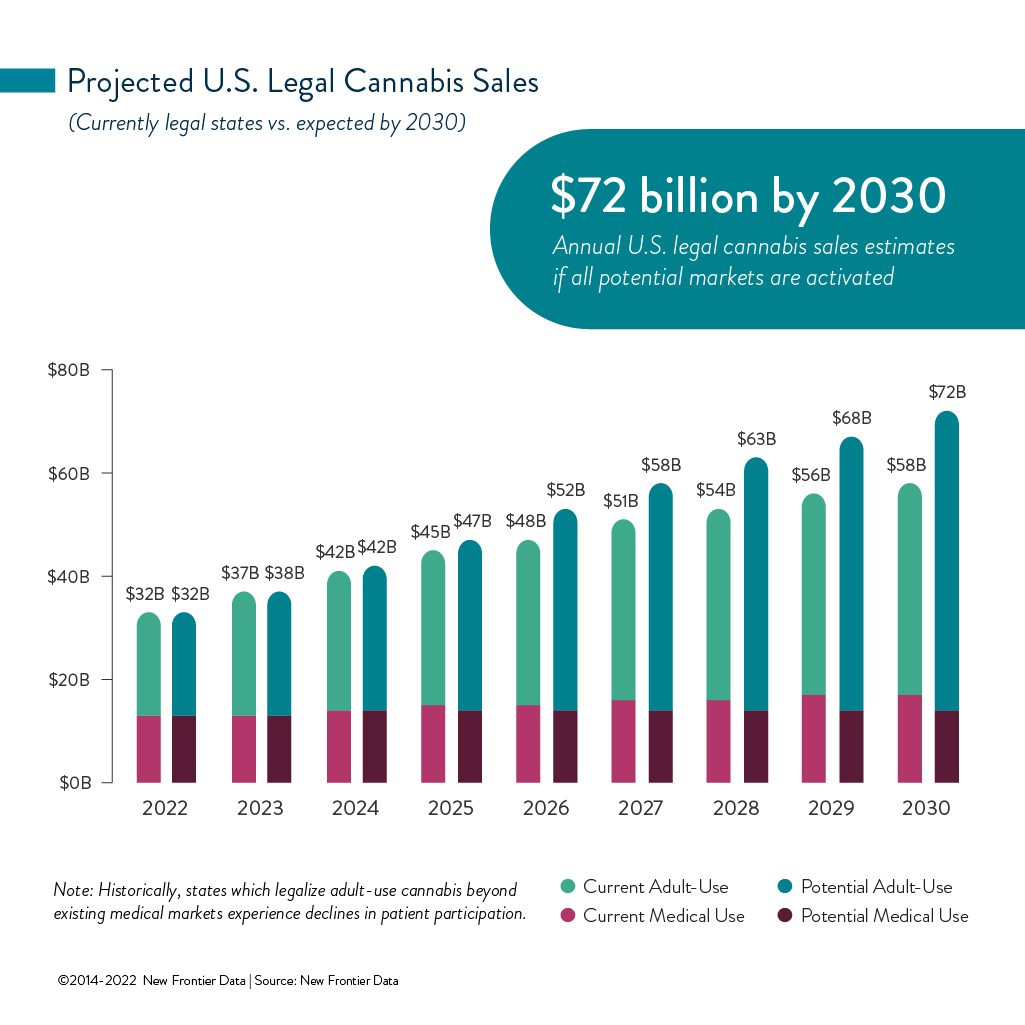
The report projects annual U.S. legal cannabis sales to exceed $57 billion by 2030 (a CAGR of 14%) in current legal states, and if the 18 additional state markets poised to legalize activate, this figure would top $72 billion. Overall growth is fueled by convergent forces including strong consumer demand and an influx of newly operational legal state markets in recent years. Additionally, more adults are consuming cannabis regularly amid normalization and increasing societal recognition of the plant’s therapeutic and wellness applications.

“The seismic shift in public perception around cannabis is fueled in part by the growing exposure that Americans have through legal, regulated markets,” said Gary Allen, New Frontier Data’s CEO. “Even in the absence of a federal framework, the resilience and growth potential of a determined industry is laying the foundation for a safe and sustainable consumer category.”

Other Key Findings:


  • Self-reported usage rates have risen sharply since 2012, and if sustained, the number of U.S. consumers will grow from 47 million in 2020 to 71 million by 2030.
  • S. medical markets continue to expand, with the number of registered patients forecast to increase to 5.7 million in 2030 (1.6% of the adult population).
  • Assuming legalization in all 18 potential markets by 2030, 47% of total demand would be met by legal cannabis purchases, up from 27% in 2021, indicating continued disruption of illicit markets.
  • Despite strong state-level momentum, the near-term prospects for federal reform are dim, but a limited measure, like cannabis banking reform, is possible following the 2022 mid-term elections.

Download a complimentary copy of 2022 U.S. Cannabis Report: Industry Projections & Trends: https://info.newfrontierdata.com/us-cannabis-2022.

About New Frontier Data:

New Frontier Data is the premier data, analytics and technology firm specializing in the global cannabis industry, delivering solutions that enable investors, operators, advertisers, brands, researchers and policymakers to assess, understand, engage and transact with the cannabis industry and its consumers.

Our mission is to inform policy and commercial activity for the global legal cannabis industry. We maintain a neutral position on the merits of cannabis legalization through comprehensive and transparent data analysis and projections that shape industry trends, dynamics, demand and opportunity drivers. Founded in 2014, New Frontier Data is headquartered in Washington, D.C. with a presence in Europe, Latin America and Africa. For more information about New Frontier Data, please visit us at https//www.NewFrontierData.com.

Media Contact: 

Susan Clayton Hammann
Marketing & Communications Director 

New Frontier Data
+1 844-420-3882 ext. 3 

media@NewFrontierData.com 


The post New Frontier Data Projects Annual U.S. Cannabis Sales to More Than Double to $72B by 2030 appeared first on New Frontier Data.


from New Frontier Data https://newfrontierdata.com/cannabis-insights/new-frontier-data-projects-annual-u-s-cannabis-sales-to-more-than-double-to-72b-by-2030/

source https://ozlemhermsen.tumblr.com/post/679522144172048384

Tuesday, 22 March 2022

New State Markets Could Boost U.S. Legal Cannabis Sales to $72B by 2030

Projected US legal cannabis market (Marijuana)

By Kacey Morrissey, Senior Director of Industry Analytics, New Frontier Data

Based on New Frontier Data’s latest analysis of state legalization efforts, the likelihood for several new cannabis markets to legalize by 2030 will drive combined U.S. legal sales past $72 billion in that year. Last year, the U.S. legal cannabis market was worth an estimated $26.5 billion, and this year it is expected to top annual sales of $32 billion.

Trending for 2022

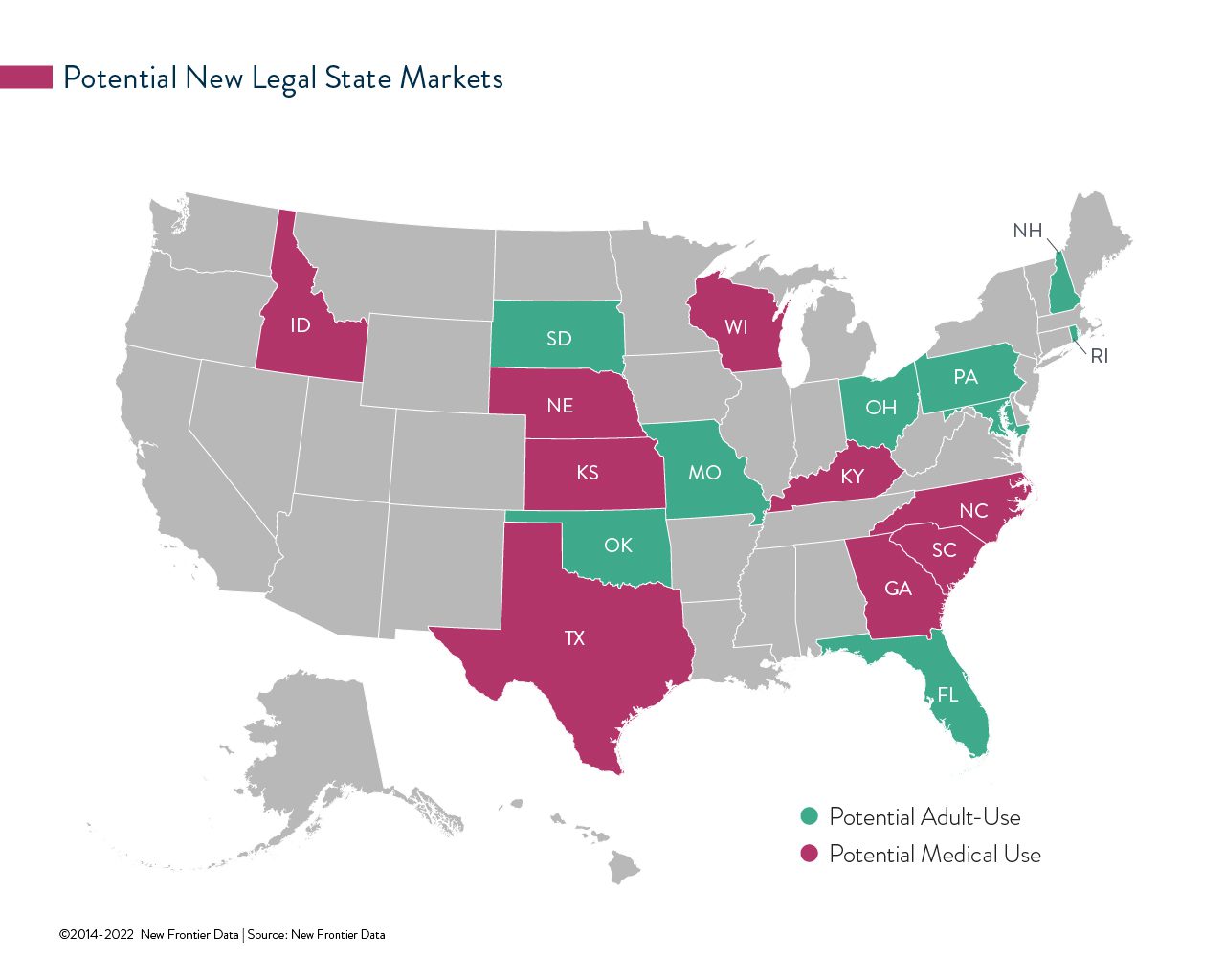
As detailed in 2022 U.S. Cannabis Report: Industry Projections & Trends, nine respective states are demonstrating strong momentum to legalize medical programs, while another nine seem likely to legalize cannabis for adult-use consumption by 2030. Should all of them succeed in those efforts, combined U.S. annual legal sales are projected to grow at a compound annual growth rate (CAGR) of 14%, to surpass $72 billion within eight years.

The report analyzes several key regulatory determinants of a legal market’s success, including qualifying conditions for medical cannabis patients, the number and activation speed of licensed operators, state and municipal tax rates, and whether home cultivation will be permitted. For comprehensive data and analysis, visit New Frontier Data’s online business intelligence portal Equio® to gain additional insights available within the U.S. Market Dashboard.

Large Will Legal Markets Grow?

Without counting any additional states’ legalizing cannabis either for medical or adult use by 2030, annual total U.S. legal sales are projected to grow at a CAGR of 11%, reaching past $57 billion by 2030. It means that currently operational states will add an additional $25 billion in revenues over the next seven years, highlighting the continued growth opportunities even among well-established markets.

Given the increasing legalization of cannabis and its broader social/political acceptance, New Frontier Data expects more U.S. states and countries internationally to legalize full adult-use markets simultaneously with medical programs. As already observed, time lapses between adopted medical programs and subsequent recreational legalization in the same markets have shortened. Adoption of follow-on recreational markets has been happening more quickly, even before South Dakota became the first state to push for legalization of both on the same ballot.

potential new cannabis markets 2022

New Markets Can Add to Majorities with Access

Should all 18 potential state markets enact legalization measures by 2030, they would not only accrue an additional $14.5 billion of U.S. legal retail sales, but add immeasurable political pressure for federal reform. Those new markets would increase the percentage of Americans living in states with some form of legal cannabis access to 96%, and of those living in states with legal access to adult-use cannabis to 64%.

Claiming certainty about U.S. federal legalization has proven to be an elusive enterprise. Yet what seems clear is that continued expansion of legal markets will add to the momentum for reform measures, and socioeconomic pressures for lawmakers to pay heed.

Broader Macro Factors Could Impact Near-Term Revenues

The convergence of several broader economic developments could potentially impact near-term legal cannabis revenues. U.S. consumers were already enduring generationally high inflation levels with the Federal Reserve wielding limited options by which to bring inflation under control. High inflation, combined with the war in Ukraine disrupting supplies to key industrial and agricultural inputs (including oil and wheat), and a global resurgence of COVID-19 — including in the Chinese city of Shenzhen, a major export hub — are compounding worse triggers of rising consumer prices.

Sustained macroeconomic disruptions would negatively impact cannabis consumer spending, and lower legal market revenues over the near term. New Frontier Data’s cannabis consumer research has shown cannabis spending to be highly recession-resilient, meaning that cannabis spending is among the last items which consumers cut when facing tightening financial conditions. Though consumption levels may remain unchanged, consumers reduce their spending by bargain hunting (i.e., seeking value purchases affording them to obtain similar quantities for less) or by reverting to the illicit market where some products, particularly flower, are generally less expensive than in the legal market.

If an economic contraction is sustained through year’s end, total 2022 revenues may return lower than forecast. However, the near-term reallocation of spending would revert to the baseline as consumers regain their spending power, and as the legal market continues to offer compelling (and increasingly cost-competitive) alternatives to the illicit market.

Taken collectively, near-term uncertainty on the broader economic climate, along with medium-term uncertainty on precisely when the next crop of states will legalize or when federal reform might happen, will have little impact on the surging levels of demand for legal cannabis, and do little to deter the broader transition of consumers in legal market from purchasing within regulated channels.

The post New State Markets Could Boost U.S. Legal Cannabis Sales to $72B by 2030 appeared first on New Frontier Data.


from New Frontier Data https://newfrontierdata.com/cannabis-insights/new-state-markets-could-boost-u-s-legal-cannabis-sales-to-72b-by-2030/

source https://ozlemhermsen.tumblr.com/post/679435326277763072

Innovation in the Cannabis Industry

By Esteban Rossi I., Ph.D., Analyst, New Frontier Data

Despite established and expanding popular support, increased sales (in some jurisdictions) and significant social benefits, the Latin American cannabis industry is evolving more slowly than anticipated. Arguably, the various dynamics of the policy process make it inherently slow, clashing with the requirements of innovation. Meanwhile, cannabis companies struggle trying to increase sales, and patients complain about the barriers to obtain high-THC products. New Frontier Data illustrates the delays in policy processes, and identifies the requirements for market creation. As always, the data used can be found in the current Global Report and New Frontier Data’s business intelligence platform, Equio.

The Bubble

Canada stirred interest in the international cannabis industry in 2018 after bill C-45 was founded, and investment bankers soon began making initial public offerings (IPOs). Consequently, bankers, entrepreneurs, and the media were heavily incentivized to pump stocks rather than set sound foundations for a new industry. The consequences of the oversight were severe: In less than two years, company valuations became impossible to justify, sales projections were rendered meaningless, and numerous companies found themselves with an embarrassing balance sheet given considerable infrastructure and few ideas for the future. Investors, in turn, found that the dominant narrative outlining an enormous and accessible market was simply wrong.

Because of the timing and the political context, the Colombian industry adopted numerous elements of the Canadian regulatory model. Those similarities allowed Colombia to attract $288 million USD in foreign investment. Yet, industry pioneers faced operational challenges, underestimated the importance of the regional market in their business plans, and often misbehaved while trying to shape the regulatory process in their favors. Most importantly, after a couple of years trying to market their products, LatAm-based companies found that the narrative pushed by Canadian bankers did not fit the facts.

Cannabis enthusiasts must remember that recent history to make sound investment decisions. Fortunately, the pendulum is moving away from story stocks, and back towards fundamentals. Now solid data exists to describe what consumers, patients, and regulators really need and can pay for. It also helps to illustrate the barriers that hinder market formation and growth.

Barriers to Innovation and Market Creation

The first challenge for the cannabis industry is to win public approval. The public at large remains poorly informed of the health, economic, and security benefits of cannabis legalization. The public conversation requires time, and cultural understanding. After four decades of prohibitionist policies, many people (particularly older generations) are understandably somewhat confused if also curious about the consequences of legalization. Cannabis patients, consumers, and their families will play prominent roles in the dialogue.

The second challenge consists in securing the political will for reform. For strategic reasons, traditional policy makers tend to distance themselves from legalization efforts. Understandably, difficulties exist and circumstances could go wrong, thus it is easy for opponents to misrepresent legalization efforts and taint a candidate’s image. Moreover, large economic interests compete for segments of the cannabis market, and provoke regulatory delays. A large set of health-care regulations enacted for consumer protection can gradually become de-facto entry barriers protecting incumbents and hindering innovation. The result: rather than acquiring local and tested products in legal markets, local consumers currently purchase CBD tinctures at the corner store, and THC products from a local dealer or an online vendor.

A third challenge lies in the implementation of the regulations. Each Colombia (e.g., Invima), Argentina (Reprocann), and Mexico (Secretaria de salud, Conadic) established a legal framework for medicinal cannabis, yet policymakers were unable to establish the regulatory capacity to foster the local industry. Over time, competing demands and scarce public funds pushed medicinal cannabis down respective priority lists. Alternatively, a government can set up an independent regulatory agency tasked only with cannabis regulations, and use license fees to ensure that the agency has the resources to cover its expenses. Both Uruguay (IRCCA) and Jamaica (CLA) obtained good results with this approach.

Industry Members’ Next Steps

As popular support for reforms continue to grow, the cannabis industry must ensure that the public as a whole (i.e., political leaders, minority groups, and the medical community) recognizes and understands the importance of regulations while effecting major transitions in consumption patterns, well-being, aging, and health care. The educational challenge currently shouldered by NGOs and growers’ associations demands consistent efforts and patience.

For entrepreneurs and business owners, it is perhaps worth a return to basics, from first securing access to consumers, then moving backwards along supply chains. Presently, international flower markets remain small or restrictive. Domestically, cannabis firms should push regulators to set up dispensaries or pharmacies focused specifically on cannabis. The distribution channel — as thoroughly tested in Uruguay, Florida, and Colorado — is easy to monitor, and very profitable. Once again, the solution entails going back to the basics and selling quality flower directly to consumers.

For angel investors, the young industry remains promising and filled with opportunities (see chart). New Frontier Data recommends identifying and analyzing cash flows, sound products or technologies, lean approaches, operational milestones, and specific client bases. In general, investors might be wary of firms controlled by Canadian capital, business models predicated on large export markets (B2B), or expensive staffs peopled with experts from other sectors. It is also important to note that in 2020 sales in the Latin American cannabis market comprised $12 billion USD — mostly from illicit sources.

For regulators, it seems time to develop bold international agendas. As the European market continues to evolve, numerous opportunities will emerge in the old continent. Export agencies like Procolombia and Proecuador should follow the approach developed by Uruguay XXI, and open new markets for Latin American cannabis in Europe. It will be a tall order but crucially important.

Recently, small jurisdictions like Luxemburg and Malta took major steps to regulate their domestic markets and attract consumers and investors. Those countries (with small bureaucracies and ambitious leaders), possess prime opportunities to innovate while passing bold cannabis legislation. Over time, such advances should inspire other countries and build momentum. Moreover, in Germany the new coalition government has expressed interest in expanding access to cannabis, perhaps through the regulation of adult-use cannabis. Since Germany’s regulations are actively being written, it would be a good time to expand distribution channels from Latin America while securing some space in Europe’s largest legal market.

The post Innovation in the Cannabis Industry appeared first on New Frontier Data.


from New Frontier Data https://newfrontierdata.com/cannabis-insights/innovation-in-the-cannabis-industry-2/

source https://ozlemhermsen.tumblr.com/post/679435325233332224

Friday, 18 March 2022

A Brief Guide To Using CBD for Neuropathic Pain Relief

What Is Neuropathic Pain?

Neuropathy, or nerve damage that manifests primarily in the extremities, is relatively common and is typically the result of injury, diabetes, or a nervous system disorder. Neuropathic pain can take the form of a pins-and-needles sensation, numbness, or localized pain and weakness. 

What Causes Neuropathic Pain?

Any condition that hampers the functionality of the nervous system can lead to neuropathic pain. These disorders often cause nerve damage, which impairs the body’s pain receptors and makes it difficult for the brain to process physical sensations accurately. 

How Does CBD Reduce Neuropathic Pain? 

Although the effectiveness of CBD as a viable source of neuropathic pain relief is still debated, many rely on CBD for diabetic pain management, which often involves reducing neuropathic symptoms. CBD, whether ingested or applied as a topical treatment, works with the body’s endocannabinoid system to reduce disease-related pain and inflammation, 

What Type of CBD Is Best for Neuropathy?

There are a number of different types of CBD for neuropathic pain, but the choice is ultimately up to you. Look for CBD strains that offer soothing benefits, which can calm the nerves of the hands and feet. 

How Is CBD Used To Treat Neuropathy?

Although you can take CBD tinctures, edibles, or pills, the best way to achieve pain reduction is to apply CBD as a topical, usually in the form of an oil or lotion, to the affected part of the body. Studies show that CBD minimizes acute pain, itchiness, and coldness when applied directly to the extremities.  

If you struggle with symptoms of neuropathy and are interested in learning how to apply CBD for neuropathic pain, consider speaking with both your doctor and a CBD specialist to figure out which solution is best for you.

The post A Brief Guide To Using CBD for Neuropathic Pain Relief appeared first on Smart CBD Hub.


from Smart CBD Hub https://smartcbdhub.com/cbd-for-neuropathic-pain/
via IFTTT

source https://ozlemhermsen.tumblr.com/post/679109107984236545

War, Drought & Demand Create Uncertainty Over Hemp

ukraine war hemp

By Eric Singular, Director, Hemp Business Journal

With global agricultural supply and demand conditions already facing a season of uncertainty, Russia’s military aggression in Ukraine only adds greater disruptions and jeopardy to the short- and mid-range outlook for food commodities prices, supply chains, and stakeholder confidence.

As the “breadbasket of Europe”, Ukraine last year supplied the U.N. World Food Programmewith more than half of its supplies against world hunger. It is the world’s third-largest corn exporter, and a major wheat supplier.

Breadbasket of Europe

For its part, Russia is a major producer of wheat, along with oil and natural gas (for which Ukraine is an important transit route for its natural-gas flows to Europe). Between them, the two countries supply about 30% of the world’s grain and wheat, while combining as the world’s top exporters of same, accounting for nearly 1 of every 3 bushels of global wheat exports, almost 1 in 5 bushels of global corn exports, and over half of global sunflower seed-oil exports.

Commodity prices surged following Russia’s Feb. 24 invasion, catapulting wheat futures prices to record highs last week. Now, the two nations could be out of the market for months, with the war interfering with Ukrainian crop production this spring.

Thus, prices and concerns of staple agricultural commodities are skyrocketing to record highs.

Over the past two years, between the COVID-19 pandemic, ending of a trade war with China, and continued historic drought, the pressure on global agriculture and food supply chains has reached critical mass.

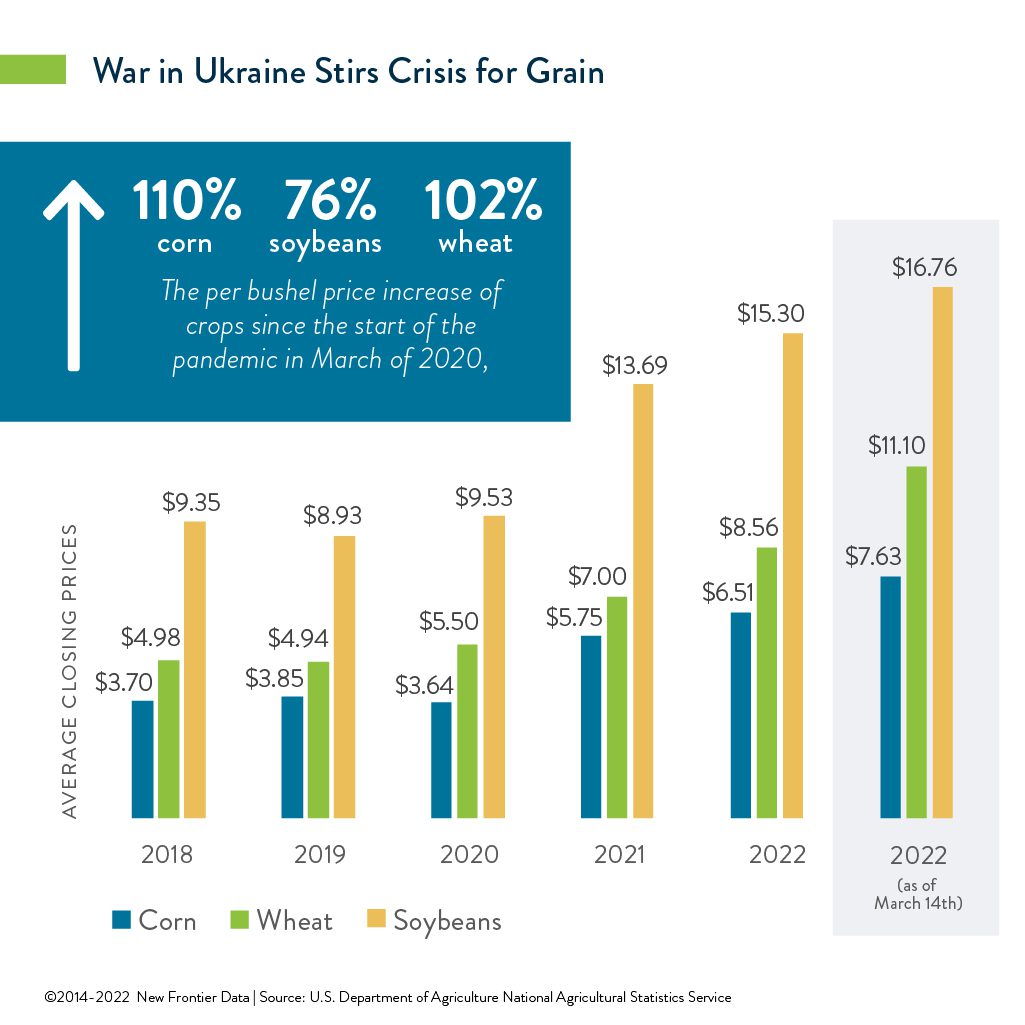
Since the start of the pandemic in March 2020, the per-bushel price of corn has increased 110% (from $3.64 to $7.63), soybeans 76% (from $9.53 to $16.76), and wheat 102% (from $5.50 to $11.10). The upward pressure on global food prices is unlikely to ease anytime soon, between continued war, rising consumer inflation, and an energy and labor crisis.

Crisis in Ukraine

Last week, Ukraine President Volodymyr Zelenskyy urged farmers there to sow as much land as possible to protect their nation’s food supply. In addition, Ukraine has banned exports of key agricultural goods including wheat, corn, grains, salt, and meat.

To mitigate the impacts on global food supplies, the G7’s agriculture ministers called on all nations to keep their trade channels open, and to prevent hoarding and profiteering on exports. A professor of agricultural and applied economics at the University of Georgia, Berna Karali, noted how “the decrease in Ukraine’s wheat exports affects the global availability of wheat, which puts an upward pressure on the global price of wheat. As financial markets do not like uncertainty oversupply, they priced that risk premium in the futures markets already, making wheat futures contract prices increase over 40% in a week.”

Time for Planting in North America

The longer that the crisis ensues, the higher that grain prices will soar. For North American farmers, March is typically a critical month for securing hemp acreage.

Given the soaring prices of staple commodities, which in turn means lucrative crop insurance, 2022 is looming to be an extremely difficult year to convince farmers to allocate land to an emerging commodity with minimal markets. With futures so high for corn, soybeans, and wheat, should farmers commit their acreage today and suffer a crop failure, the insurance would provide compensation at those very inflated commodity prices, thereby assuring a profitable season either way for corn, wheat, soybeans, etc. Conversely, any farmers betting on hemp would be subjecting themselves to unprotected risks.

Over the past two months, grower meetings have been held in Kansas, Vermont, South Dakota, and Montana to identify regional growers looking to contract for fiber and grain production. The fight for acres has been an uphill battle.

Last week, each of the National Corn Growers Association, the American Soybean Association, and the National Association of Wheat Growers spoke at the Commodity Classic in New Orleans. Their messaging was clear – the high commodity prices are showing no signs of crashing in the coming months, or even years, depending on how the situation in Ukraine plays out beyond ever-increasing perennial impacts on crop yields from global drought and low water availability. Addressing the event’s attendees, Cory Bratland, chief grain strategist for Kluis Commodity Advisor, predicted a 25% to 50% reduction in Ukraine’s corn crop this year.

Last week, the USDA’s March World Agricultural Supply and Demand Estimates (WASDE) report cited another compounding factor tightening the global grain shortage: South America’s three largest agricultural producers – Brazil, Argentina, and Paraguay – are experiencing a prolonged period of drought and low water levels in their main rivers. South America’s low crop yields will most impact the global market for soybeans, which relies on the continent’s 2022 production. The report also cut Ukraine wheat exports by 17% (from 24 million to 20 million tons), and corn sales by 6 million tons in 2021-2022. USDA’s cuts to Ukraine and Russian grain exports were partially offset by India and Australia.

Uncertainty in the global food supply chain may precipitate a U.S. shift of 3 million acres from corn to soybeans, with both corn and soybean acreage leveling around 90 million acres this summer.

However, soybeans remain the more attractive option for farmers due to lower fertilizer requirements. Already, fertilizer prices have more than doubled in the last year, a trend exacerbated as Russia provides 23% of the global ammonia market, 17% of potash, 14% of urea, and 10% of phosphates. While Ukraine is not significant in fertilizer, its neighbor Belarus supplies 13% of the world’s potash.

Rising Grocery Prices Ahead

Come autumn, the sky-high commodity prices will arrive at grocery stores. Last October, the United Nations, the Food and Agriculture Organization, and the Food Price Index had pegged the global prices of commodities used in food manufacturing up 30% relative to January 2020’s pre-pandemic levels 10 months earlier. While a commodity shortage is unexpected in the U.S., grocery prices will nevertheless be the most tangible impact felt by American consumers.

Wheat serves as a useful barometer of pressures on global food prices. The Chicago wheat futures contract is sitting near a nine-year high, while wheat globally has slipped into its largest deficit since 2013. After a decade of the world’s producing more wheat than it needed, and keeping inventories stocked, 2022 will see the second consecutive year of a deficit.

The confluence of all the described factors makes it increasingly difficult to secure hemp acreage in North America. That is especially troublesome for fiber and grain hemp processors – many of whom have invested millions of dollars to acquire facilities, equipment, and labor – who are now operational but cannot secure enough regional production to meet their annual feedstock needs. That could add financial pressure on the operators should they struggle to hit their sales targets, and could delay their timelines for paying back loans and meeting investor expectations.

As things stand, given the yields that farmers can achieve planting corn, hemp is a far less attractive option. In addition, the lack of crop insurance for hemp production means that growers must bear on higher risk with minimal chance of reward, especially in a year when a crop insurance loss on corn or soybeans would still be highly profitable given where the futures sit.

Nevertheless, there is a silver lining: High prices for major agricultural commodities will push food and feed manufacturers to consider cheaper, nutritious alternatives. That could make hemp a winner, especially if hemp grain can achieve approval as a feed ingredient (for poultry at the very least) in the next 12 months. The high-protein content and nutritional profile of hemp grain ingredients rival those of flaxseed and other oilseeds which may prove to become targets for manufacturers seeking alternatives.

Ukraine is the world’s largest exporter of sunflower oil, responsible for up to 46% of sunflower seed and safflower oil production. The second-largest producer is Russia, which supplies about 23% of the global demand. Sunflower seed oil is widely used in cosmetics and, like hemp seed oil, contains polyunsaturated fatty acids.

Upside to Hemp Seed

A global deficit in sunflower seed oil could draw new attention to hemp seed oil, which contains 75%-80% polyunsaturated fatty acids, as well as highly sought-after omega-3 and omega-6 fatty acids, including gamma-linolenic acid (GLA). Over the last few decades, GLA has gained recognition for its anti-inflammatory and anticancer properties, and a handful of clinical trials found that GLA reduced inflammation, symptoms, and the requirement for NSAIDs in patients with arthritis. The unaffordability of major crops as driven by market uncertainty could stimulate the market both for hemp grain and its adoption as a plant-based ingredient.

While each week of Ukraine’s sustained resistance floats renewed hope for peace talks between Ukraine and Russia, the next 30 days also hold critical importance for farmers in North America as they finalize production plans and begin sowing seeds for this summer’s increasingly vital harvest.

The post War, Drought & Demand Create Uncertainty Over Hemp appeared first on New Frontier Data.


from New Frontier Data https://newfrontierdata.com/cannabis-insights/war-drought-demand-create-uncertainty-over-hemp/

source https://ozlemhermsen.tumblr.com/post/679023869027368961

Wednesday, 16 March 2022

Emerging Cannabis Economies Taking Root Internationally

By Oliver Bennett, Special Contributor to New Frontier Data

So far this year, the mood in the European cannabis industry has been buoyant. Consumption rates are rising, and public support for legalization continues to grow. Several milestones achieved during 2021 hinted at growing momentum toward cannabis normalization, along with acceptance of elements from adult-use consumption, to medical programs, to the popularity of CBD.

Developments across the continent include major strides made in Luxembourg, Malta, and Germany, respectively, toward legalization of recreational consumption. In particular, Germany’s potential creation of a regulated adult-use market is expected to further stimulate cannabis reforms across Europe.

As detailed by New Frontier Data in our proprietary Equio cannabis industry intelligence platform, five of the world’s 10 largest markets of cannabis consumers are in Europe (i.e., France, Italy, Spain, Germany, and the United Kingdom [U.K.]). Among top legal revenue producers, Germany (at $311 million), the Netherlands ($113.7 million), Italy ($30 million) and Poland ($14.3 million) stand out as Europe’s biggest hitters. While those totals remain well below the money being spent in those countries’ rival illicit markets, they nevertheless represent an upward trend echoed across much of the world, and with particular urgency in Europe. Nearly one-third of the world’s consumers is contained within the planet’s 10 largest consumer markets, with European territories representing the lion’s share.

The tendency seems to have been bolstered throughout the past two years during the COVID-19 pandemic. Back in mid-2020, New Frontier Data found that European cannabis demand, already strong, had continued to evolve during the pandemic. The European cannabis market then serving an estimated 42.6 million people (5.9% of the total population) throughout 28 European countries spent 62.7 billion euros (USD $68.5 billion) across both their regulated and unregulated markets.

Countries rated with a score of less than 1 – meaning that “low- THC products are legal in some form, including pharmaceutical cannabis products like Sativex” – include Belgium, Croatia, Cyprus, Romania, Estonia, Greece, Ireland, Lithuania, Macedonia, Slovenia, Sweden, and Switzerland.

Many of those, notably, are Eastern European nations and more recent European Union accession states, with the remainder being rather smaller nations by population in Europe (in the case of Switzerland, a neutral state which is not a European Union [EU] member state). The study also tracks European countries where medical cannabis is legal, including the Czech Republic, Denmark, Finland, Malta, Norway, Poland, Portugal, Luxembourg, France, Germany, Italy, the U.K., and influential non-European market Israel. The last category of countries among the vanguard for legal medical cannabis and some liberalization of non-medical use includes the Netherlands, Spain, and – as something of an outlier – Georgia in the Caucasus, which in 2018 became the first former Soviet country to legalize cannabis. Indeed, that year marked something of a turning point for legal cannabis internationally, with 33 countries legalising medical cannabis since.

Managing Market Expectations

Given recent events, it is imperative to note some unavoidable if uncertain caveats due to the Russian invasion of Ukraine. Though as of January the Ukrainian government had been making headway in Parliament toward legalizing medical cannabis, only chaos and uncertainty are expected in the short term. Regardless of any other more pressing pending outcome, the war will leave a deleterious if not disastrous outcome for the country’s cannabis market.

Ukraine is the world’s second-biggest shipper of grains and largest exporter of sunflower oil, and millions of people in the developing world depend on its national wheat harvest. Given some already manifested constraints on cannabis and all manner of other businesses, and similar fallout including economic inflation, higher energy and commodity prices, and far-flung disruptions to the supply chain, the G7’s agriculture ministers are already calling on all nations to maintain open trade channels and safeguard against unjustified limits on exports as risks of hoarding and profiteering are introduced.

As Alain Menghé à Menghé, CEO of German company Lio Pharmaceuticals, understatedly suggested, “deprioritization of other issues (than the war) could slow the dynamic of regulatory change.”

Incremental change

For now, there remains momentum toward gradual change. France, slow among its Western European peers to take up with cannabis reforms despite having the most national consumers on the continent, last month issued a decree to authorize cultivation and development of medical cannabis. Coming into force on March 1, the measure enables France’s Code of Public Health to allow the production of cannabis under medical authorization and supervision by the National Agency for the Safety of Medicines and Health Products (ANSM).

Meanwhile, Tilray Brands recently announced that its Tilray Medical cannabis division, had begun selling medical cannabis in pharmacies across Malta, providing patients with access to its branded products. As Denise Faltischek, Tilray’s Chief Strategy Officer and Head of International Business described, “As demand for cannabis continues to grow across Europe, we’re incredibly proud to partner with established and reliable distribution partners to supply new markets with high-quality medical cannabis which patients can rely on.”

In The Global Cannabis Report: Growth & Trends Through 2025 (released 9/15/21), New Frontier Data projected the EU medical market to see a compound annual growth rate (CAGR) of 23.9% from 2020 to 2025.*

In an unrelated setback, though Italy’s referendum on cannabis was led by a nationwide petition of 6 million people last year and touted as a positive sign for European adoption of adult-use cannabis, it was recently knocked back by Italy’s Supreme Court as inadmissible.

Medical first

In general practice, legalization of medical cannabis typically precedes a given market’s adoption of adult-use programs. Medical cannabis remains more acceptable throughout Africa, Asia, and Latin America, where conservative attitudes are thawing against medical use, if not yet for recreational use.

Since 2020, countries either legalizing medical use or allowing its possession for personal use have included Lebanon, Malawi, Panama, and Rwanda, and more recently Ghana and Morocco, both of which approved medical cannabis measures last year. Those developments are bound to raise the stakes for Europe’s cannabis industry. Morocco – already the biggest exporter of illicit cannabis to Europe – has identified three provinces selected by its government to cultivate legal cannabis, representing a gateway to Europe that will “undoubtedly facilitate access to the largest market for cannabis products.”

Resilience

Kickstarted in 2017-2018, and by 2020 accepted by the United Nations for having medicinal attributes, European medical cannabis reforms followed examples set in the United States a decade ago. Yet, the European market, which is distributed through pharmacies and doctor’s prescriptions, is already arguably more mainstream than is the U.S. medical dispensary model. Moreover, the EU-GMP certification has given that market a measure of a stringency that neither the U.S. nor Canada enjoys, and provided a bedrock sense of legitimacy to the industry.

Improving access for patients to medical cannabis will be the central challenge for Europe over the next few years as patient registration rolls increases, and as adult-use cannabis legislation follows at a slower pace. While the arcs of social acceptance and scientific legitimacy seem bound to trend upward, for the foreseeable short term the cannabis industry seems once again fated to test its resilience in uncertain trading conditions.

* Editor’s Note: Those projections were calculated based on sales as of Q2 2021, and preceded both recent legalization measures in Germany, Malta, and Luxembourg, and the military hostilities in Ukraine.

The post Emerging Cannabis Economies Taking Root Internationally appeared first on New Frontier Data.


from New Frontier Data https://newfrontierdata.com/cannabis-insights/emerging-cannabis-economies-taking-root-internationally/

source https://ozlemhermsen.tumblr.com/post/678850236121219072

Almost 1/5 of Americans Report Consuming Cannabis Each Year

usage rates US

By John Kagia, Chief Knowledge Officer, New Frontier Data; and Kacey Morrissey, Senior Director of Industry Analytics, New Frontier Data

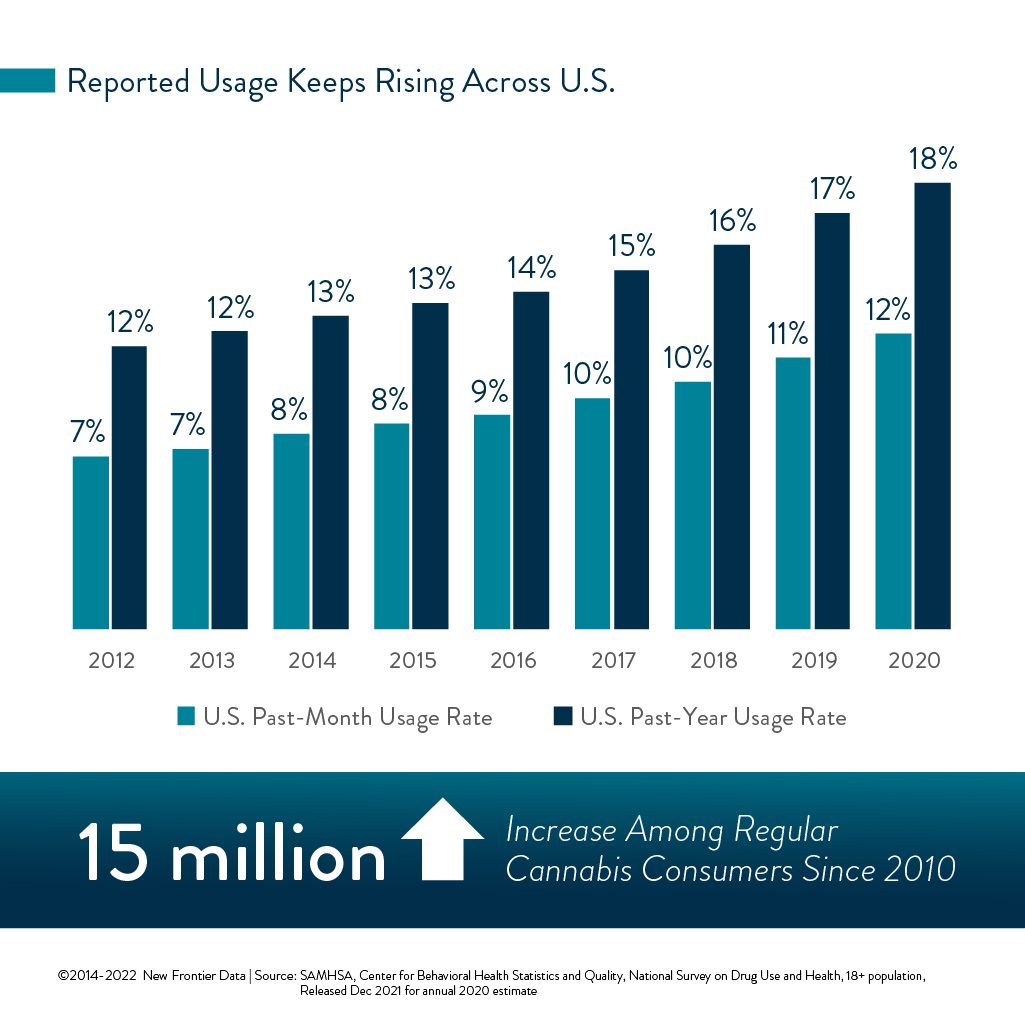
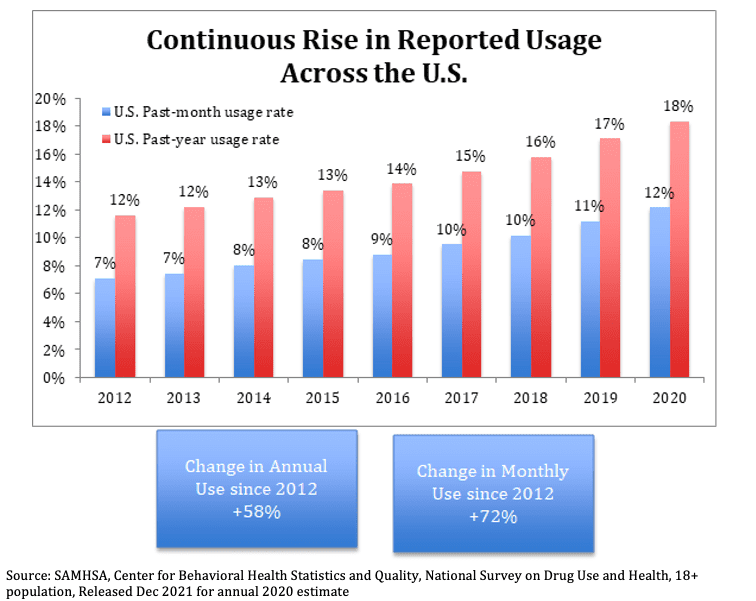
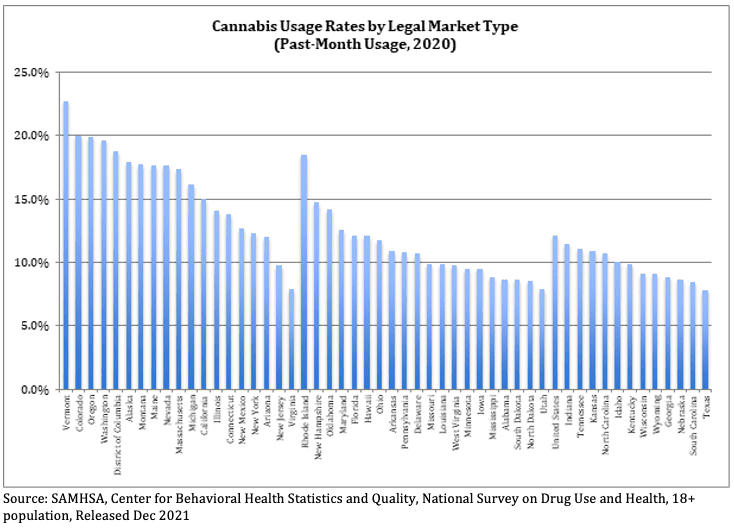
In marking new records for U.S. consumption, approximately 12% of American adults aged 18+ report using cannabis at least monthly, with 18% report having used it within the past year, according to the National Institutes of Health (NIH)’s National Survey on Drug Use and Health (NSDUH).

According to the NIH, the number of regular cannabis users in the country has grown by 15 million since 2010 (surpassing 31 million in 2020). The increase is attributed to converging factors, including broader acceptance and socialization of cannabis use as more states legalize it for medical and/or adult use, and more adults feel comfortable in reporting their use for a governmental survey.

With more than 1 in 10 Americans consuming cannabis regularly (and nearly 1 in 5 doing so at least once a year), acceptance of the drug in the U.S. has broad implications for the presence and visibility of cannabis throughout U.S. society. Generally, those states having the highest self-reported rates are also those with the most liberalized related policies — from the range of commercially available products, to lists of qualifying medical conditions, to expungement of cannabis-related crimes, and promotion of social-equity programs.

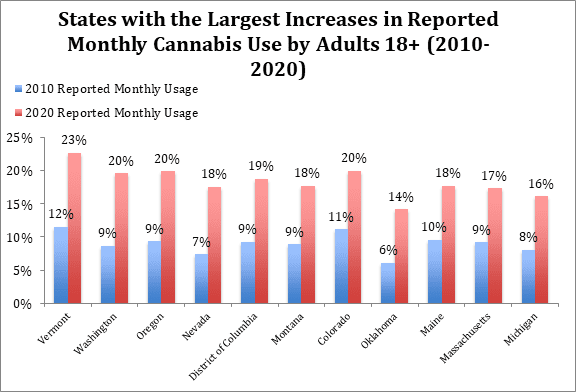
States with legalized adult-use markets tend to see higher usage rates than those with medical-only markets. States prohibiting cannabis typically report lower rates of use. Correspondingly, between 2010-2020, states with respectively liberalized policies reported the highest increases: Notably, Vermont — which voted in a legal cannabis marketplace in 2020 — has seen the nation’s highest reported consumption rate (23%), with nearly one-quarter of residents consuming each month.

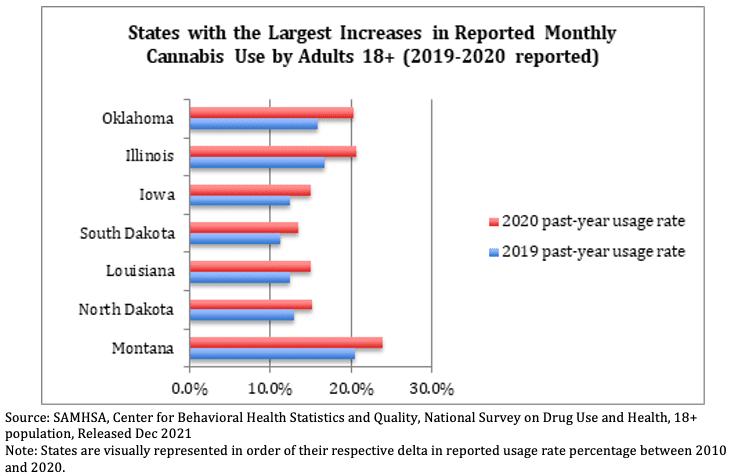
Between 2019 and 2020, significantly pronounced changes were reported among some historically conservative states: Oklahoma, Iowa, Louisiana, and the Dakotas respectively registered the highest reported one-year increases after long claiming the lowest such rates in the country.

Oklahoma is home to the country’s fastest-growing medical cannabis market, while South Dakota was the first state to simultaneously approve both medical and adult-use legalization via ballots in a single election cycle (though the latter was overturned following a challenge by the state’s governor). Louisiana has amended its medical cannabis program to approve flower sales for the first time, and cannabis reform has become a top issue in the state’s campaign for a U.S. Senate seat this fall.

While the rising rates of cannabis highlight significant progress which the U.S. legal cannabis industry has seen in bringing cannabis consumers out of the shadows and onto Main Street, it remains worthwhile to note how much lower the public’s use of cannabis remains in comparison to alcohol, the country’s most widely used drug. While 12% of American adults report using cannabis at least once a month, more than half (55%) of Americans use alcohol with such frequency.

As New Frontier Data has previously analyzed, the interplay between alcohol and cannabis will be a critical trend to monitor throughout the coming decade. As detailed in New Frontier Data’s 2021 cannabis consumer survey, 44% of cannabis consumers preferred cannabis to alcohol, while 47% substituted cannabis for some of their drinking.

As numbers of cannabis consumers increase, and access to regulated, high-quality products becomes more common (including in social-use spaces designed to rival bars and coffee shops), greater substitution is to be expected from alcohol to cannabis. The trend will predictably be most pronounced among young adults, coming of age in environments where cannabis is as socially accepted as alcohol, though broadly deemed as a safer option. The full impact of that trend may take another decade or beyond to be manifested in the mainstream, but presents itself among the most significant and enduring impacts of the legalized cannabis industry.

As reported in the NSDUH, Oklahoma most recently saw the highest increase in past-year cannabis usage, due largely to the opening of the state’s easily accessible legal medical market, the expansion and success of which has decreased stigma and increased public comfort levels across the state for admitting usage.

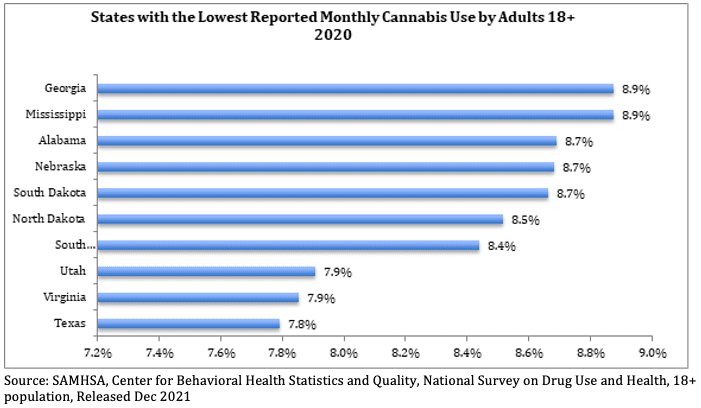
The states with the lowest reported usage rates are the most historically conservative states in the South and Midwest, which have had the most punitive cannabis laws over the past half-century.

As the confluence of each among the described trends reaches critical mass, the usage rates seen across demographic cohorts will expectedly rise further. Accordingly, constituencies in favor of legalization may be expected to lend ever-increasing mass to voting blocs. Such trends will hasten the seismic social shift in support as more legal state markets open, and their proponents increase public and political pressure against federal prohibition.

The post Almost 1/5 of Americans Report Consuming Cannabis Each Year appeared first on New Frontier Data.


from New Frontier Data https://newfrontierdata.com/cannabis-insights/almost-1-5-of-americans-report-consuming-cannabis-each-year/

source https://ozlemhermsen.tumblr.com/post/678850235031797760

Tuesday, 15 March 2022

Should you try CBD oil for your annoying eye infection symptoms?

Types of Eye Infections

Eye infections may be caused by viruses, fungi, parasites or bacteria. Treatment plans are dependent on the cause of the infection. Here are common eye infections:

•         Conjunctivitis – This widely seen infection, also known as pink eye, happens when the blood vessels in the eyeball become infected. It can be viral conjunctivitis, bacterial conjunctivitis or allergic conjunctivitis.

•         Keratitis – The eye’s cornea is infected with keratitis. The best treatment course is prescription eye drops.

•         Sty – A sty appears when an oil gland on the eyelid gets inflamed and infected. A warm compress or antibiotic ointment may help it clear away.

Eye Infection Symptoms  

Other types of eye infections that aren’t as common include endophthalmitis, blepharitis, cellulitis, uveitis or herpes. The symptoms of an eye infection may be redness, irritation, discharge, itchiness, pain or blurry vision. Sometimes, a sore eye may be a sign of another type of illness, such as COVID-19.  

CBD Treatment

The possibility of using CBD oil to treat eye infection symptoms has been briefly studied. According to some studies, CBD oil taken orally may result in increased intraocular pressure in the eye. Higher pressure in the eye is a significant risk factor for developing glaucoma. While researchers didn’t see a pressure increase in smaller doses of CBD oil, there was no benefit of CBD oil treatment on the eyes. For patients with eye infection symptoms, CBD oil may not provide relief or advantages.

The best thing to do if you have irritation, redness or inflammation in your eyes is to talk to your physician. Your doctor can give you advice about how to reduce the symptoms and treat an eye infection.

The post Should you try CBD oil for your annoying eye infection symptoms? appeared first on Smart CBD Hub.


from Smart CBD Hub https://smartcbdhub.com/cbd-oil-for-eye-infection-symptoms/
via IFTTT

source https://ozlemhermsen.tumblr.com/post/678822254056996864

Tuesday, 8 March 2022

Which States Are Looking to Legalize Cannabis This Year?

US adult cannabis legalization

By J.J. McCoy, Senior Managing Editor, New Frontier Data

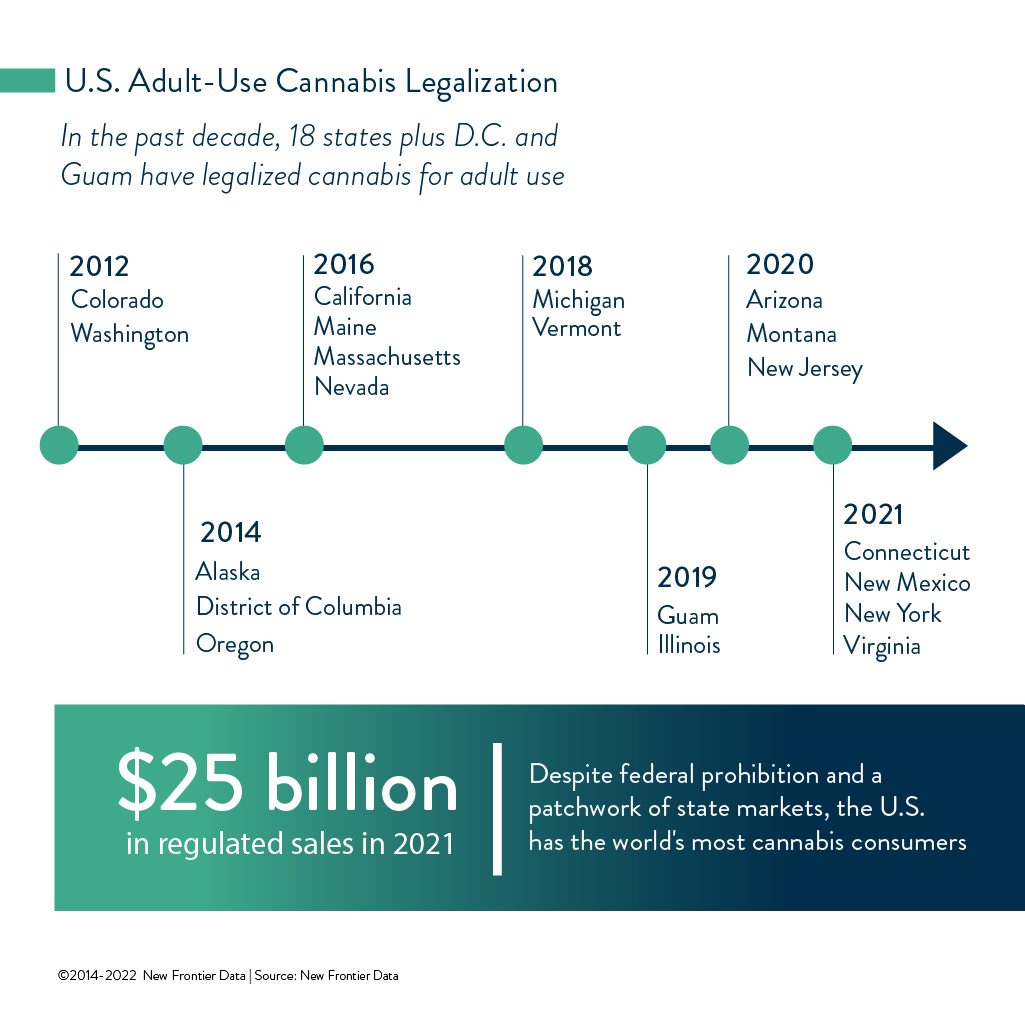
It was Election Day 2012 when Colorado voters approved a ballot initiative legalizing cannabis for sale, possession, and use by adults. In nearly a decade since the Centennial State became the first U.S. state to do so, 17 others (along with both the city of Washington, D.C., and the territory of Guam) have legalized cannabis even while the federal government maintains its longtime prohibition of marijuana. When Mississippi legalized medical marijuana last month, it marked more than twice as many (37) more states and territories (4) now permitting the use of cannabis to treat qualifying medical conditions. Worldwide, 33 countries have legalized its medical use since 2018.

Despite its prohibition, the U.S is home to the most cannabis consumers in the world, with 45 million people reportedly using cannabis annually. Nine of the 10 largest consumer markets are in North America or Europe, affirming strong market opportunities in both continents as lawmakers liberalize cannabis policies and transition to regulated markets.

U.S. Cannabis Sales Surpass $25 Billion

New Frontier Data notes that even while the U.S. lacks a federally regulated framework, the patchwork of state markets makes it the world’s largest legal cannabis market by a wide margin, generating over $25 billion in regulated sales in 2021. Even so, those U.S. legal sales captured slightly more than one-quarter of the country’s $90 billion in demand, underscoring the robust growth potential in the world’s largest consumer market, projected to surpass $40.5 billion in sales by 2025.

Today, eight months before the U.S. midterm elections, popular support for marijuana legalization has never been higher. Two years after legal cannabis was deemed by many jurisdictions as “essential business” during widespread shutdowns to mitigate the COVID-19 pandemic, mainstream acceptance has broadened Democratic and Republican political support for both state and federal reform measures.

Though there was initial enthusiasm for federal legalization after the election of President Biden in 2020, no action has been forthcoming from the administration. Instead, cannabis proponents and industry lobbyists expect to see a continuation of incremental measures come to pass, including several yet in 2022.

New Measures Taking Shape

Banking reform for cannabis businesses as detailed in the SAFE Banking Act would allow federally insured financial institutions to serve state-legal, plant-touching businesses without fear of legal jeopardy. The bipartisan Biological Medical Marijuana Research Act would expedite long-stifled research about cannabis, and the Veterans Equal Access Act of 2021 would allow Veterans Administration doctors to provide advice and treatment involving medical marijuana to former members of U.S. military services.

In a political era of fierce partisanship and sharp discord, the HOPE Act has the support of unlikely allies including Representative David Joyce (R-Ohio) and Representative Alexandria Ocasio-Cortez (D-NY) seeking to direct funding to states to expunge offenses for cannabis-related convictions.

Advocates also tout legal cannabis’ potential to create jobs and mitigate economic shortfalls from the pandemic. They welcome it as a moneymaker for states, and an overdue means for social justice for those demographic sectors most disproportionately affected by cannabis-related prosecutions and mass incarcerations.

Robust medical cannabis patient programs can help substantial portions of the populace, and help reduce stigma as positive precursors to adult-use regulations. The three leading U.S. medical markets by patient saturation (i.e., Oklahoma with 10% of its residents registered, New Mexico at 6%, and Pennsylvania at 4.5%) demonstrate successful levels of penetration where regulations and social acceptance have proved vital to the performance of those medical markets.

New Mexico has already moved into adult use, and Pennsylvania lawmakers have expressed intentions to do so. Oklahoma represents a real test of the medical-saturation effect, being a state that has fully embraced cannabis for medical use but stands down regarding progress towards full legalization.

Legalized Adult-Use States
Alaska (legalization passed in 2014), Arizona (2020), California (2016), Colorado (2012), Connecticut (2021), Illinois (2019), Maine (2016), Massachusetts (2016), Michigan (2018), Montana (2020), Nevada (2016), New Jersey (2020), New Mexico (2021), New York (2021), Oregon (2014), Vermont (2018), Virginia (2021), and Washington (2012), along with the District of Columbia (2014), and Guam (2019)

States on the Bubble for Legalization Measures in 2022

Delaware, Florida, Maryland, Minnesota, Missouri, New Hampshire, and Ohio for adult-use programs, and Texas for expanding its medical-use program

Delaware: Already having a well-established medical marijuana program, the House Health and Human Development committee in January approved HB 305, a bill awaiting consideration before a vote. Governor John Carney has been lukewarm to it, neither advocating legalization nor threatening a veto if the bill reaches his desk.

Florida: Though nothing will happen during this legislative session while the Sunshine State’s Republican majority and Governor Ron DeSantis oppose adult-use legalization, polled majorities favor it among both Democratic (76%) and Republican (64%) voters.

Maryland: With the Maryland General Assembly considering whether to debate adult-use cannabis legislation this year, support among polled residents decreased slightly (from 67% to 60%) between March and October 2021, according to Goucher College.

Minnesota: Though adult-use cannabis was technically legalized in May 2021, the measure stalled when the legislative session ended two days later. Lawmakers are now resuscitating it, and the governor has earmarked funding for legalization in his annual budget request.

Missouri: Multiple competing campaigns are afoot to present legalization bills; given that the Missouri General Assembly has not been as supportive as the overall electorate, pursuing the initiative petition process seems vital.

New Hampshire: Without including retail sales, state representatives voted in January to legalize possession and home cultivation. With another half-dozen cannabis proposals being considered, a more comprehensive program including commercial retail and cultivation looks due for passage this year.

Ohio: Featuring one of the nation’s top medical cannabis programs, Ohio has a measure headed for its November ballot amid strong voter support. Other reform measures are under consideration, including a Republican-backed adult-use bill.

Texas: The state’s Compassionate Use Program limits medical cannabis to low-dose THC containing no more than 1% THC by weight. Advocates like Americans for Safe Access want to expand the medical-use program, noting that the state’s registry of some 3,500 patients grew by 46% in 2021, even though only two Austin-area dispensaries exist throughout the nation’s second-largest state by area. Texas is notable as the largest state which has not yet approved a full medical market. Amid a population of nearly 30 million, the state’s prospective program could fast become the country’s largest medical market.

Local political dynamics — including specifics of the proposed language in each market — will influence the timing and likelihood of passage of each state’s reforms.

As seen in states including Mississippi and South Dakota, even broadly popular measures may face stiff opposition and legal intervention from conservative lawmakers who oppose expanding access to cannabis. However, with the tide of public opinion gathering strongly behind ending prohibition, the coming expansion of state markets in the U.S. is all but assured.

The post Which States Are Looking to Legalize Cannabis This Year? appeared first on New Frontier Data.


from New Frontier Data https://newfrontierdata.com/cannabis-insights/which-states-are-looking-to-legalize-cannabis-this-year/

source https://ozlemhermsen.tumblr.com/post/678216035724378112

Uruguay’s Legal Cannabis Market: Lessons Learned

uraguay flower export

By Esteban Rossi I., Ph.D., Analyst, New Frontier Data

Nearly a decade ago, Uruguay’s President José “Pepe” Mujica argued that no one should go to prison for smoking cannabis, and that it was absurd to allow illegal or informal actors to control the market. Subsequently, under his leadership, Uruguay embarked on a bold and unprecedented policy experiment to legally regulate cannabis for adult use. Though most of the Western world has since become familiar with Mujica’s legacy, the pressing question remains: What is the best path to establish regulate this young industry and create a new market?

In attempts to characterize the best policy approaches to cannabis legalization, New Frontier Data reviews the accomplishments, lessons, and perspectives from the Uruguayan experience. We draw from data and analysis available through, Equio our business intelligence platform, along with trade records, interviews with key stakeholders, and information provided by the Uruguayan Cannabis Institute (IRCCA).

Crucial milestones

After a slow and fitful start, the IRCCA achieved three important milestones and set the course for multiple jurisdictions. In a few years, Uruguay established a successful adult-use market, carved a niche in international flower markets, and managed the public narrative surrounding the legalization process.

Presently, Uruguay has approximately 260,000 adult users that obtain cannabis through different channels. According to IRCCA between 30%-35% of them regularly purchase cannabis through pharmacies (48,000), home cultivation (13,000), and clubs (7,000 users) distributed in 200+ clubs). Although the remaining 190,000 users still obtain cannabis in the mostly domestic grey market, the regulated market exhibited a 27% growth rate between 2021 and 2022.

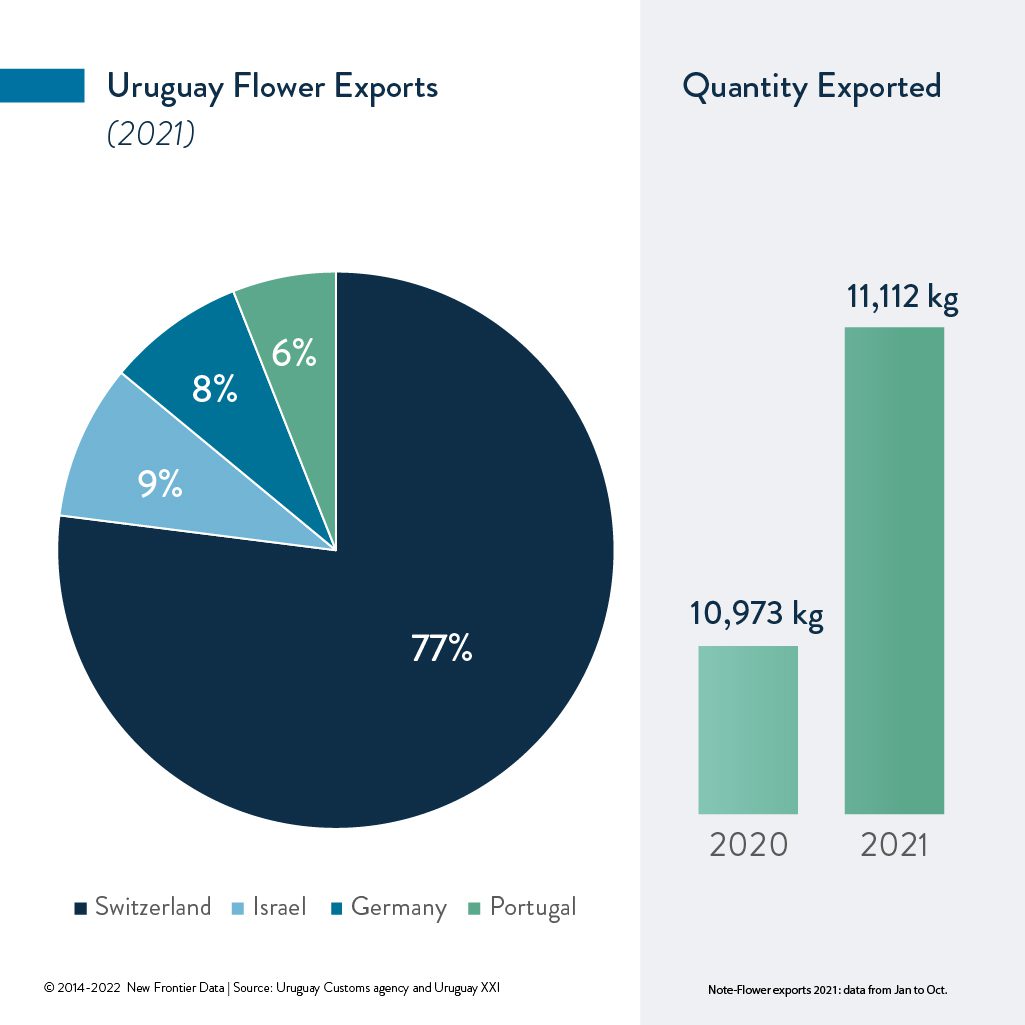
Local firms, licensed by IRCCA and supported by the agriculture ministry and export agency, found a niche in foreign markets. In 2020, shipment figures were as follows: THC flower for $5.2 million USD of THC-flower; CBD-flower for $2 million USD, for a total of $7.2 million USD. In addition, Uruguay exported a few small seed shipments along with Epifractan, a CBD tincture manufactured by Medicplast, in a deal worth $173,000 USD. Conversely, flower exports during the first 10 months of 2021 accounted for $5.1 million USD.

Over the past two years, Uruguayan THC-flower reached Germany, Portugal, and Israel while most CBD flower entered Europe via Switzerland. Tinctures or extracts, in turn, were mostly shipped to Brazil and Argentina. These figures represent the accomplishments of fewer than 20 firms that delivered quality products for international buyers. In addition, recent figures also provide a benchmark to evaluate the business projections for younger firms.

While these companies are well-positioned to take advantage of recent legislative advances in European markets, investors should remain cautious about potential protectionist approaches to regulation and international trade. If European countries like Malta, Luxembourg, and Germany choose quality and price advantages and favor free trade, Latin American firms will face soaring exports in 2022 and 2023. Conversely, if European lawmakers follow the Canadian example and restrict imports, the market will evolve much more slowly, and subject consumers to higher prices.

The Uruguayan regulatory model hinged on government control of the adult market and demonstrated that even in traditional societies, citizens dislike prohibitionist policies and actively seek alternative approaches. Uruguayan public officials carefully managed the public discussion regarding cannabis policy in Latin America. The IRCCA clearly communicated that substances like THC should not be consumed by teenagers and should be used under appropriate guidance. Still, the agency demonstrates how the state can play an active role in the cannabis market to ensure that users can safely access a quality product at a reasonable cost.

Lessons learned

So far Uruguay demonstrated that private-public collaboration yields results and that the premises defended by Mujica ring true today as back in 2013. Meanwhile, the public and financial markets benefited greatly from the creation of this new industry. Sadly, the kind of principled vision and strength of the Uruguayan government proved hard to find. In Colombia for example, although the government recently expanded access to generic formulations, incomplete technical and trade regulations continue to delay flower exports. The situation is particularly confusing since the president himself announced back in July 2021 that he would support the cannabis industry. In a similar vein, multiple Latin American governments continue to criminalize users and home-growers and have yet to develop a robust regulatory framework to reach regional or international markets.

In addition to the potential shortcomings of political leaders, users and firms must shoulder some of the blame for the incremental evolution of the legal industry in the region. All too often, cannabis enthusiasts and business leaders misunderstand the enormous impact of four decades of prohibitionist policies. In fact, few narratives in recent history have been so successful in shaping public imaginaries around social justice, public health, and police control. Therefore, the legal cannabis industry requires substantial communication and educational efforts to win the hearts of socially conservative leaders and their constituencies.

Expectations for 2022

Over the next several months we should expect incremental growth, closely tied to legislative advances in Europe as well as Israel and Australia. IRCCA is preparing to launch a new product (flower strain) with higher THC content to satisfy the needs of experienced consumers. Slowly but surely, Uruguayan and Colombian products will continue to chip away at the illicit market that comprises roughly 12 billion and look for customers in Europe, Australia, and Israel (see Latam, 2021. Global Report). Moreover, a growing number of small to medium firms will continue to develop new products for small or online markets. It is most likely that the next breakthrough product will be developed in one of these local niches. Lastly, new players recently jumped into the seed production business aiming to provide seeds to home growers, Uruguay and Colombia seem well-positioned to lead the way.

The post Uruguay’s Legal Cannabis Market: Lessons Learned appeared first on New Frontier Data.


from New Frontier Data https://newfrontierdata.com/cannabis-insights/uruguays-legal-cannabis-market-lessons-learned/

source https://ozlemhermsen.tumblr.com/post/678212273405362176

How To Calculate the Right Dose of CBD Oil for Dogs

Can CBD Oil Shrink Your Dog’s Tumor ? More research needs to be done on how CBD affects tumors in a dog, but recent studies show the potent...